
Why Do We Still Circumsize Our Boys?
Why is it in the age of information we still allow Infant Male Sexual Mutilation when there are zero medical benefits that outweigh the disadvantages?
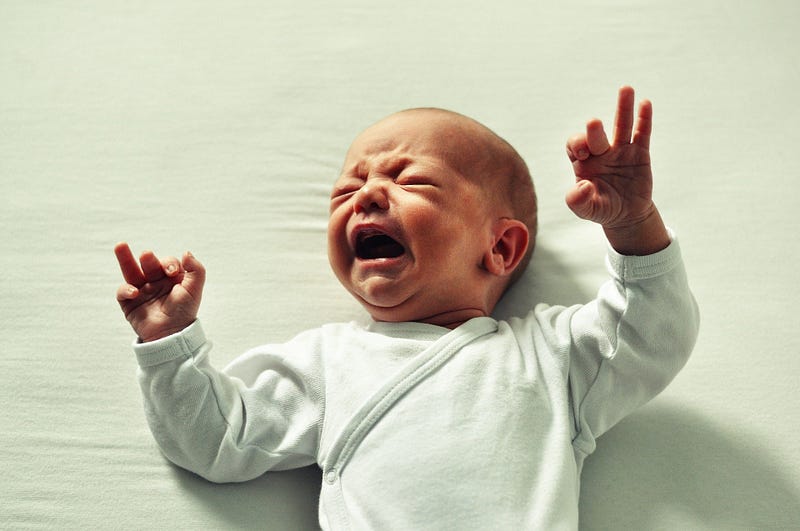
I used to hate my mother for not circumcising me. I had no particular reason for hating her for it, I just didn’t like it. I am now eternally grateful that she did not make the other choice. (All articles I read for this story will be linked at the end)
When Did Sexual Mutilation Become the Norm?
Outside of Judaism and Islam, there were only a few cultures that have used some form of circumcision as a rite of passage or a form of ritual sacrifice. Until the second half of the 19th century, it was viewed as barbaric and unnecessary.
Then around 1855 an English Dr., who also was a Christian, wrote a paper in which he claimed that circumcised men in the Jewish communities had a much lower rate of Venereal Disease contraction than uncircumcised Christian men. He also claimed that circumcision could cure a number of other ailments such as masturbation and the temptation thereof.
There was also an American Dr. in NY, Lewis Sayre, who became a proponent of it for helping to relieve hysteria and claimed it help boys learn to walk easier.
The Encyclopedia Brittanica, 1876 ninth edition’s author made no reference to the procedure in any medical sense, instead writing that it was a tribal or religious ritual performed by the Jews, Muslims, Ancient Egyptian, and some S. Pacific Islanders;
“like other body mutilations … [it is] of the nature of a representative sacrifice”. (R. Darby)[61]
By 1929 the encyclopedia entry made no mention of religious rituals, only that it is done as a preventative measure on infants, for health reasons. Lets look at these reasons…
Health Reasons: Pros
There is an elevated risk to those who are uncircumcised getting a Urinary Tract Infection in their first year of life, about 1 out of 100 uncircumcised baby boys.
There is a higher risk for some STI’s, such as syphilis, HIV, and HSV. But as with all categories of men, these can be reduced to below normal levels by practicing safe sex.
Phimosis, or tightening of the foreskin around the head of the penis, most commonly in very young boys, does not require medical attention except in about 1 out of 10,000 cases.
Bacterial infections. This seems to be the big one they use to convince parents. If you don’t mutilate your infant they’ll get infections on their penis. I am 48 and I have NEVER had a bacterial infection or any other infection on my junk. It’s called soap and water people. Good hygiene practices will eliminate bacterial infections.
Injury. The foreskin may hang and get caught in the zipper. I ain’t making this shit up. That is one of the 6 reasons given to parents.
Health Reasons: Cons
Circumcision is a multi-step, tissue slicing, cutting, and crushing process that is extremely painful, during the procedure and after. There is often times added pain and possibility for infection and other problems when exposed to urine and feces in the diaper.
Penile amputation is a rare side effect of circumcision. It generally results from post-procedure infection and can cause an antibiotic-resistant staph infection, and death.
The foreskin is erogenous tissue, with dense concentrations of sexually sensitive nerve endings.
The foreskin protects the glans from abrasion, irritation, and foreign material, keeping it soft, moist, and comfortable throughout life. It also protects the delicate urinary opening.
The foreskin provides sufficient skin length to accommodate penis growth and to allow for comfortable erections without undo stretching, which can be very uncomfortable.
Foreskin allows for a gliding action with the motions of intercourse and helps retain natural sexual lubrication. By reducing friction in these ways, the foreskin makes sex more comfortable for both partners.
Circumcision alters all of these functions and could be linked to why there is such an emotional gap between American men and women.
My Opinions On the Matter
We view the sexual mutilation of African and Indian women as a crime against women, yet we, as Americans, are complicit of it every day.
“Circumcision removes the most important sensory component of the foreskin — thousands of coiled fine-touch receptors called Meissner’s corpuscles. Also lost are branches of the dorsal nerve, and between 10,000 and 20,000 specialized erotogenic nerve endings of several types.’ [Sources: 1. R. K. Winkelmann, “The Erogenous Zones: Their Nerve Supply and Its Significance,” Proceedings of the Staff Meetings of the Mayo Clinic 34 (1959): 39–47. 2. R. K. Winkelmann, “The Cutaneous Innervation of Human Newborn Prepuce,” Journal of Investigative Dermatology 26 (1956): 53–67.]
So to say that it is a safe, harmless procedure is not true. I am eternally grateful to be a Whole Man.
Just my opinion, as an uncircumcised man and father of an uncircumcised son. Article links are below.
Be well and thanks for reading
~Namaste


