
Why Do We Procrastinate?
How do we overcome it?
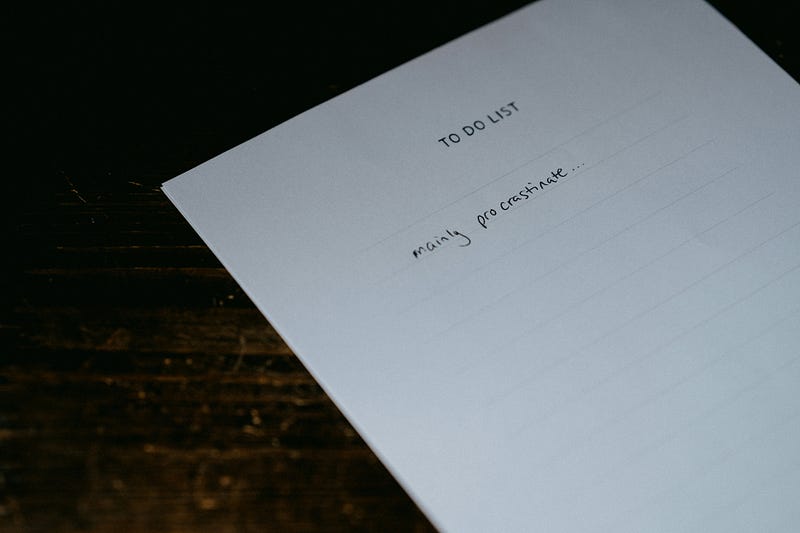
My first ever experience of the term procrastination was likened to laziness because that was what I was made to believe. I used to imagine how lazy I was whenever I pushed off a task. But that by itself is such a surface-level interpretation of procrastination as a whole. And it is easy to link procrastination to laziness as a result of the similarities that exist between how one acts when one is lazy, and when one procrastinates.
It was that thing of having to pick bits of both and conclude that one serves the other. This went further to the typical excuse of “I just don’t have enough time.” The go-to justification of having to find ways to beat down the idea of my inability or unwillingness to do the work. However, in another view, it isn’t necessarily a way to give an excuse if we look deep into the picture in a frame.
Procrastination and laziness/time management control are 3 completely different things. And it may be surprising that procrastination has very little to do with laziness. It may appear to you (if you think procrastination has anything to do with laziness) that "I just feel lazy, that’s why I’m moving this off to a better time."
Procrastination is far less complex than we may believe it to be
Procrastination is psychological, essentially irrational. It is more of an occurrence due to an inability to regulate the emotions we feel at the time we have the tasks at hand than it is an issue of laziness or poor time management.
We don’t actively write on our to-do list that we will not do a task or pick up our phone and tell Siri or Google Assistance “Hey Siri (Hey Google), can you remind me to procrastinate by 4:pm today?”
Picture this: you are looking at your desk filled with piles of work, or your to-do list on your note, and you think "This feels like an overwhelming thing to do now, let me rest a little, I will find a better time to do it, let’s say tomorrow”.
Tomorrow comes and the same thing happens, and you eventually end up having to be more overwhelmed by something we wanted to happen at a better time, After all, if I move a task to a time I feel much better, shouldn’t that make the whole thing run smoothly?
Instead, we feel much more pressured, we feel physically and mentally exhausted, we feel less satisfied, and we work less than our potential cap because of the shorter time frame we have at the time we finally do the work.
Why do we procrastinate?
You may ask, why then do we procrastinate if we feel worse after? If you follow along, we procrastinate for a series of “emotional irregularities.”
Most of the reasons we procrastinate stem from how we feel, and the difficulties we face in understanding and managing our emotions. This emotional irregularity spreads into different aspects of our being, these include some of the following.
- Work-reward practice in our childhood.
- Worrying about failure.
- The chase for motivation.
- Fear.
- Perfectionism.
- Low self-esteem.
- Lack of belief in our abilities.
Ultimately: Procrastination, by itself, is a mechanism for coping with negative emotions associated with specific tasks — feelings like self-doubt, low self-esteem, anger, sadness, frustration, feeling unloved, unappreciated, feelings of boredom, anxiety, stress, and insecurities. In other words, we procrastinate because of how we feel at the moment.
Reward
The idea is that our brains are naturally wired - from how we were brought up as kids to associate doing specific tasks with incentives fueling it.
Think back to your childhood. How did your parents or caregivers motivate you to do something you didn’t want to do?
They probably offered you a reward. Right? To take you to the movies, buy you toys, make you watch your favourite animation, or even give you money, candy or a meal. You know what I mean yeah?
When I was much younger, my dad would promise to buy me a bike if I had a good result. It was motivating even though he never did because there was always another good set of grades I could get the following school session and another promise that came into the picture.
As we grow into adults, our brains tend to shy away from tasks that lack immediate rewards, especially if they seem tedious or unenjoyable.
Several studies have shown that overusing the extrinsic reward as a peak form of motivation deprives the individual of deriving the benefits of experiencing the intrinsic reward for the tasks. Not only does it decrease internal motivation, but it also causes a dent in the level of trust an individual has in themselves.
While the reward system isn’t bad when the right amount is utilised, there might have been no regulation of rewarding when we were much younger, and now as adults, we struggle to take on certain tasks.
The relief we get from avoiding a task acts as a reward for procrastination. It’s a bit of a conundrum: procrastination is born from negative emotions, but it ultimately leaves you feeling worse than when you started.
Sometimes we are scared to fail.
The thought of failing seems like such a humiliating thing, especially considering it may go against how we perceive ourselves. We may look at ourselves as individuals who ought to have figured things out or the idea of what society has made us believe; “if other people can do it, so can you” and if we assume we will be unable to do it, or that we do not have the required skills or competencies to do the task, we resort to procrastinating the task, to limit us from putting ourselves in the position where we fail.
We may believe that we may appear less of ourselves when we fail. Like we cannot look up to ourselves. After all (we think) how can an autonomous individual be tagged a failure?
The fear of failure usually happens subconsciously, due to underlying factors such as the influences of our environment, our limiting beliefs and domestication (how we were made to interact with the world). Have you ever found yourself in a situation where the fear of failure was holding you back from taking a leap of faith? Do you fear failing?
This fear can make us dwell on a fixed mindset, making us believe that we either have something or we don’t. The other side of this coin is us being the fool. Which conversely is supposed to be the case. We are supposed to embrace being the idiot, fail, and learn and grow; The Utility of the Fool.
The utility of the fool according to Jordan Peterson, is being willing to play the role of — in its necessity and usefulness — a beginner, to be willing to risk being back at the bottom.
The beginner, the fool, is continually required to be patient and tolerant—with himself and, equally, with others. His displays of ignorance, inexperience, and lack of skill may still sometimes be rightly attributed to irresponsibility and condemned, justly, by others. But the insufficiency of the fool is often better regarded as an inevitable consequence of each individual’s essential vulnerability, rather than as a true moral failing — Jordan Peterson.
Getting the essence of motivation mixed up
You might find yourself postponing tasks until you feel more motivated or in a better mood because you’ve linked task completion with your current emotional state.
For instance, watching TikTok videos may appear far more instant-gratifying than cleaning your room, which can feel dull in comparison.
We may want to push tasks off because we may believe in the idea that we ought to get a certain level of motivation before we can begin the tasks at hand. However, motivation isn’t supposed to be a preliminary to doing all the work. We shouldn’t crave motivation to do all the tasks, rather, we should be focused on being inspired to do the work, doing the work, and being motivated to do more work.
Inspiration — Work — Motivation ♻️
Motivation is not a fixed metric system, where you remain motivated for as long as possible. There will be days when you are low on motivation, and the tendency to have a low motivation gauge extend for a long period is high. This can be due to certain underlying issues you may be experiencing.
We can’t always be motivated. However, the idea of wanting to be motivated all the time can make us procrastinate tasks so long we are unmotivated at that moment.
Fear
We may delay certain tasks for fear of the outcome. The fear of experiencing the outcome we predicted. For example, we may be scared to go for a medical test for the fear of seeing the results in the diagnosis that we have what we fear we will have.
The fear and anxiety can make us push tasks aside to play it safe. To avoid having to bear the pain of having our fears come true.
This fear can come out in different forms. One may be scared to apply because they fear being rejected. You may be scared to make that medium post because you are scared of not having reactions or for the fear of sounding stupid.
As a result, we develop fear and struggle to get the work done. We opt to push the tasks aside and see if we can wait till we get a better mood or feel less scared about it. Yet, whenever we think about the situation at a later time, our fears skyrocket again.
Fear of failing, fear of being rejected, fear of finding the answers we dread, fear of experiencing our worst fears.
Low self-esteem
Sometimes an individual may procrastinate because he/she doesn’t see themselves as someone worthy or capable of doing the tasks. Low self-esteem can make someone see themselves less, and in seeing themselves less, they lose faith in their ability to take on something that may put them out there.
Having an overall poor sense of self-value or essentially having poor opinions about yourself can make one feel less among their peers or coworkers, making them overvalue other individuals before them.
Everyone lacks confidence in themselves one way or another, one cannot be a completely confident individual, there are specific things one won’t be able to do, and that’s fine. However, a person with low self-esteem feels more unhappy and unsatisfied with themselves. They struggle to hold themselves on high importance or high value, and that makes doing certain tasks difficult for them to handle, making them prone to procrastinate.
A person with low self-esteem can struggle to receive positive feedback. This is so because the compliment to one’s endeavour usually doesn’t correlate with their self-story. This can raise a level of suspicion and mistrust in people’s feedback.
For people with low self-esteem, there is a fear that comes with having people validate the negative self-perception that is held in them. It isn’t such an amusing this to experience. The idea that people will see them for how they see them makes them prone to procrastinate the tasks, to avoid facing that preconceived embarrassment.
As a result, the tasks keep piling up, stress and anxiety levels skyrocket, self-esteem takes a nosedive, and self-blame becomes a constant companion.
I need this to be perfect
People may choose to avoid tasks because they believe they won’t do it well, or that they will fail in the task altogether. The fear that we may not be able to give our best, and have whatever it is we want to do be as good as it can get.
We want to be able to craft and design a work that is of peak appearance, and if we realise that we won’t be able to do that, we worry and doubt our abilities to do the tasks properly.
It goes back to the idea of believing that one has to be able to do something well, or one doesn’t at all. Which is a fixed mindset trait. That one is either good or bad. There is no in-between.
But no one is ever truly good at something if they do not start somewhere and learn as they progress.
To the mind of a perfectionist, there is no room for errors, and all that is to be done should be done perfectly. Since they are unable to do it perfectly as intended, the tasks get avoided and put aside.
How do we overcome procrastination?
Ultimately, even when we know that procrastination will make us feel worse later, we still choose to avoid the task and indulge in the momentary relief of not doing the thing. Paradoxically, the relief one experiences temporarily is what makes procrastination’s grip stronger. So, the next time you catch yourself procrastinating, remember that it’s not about laziness but a complex interplay of the emotions that run through you.
Be kind and compassionate with yourself
We can learn and choose to speak to and treat ourselves like we would to a friend in need of help; with kindness and compassion.
Be kind to yourself. Give yourself room to make mistakes. Know that it is okay to have imperfections. It’s okay to fail.
And you don’t have to beat yourself about it.
Debunk the idea of wanting to be motivated before you work.
Motivation as a drive for work is not a sustainable practice.
Often, we find ourselves waiting for motivation to strike before taking action towards a goal. However, this approach can lead to inconsistency and a lack of progress. It’s more effective to focus on building strong habits and discipline, which in turn can lead to improved outcomes over time.
So, instead of relying on motivation as the driving force, it’s important to prioritise consistency and discipline to achieve the desired results.
Break tasks into smaller but effective bits
One effective approach to managing tasks is to break them down into smaller and more manageable pieces. By doing so, you can tackle each piece separately and avoid feeling overwhelmed.
This can help you stay focused, be more productive, and ultimately achieve your goals more efficiently.
Reflect on how you feel
Every day, you should spend a designated time convenient for you to reassess, and reevaluate the emotions you feel.
Reflection enables you to become self-aware of how you feel. Learning the dynamics of how you think, act and behave. The emotions you feel and how they shape how you are. You get to learn how to not let your current feelings control how you act (watching TikTok and avoiding tasks when one is experiencing sadness doesn’t stop the sadness, it extends it), rather than learning how to manage and regulate the emotions that are overwhelming for you, and making your temptations unsatisfying.
Make hard tasks easy to do.
Find what feels easy (but effective) and works for you. Like doing them in segments or doing hard tasks first, then progressing from there. Try to remove every roadblock!
I have come to realise that it is easier for me to clean my dorm when I think of cleaning only individual places at a time. I start with my kitchen, then my room then the toilet. This makes the cleaning process less tasking when I visualise cleaning my entire room at once. At the end of the cleaning, I see that I’ve spent 3 hours (or more in some cases) and I feel less stressed.
You should make it easy enough that it becomes pointless, but to do it in effective but less stressful ways.
Make tasks enjoyable to you.
Find fun in doing your tasks. You could choose to listen to music while you do them. You may choose to do your work with a group of friends, colleagues or classmates, or you may choose to read in specific places that appeal to you.
However, you should be sure that these enjoyable means don’t strip you of the essence of doing the task; being distracted. They should be the fuel to your fire.
Don’t set yourself to work all the time under pressure.
Working under pressure can be ideal once in a while, especially when things become unpredictable.
However, if you repeatedly set yourself to work under pressure even when you know you would have been able to do it long before the pressure starts, you rob yourself of having you do your work to the best of your true potential every time you are under stress.
You don’t have to figure out how to perfect it. Just start and learn from there. Instead of telling yourself you are going to do it later.
Conclusion
Understanding this complexity is the first step toward breaking free from its grip and unlocking your productivity.
So, what’s the takeaway?
You are not lazy, you certainly are not bad at time management, you just need a little self-reflection and self-care. Don’t be hard on yourself when you catch the procrastination bug.
Recognize that it’s a psychological maze, and you have the power to navigate through it.
By acknowledging the emotional triggers and learning to manage them, you can reclaim control over your time and tasks.
This isn’t the end of our conversation; it’s just the beginning. I’d love to hear from you. What are your procrastination struggles if you have any? What strategies have worked for you in overcoming this sneaky habit?
Want to receive this type of content via email, sign up here to join my newsletter.


