Why do we need to associate pain with the turning point for finding purpose?
Our „extreme” biology shows that both pain and joy ( on a psychological level) look the same at a biological level. However, pain wires our brains in much deeper ways and makes us addicted to a vicious circle of challenges and struggles until we decide to understand the underlining problem and solve the initial trauma and rewrite the story we tell to ourselves.
So why do we assign a negative connotation to a transformative moment when confusion is taking place and we don’t know if this is good or bad?
The 4 reasons why we process negative emotions with a bigger impact on affect than positive emotions:
- The right side of the brain dealing with negative emotions is linked to long term memory
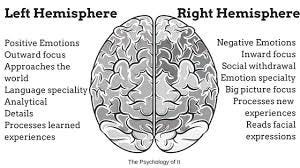
If we look at the relationship between the part of the brain that processes these emotions and at the other specialties of the same hemisphere we see that there’s a connection between the long term memory and processing big picture events and negative emotions. As such, we’re much more inclined to associate these things and also still crave new experiences that bring that feeling again into the processing until we can aligned it in our big picture puzzle. As soon as the learning from that event is figured out in the big picture, the addiction to similar painful situations might stop.
2. We are 80% more likely to remember a negative experience than a positive one (according to Thomas & Diener, 1990).
As such, the hardwiring of the brain is formed by learning from negative experiences. As children, we learn that if we touch something and we get injured, that is something we shouldn’t do anymore. Then, as we grow up, we learn more prevention methods around this same experience and we consume 4 times more energy to prevent than the pain we would experience if we’d go through the event again. But of course, since we are not cats, we don’t have more than 1 life and exposing ourselves to physical injury so many times is not good for us.
3. Pain is addictive and gives us self-righteousness which feeds the ego
From the neuroscience and chemical explanation of negative emotions in the brain to the psychological effect of it, there’s only one step. As soon as we experience pain and our brain has learned to align that in the bigger puzzle of our life, the left side of the brain which deals with processed learnings from different events will deliver a false positive over this trauma and create a halo effect to hide the real pain and make it less painful by exposing it to the judgment of others under the form of different stories of self righteousness which feed our ego and tell a new story about our trauma from a positive perspective. This is already a point that many authors like Tony Robbins talk about under the format of the science of happiness.
This brings me to point number 4 which is…
4. We tend to control more bad feelings than we would on positive ones
As we tend to remember the bad emotions more, we also spend much more time processing those bad emotions and more time avoiding the pain. Therefore, there’s a big chunk of time to be managed related to bad emotions. Our instinct about time management then kicks in and will reorganize and dress up the emotions into either positive learnings or simply say “fuck it” as Mark Manson says. There’s a whole mainstream industry focusing on helping you control bad feelings called “self-help” and the empowerment of the individual.
The mainstream “self-help” and empowerment of individuals movement
So what about emotional pain. How does that come about?
I am very much a WHY person, wanting to know why things happen a certain way and what I should do to change those things if I can. Wanting to know ( from self-help books) though, doesn’t really solve anything. It keeps you busy with understanding the mechanics of pain without really doing anything to lower the pain. Or.. maybe it does if it helps you accept it and let go of rejecting it and feeling it until you feel it no longer like Shakespeare said in this article that deals with the path to accepting it which is part of the empowerment movement. Both profit a lot from people searching for ways to feel better about themselves.
However since I mentioned I am the rational one who always tries to understand why we feel pain and how does psychological pain feels, I will introduce you to my research on the topic which might also come to a point of solving the vicious circles of pain.
To deconstruct psychological pain we need to understand what are the different layers on which it may occur.
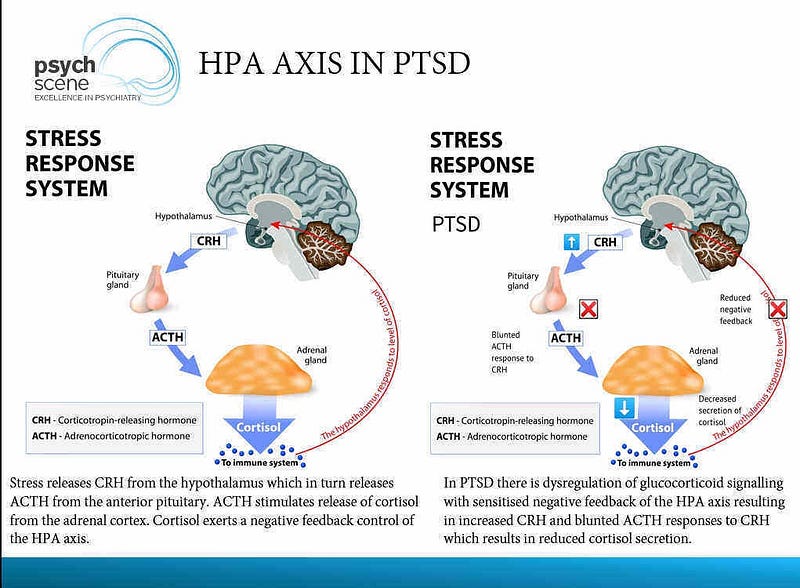
It starts off like a stress response system and then it adds a blockage between the communication of the stress hormone cortisol with the brain about its negative impact on the body. As such, this negative emotion keeps on being pumped into our body until our brain can waken up again to take control over the release of this stress hormone.
One of the most important lessons from here is the ability to have a BIG enough impact on the cognitive brain to wake up the function of controlling the release of cortisol. As such, if we look at experience design for example and novel writing we see that the author makes sure it introduces a state of discomfort with the plot rising tension, but it makes sure it gives you a resolution to it so by the end of the novel you are back on an optimal level of tension.
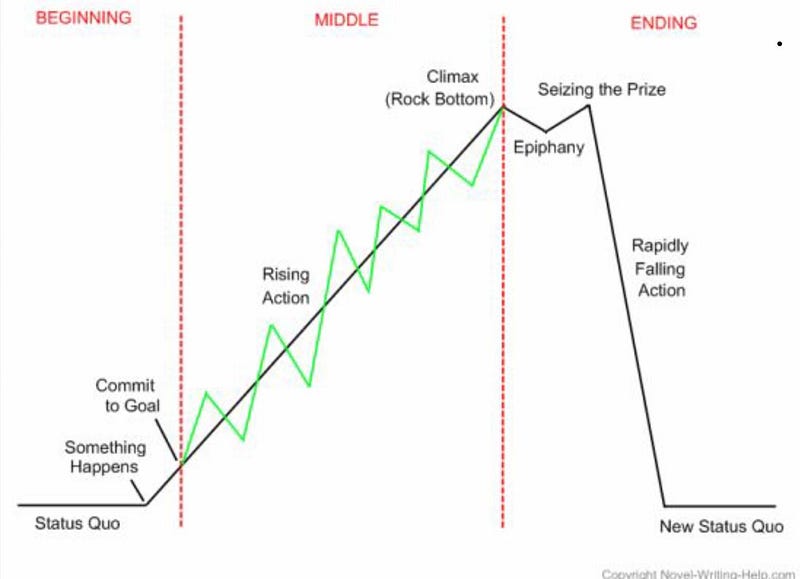
However, when an unpredictable event happens in your life, you may not be able to calm down yourself and awaken that cognitive brain to regulate your emotions. That is especially true if you are a child. This is why most of our profound traumas are not necessarily huge dramatic events, but with a powerful enough impact on our vulnerable limbic brains, and without enough cognition to fight back and of the stories we then tell to ourselves about what happened, this easily goes directly into the subconscious brain where is deeply engraved in the reptilian brain as a major trauma. This event then becomes our major trauma which will influence most of our experiences as adults in life.
If we are able to tackle the powerful events and the story behind it and deconstruct it as adults, then we are halfway closer to taking our lesson from it and making it the new wiring of our brain which might influence a new position about the purpose we have in life. As a consequence, we could say that powerful experiences shape us. Goalcast is a website promoting a lot of these stories of people who succeeded and changed their life after a traumatic painful event. You can see here one that inspired me today to write this article.
Mark Manson again speaks about reframing the narrative of your trauma into a success story of your life. As mentioned before, there’s a whole industry focusing on helping us reframe our traumas and maybe that’s also why it represents a good inspiration for finding purpose.
Finding purpose in our modern society
As Simon Sinek said in Finding your Why, the purpose is a matter of pursuit of your most deep values which impacted you the most. So coming back to the pain definition, we might say that if you unlocked the story of your deepest trauma, you may have found your purpose of what you can heal for the rest of your life through different activities that reflect this inner motivation to escape your initial hardwiring.
But to be honest, I find ALL that bullshit!
Pain reframed into a story that glorifies pain as a learning process for finding happiness is still pain relived over and over again!
So how do we break the circle?
We need to see pain as for what it is. It is a feeling that is not processed as a cognitive activity until we give it meaning. The more we give it meaning and we base our purpose on it, the more we form a pathway in our brain to relive and access back the initial trauma. Our brain will never overcome the trauma if we wire the trauma in the center of all our actions ( the definition of purpose being exactly this one).
In my belief, there’s a bigger and bigger need to work on the discipline of the mind. The more we avoid going into the inner work of the further we are from living a happy life.
Discipline does involve some pain!
The way in which most articles talk about happiness involving some level of pain is this. However, my stand on this is that the way they speculate introducing pain is by setting discipline of the mind.
Let’s look at the Maslow Pyramid again. I wrote an article about this some time ago which I find relevant again and again and seems to become the center of my research on rewiring the brain.
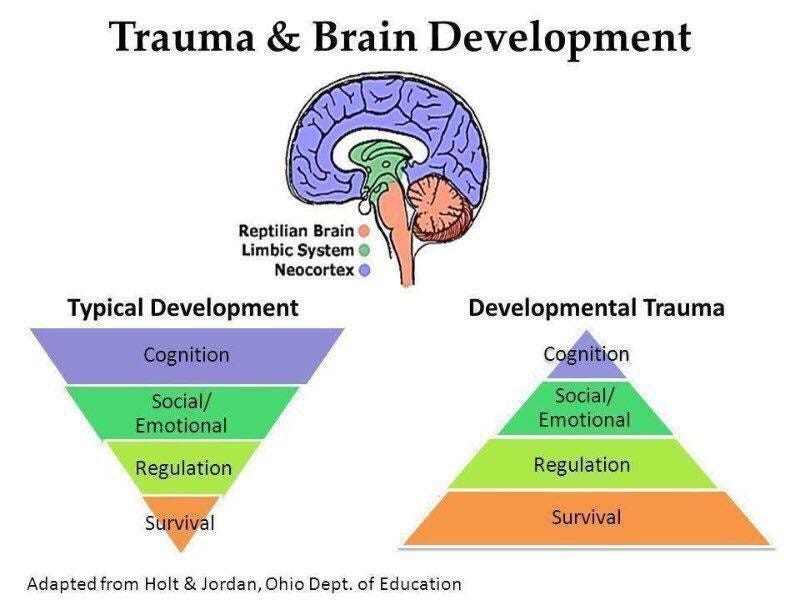
We need to spend more time using our cognitive power and less time assuring our survival needs. As such, self-actualization behaviors might look like this as explained by Maslow in his last book on human nature. These behaviors will help spend less time on cognition of already lived situations and will enable us to incorporate more experiences and experiment with new soul-enriching events outside of our comfort zones. Using the biggest part of our brain for its rightful power will bring about more happiness than living in the limited space of the primary brain in our evolutionary journey. New feelings will emerge, a larger spectrum of emotions, more resilience, and more acceptance and less pain and sensitivity will come from inverting the lenses of how we perceive our brainpower. Despite having the image of a traumatized brain there on the left of the picture above, we are all traumatized when we take our purpose from pain. We all depend on the pain more than the cognition in order to calibrate our lives. So why not shift that?!
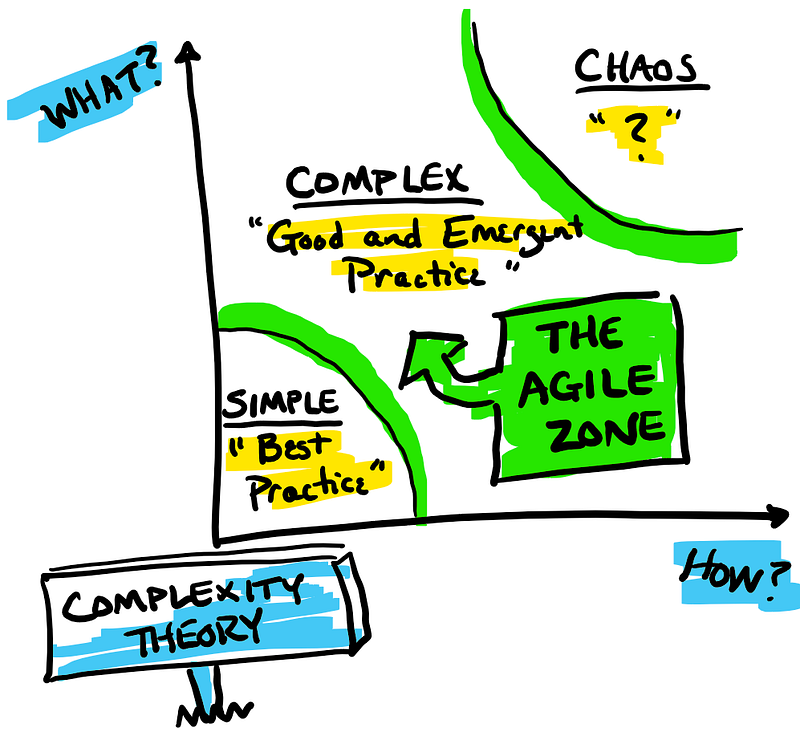
But living on these extremes consumes us more than allows us to live. True balance is not about the extremes of pain or joy but about the fuzziness and grey of the area of uncertainty and complexity in the middle.