
Inspiration | Life
Why Do We Live and Die?
Is life the beginning of the end or the end of the beginning
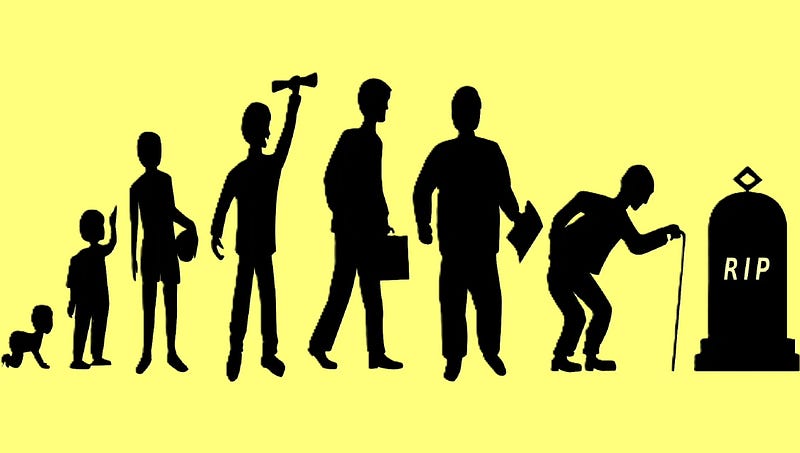
What do you have in common with every person on the planet? All of us are born into this world and will take a final breath one day. It happens to the best and worst of us.
One thing for sure is no one gets out alive! But what if there is more to birth and death than appears on the surface? Let’s look at some thoughts, insights from others, and questions to consider as we continue our life journey.
Life and death?
Since it happens to every person alive, why does it catch so many by surprise? And why do we do our best to avoid thinking about it? Could it be because we don’t want to face the inevitable until it happens?
How do you see life and death? Are you like most of us who want to live without thinking about the end?
There are so many unanswered questions about life and death, a few of which include:
- If life is for the living, who is death for?
- Is death the end or the beginning of something new?
- There is death in life, but is there life in death?
It is a fact that life leads to death 100% of the time. Estimates are that more than 100 billion people have died in all of history. No one gets out alive (at least not by earthly standards).
However, one person in those 100-plus billion people who died rose from the dead to live forever. He has answers for those who believe in Him, and some of us will one day join Him.
We are guaranteed two things in life — change and death. Oh, and taxes for most, but not everyone. Each person must face change and eventually die. Facing his death, Steve Jobs made a profound statement:
“No one wants to die. Even people who want to go to heaven don’t want to die to get there. And yet, death is the destination we all share.
No one has ever escaped it, and that is how it should be, because death is very likely the single best invention of life. It’s life’s change agent. It clears out the old to make way for the new.” Steve Jobs (1966–2011)
I have yet to meet anyone who didn’t have at least some fear of death. One of the most devout Christians I have ever known, my first wife, died from cancer at only 51 years old. We knew where she was going, yet death did not come easy for her or me.
“Life asked death, ‘Why do people love me but hate you?’ Death responded, ‘Because you are a beautiful lie and I am a painful truth.” Author unknown
Some say they do not fear death, but they nearly always change their mind when the time comes. As the old saying goes, there are no atheists in foxholes.
Before conception in the womb, you did not exist. Science claims that all matter has always existed in some form. If true, it means the individual atoms that make up your body have always existed and will continue to exist after you die. Your form will change, but your substance will continue to exist. But are atoms really eternal?
Then there are those non-material things that exist in the form of human consciousness, thoughts, feelings, love, hate, good, evil, heat, cold, sound, energy, and gravity. What happens to them? Do they continue to exist in their non-materialness?
“I do not fear death. I had been dead for billions and billions of years before I was born, and had not suffered the slightest inconvenience from it.” Mark Twain (1835–1910)
How you see life and death depends on how you think. Does all of existence only exist in your thoughts, or is there something more? One thing for sure is no one can think for you. Your thoughts are yours and yours alone.
“Every man must do two things alone; he must do his own believing and his own dying.” Martin Luther (1483–1546)
Similarities of life and death
Life and death can each bring pain. Life in the form of physical pain. Death in the form of emotional pain to those left behind.
Life can bring happiness in the form of pleasure and satisfaction. Death can bring happiness to those who believe there is more after this life.
Plants die and spring to life continually. A seed must die in its current form to bring forth life. Since all life precedes death, isn’t it possible death also precedes life?
While every life has a beginning and an ending, what happens in between makes each unique.
“Every man’s life ends the same way. It is only the details of how he lived and how he died that distinguish one man from another.” Ernest Hemingway (1899–1961)
As people know you in life, they can also know you in death. In each case, you exist only in their mind. After death, you will be remembered by those whose lives you touched. Your legacy exists in the minds of those who remember or learn about who you were. Nothing material will last in its current form forever. Is this true for those non-material things as well?
“The fear of death follows from the fear of life. A man who lives fully is prepared to die at any time.” Mark Twain (1835–1910)
If only we could see life and death differently. Perhaps understanding its contrasts can help.
Contrasts between life and death
Life blesses us with a new beginning each day, but death is final. Life is short, while death is forever. Or so we think.
When life comes into the world, great joy can exist. When death takes someone out of the world, great sadness occurs.
To be born is to die. Is to die to be born?
With no light, there is only darkness. With no darkness, there is only light. We see life as light and death as darkness. Yet, is this true? In life, darkness exists. Is it possible that in death, light exists?
“Life isn’t just about darkness or light, rather it’s about finding light within the darkness.” Landon Parham (1981-present)
What is the opposite of life? Nothingness? Would that make the opposite of nothingness life?
“I will love the light for it shows me the way, yet I will endure the darkness because it shows me the stars.” Og Mandino (1923–1996)
Here’s what one of the greatest poets of all time and the father of transcendentalism had to say:
“It is the secret of the world that all things subsist and do not die, but retire a little from sight and afterwards return again.” Ralph Waldo Emerson (1803–1882)
These final words come from the well-known writer, poet, academic, and philologist, best known as the author of The Lord of the Rings.
“End? No, the journey doesn’t end here.
Death is just another path, one that we all must take.
The grey rain-curtain of this world rolls back, and all turns to silver glass, and then you see it.” J.R.R. Tolkien (1892–1973)
Did Emerson and Tolkien have inside information? One might hope so!
Final thoughts
There is much to consider about life and death; a million written words could not do it justice. Since you are alive now, why not strive to live the best life possible? It will end soon enough, yet there is this day and hopefully many tomorrows.
The most enduring thing about life is our relationships. We will continue to live on in the minds of those we leave behind. May their memories of us be good, filled with love, joy, and laughter!
Be like the tree in your life. So long as there is the earth, sunshine, and rain, grow your roots as deep as you can, reach as high into the sky as you can, and extend your reach as far as you can. Make every attempt to use your remaining time and life wisely!
Lastly, for my fellow Christians, take to heart the words of the Apostle Paul:
“For to me, to live is Christ and to die is gain.” Philippians 1:21 (NIV)
BillAbbate| LinkedIn |Twitter| Medium| Facebook| AmazonAuthorPage | NewsBreak | Truth
Bill Abbate Leadership Writer and Editor in ILLUMINATION
Thank you for reading this article! If you enjoyed it, please check out the others below! Medium boosted each!


