
Why Do We Habitually Create Suffering For Ourselves?
If we investigate and really see the harm of something we can ‘let it go’…
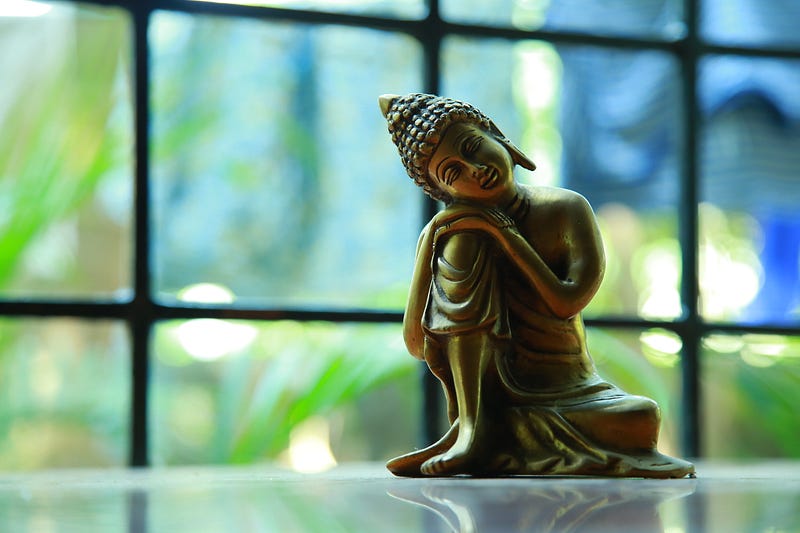
Buddha says “don’t cling to things” but it is hard for us to understand what this really means. We need to investigate, contemplate and reflect on our thoughts, speech and actions to the point where it becomes natural for us to do the right thing more often than we do the wrong thing. This is practice. We continue to practice until we start to get it right and realise the fruits of our labour.
We feel that we don’t cling but results show us otherwise. Clinging, grasping and attachment. These are words which really take some investigation. We come at everything with our own back catalogue of understanding, perception, personal experiences and views therefore we all interpret things differently. This is why it’s so important to take Buddha’s guidance as our foundation and investigate thoroughly using our own learning experiences.
The same as we can’t learn new things without studying, we can’t make our learning concrete without embodying it through practice, putting it into action, testing theories out for ourselves. We are not deemed to be wise until we have analysed and know for ourselves.
We can begin to decrease the amount of suffering we cause ourselves by paying attention to the small details in our everyday life. Being mindful, reflecting on what we think, do and say and how it affects us and others we come into contact with.
Instead we often repeat our mistakes without learning:
- we cling to our opinions and views, thinking we are right and not wanting to back down
- we grasp at having, getting or becoming
- *we attach to everything we come into contact with starting with our own bodies so that everything becomes ‘me and mine; our possessions, our wealth, our family, all material and intellectual things
This all leads to suffering. Once we accept that we are the masters of our own destiny and, in fact we create our own suffering, we can begin to look for a way out of it. We can interpret the Four Noble Truths for ourselves thus:
- I accept that suffering exists
- I can identify the causes of my own suffering
- I am able to work out a way to end my suffering
- I will work to end my suffering
So, how can we start to detach? What steps can we take?
Here are three daily practices which will help you to identify and work with the causes of your personal suffering:
One.
Practice mindfulness — sati — taking note of things as you go through your day:
- Do you always react in the same way to certain situations? How can you begin to change that?
- Do you recognise things that are habits and which perhaps no longer serve you? Begin to drop them and notice any lightness you feel as a result.
We often hear that the definition of insanity is doing the same things over and over again. We repeat things, cling to our own views and opinions and ‘do what we have always done’ simply because we haven’t looked for or tried another way.
Just for today: try to do the exact opposite of what you would normally do on at least one occasion. Maybe it’s how you react to something happening or what you say in response to a question or criticism. Analyse how it makes you feel — do you feel ‘better’, calmer, stronger?
Two.
Take some time to reflect daily, meditate if you can for even 15 minutes, just enough time to slow the mind down and make it calm. Then you will find that you can hear your natural mind speak to you and you can also make it listen to you for a change. How does that feel? Amazing? Empowering? This is training the mind, making it work to support you. Begin to try work for longer periods. I find 45 minutes is a good length of session to settle in, get through any initial resistance and then relax into the good part.
Three.
Begin to release feelings of needing to be in control, of having to achieve something, of wanting to gain something; practice this and opening up (maybe through meditation) to the idea that there is no ‘me’ and ‘other’. Start to really feel that we are all the same, we all have the same needs and suffering, this will help to loosen the ego’s grip on you.
*I will write a separate article to address Attachment since it is a complex and important topic and will link to it here asap.
We can control the level of our own suffering — it’s a process — but by watching our mind, investigating and noticing where we are going wrong we can begin to turn it around and, by reflecting and letting go, we can learn how to bring more peace and calm to our everyday lives.
You may also like these articles: