
Why do we exist? (# 2)

.jpg)
This series of articles describes a theoretical explanation for the origin of dark matter. Article 1 — Dark Matter Mystery — developed the idea that the fabric of space could be more like a memory foam mattress rather than Einstein’s rubber sheet. Dark matter is a consequence of space being a way of storing information. The challenge is identifying a scientific explanation that justifies the memory foam hypothesis.
One way of understanding the rationale for the memory foam hypothesis involves re-thinking whether there is a rational explanation for what might have happened before the Big Bang. This re-thinking includes thinking the questions of why the universe exists and what its purpose might be.
Is there a Theory of Everything?
Thought experiments have a long history in facilitating the evolution of scientific ideas. This and subsequent articles comprise several thought experiments. These articles do not provide a comprehensive description of reality. An aim is to challenge existing thinking about various scientific ideas. The articles are based on a ‘What if’ way of developing an understanding of reality.
Scientists’ Theories of Everything (TOE) tend to be self-limiting i.e. limited to things that can be measured. They generally do not attempt to explain sociological phenomena such as whether there is a reason why our civilisation has arisen in its current form. Ideally, a comprehensive TOE would consider the possibility of a causal/feedback relationship between the evolution of scientific ideas and the evolution of society. These articles support the view that there is such a relationship. Changing the focus of scientific research to examine such a possibility could lead to new discoveries in science.
While these articles are only thought experiments, hopefully they challenge readers to rethink:
- Why ancient ideas about the origin of the universe as a way of understanding cosmological problems such as the origin of the Big Bang, dark energy and dark matter, have not been more widely examined before funding additional expensive experiments where there is limited evidence to show that current experiments are resolving outstanding problems; and
- Why the scientific method is often dogmatically applied when there is substantial circumstantial evidence that the application of the scientific method constrains researchers’ ability to explain many sociological and psychological phenomena.
Plato’s insights are still relevant
While researching the ideas in these articles, I repeatedly came across references to Plato’s books. I gradually realised that some of Plato’s ideas provide a useful framework for explaining how our society has evolved. The following is one example.
Plato’s theory of justice as described in his book ‘The Republic’ is recognised as one of the most important developments in philosophical thought in Western civilisation. His book is one of the starting points for the thought experiments outlined in these articles because a comprehensive TOE would ideally discuss whether there is a scientific purpose behind the evolution of our society.
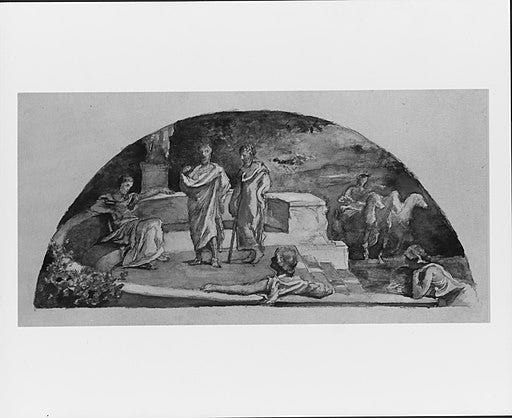

Plato discussed many ideas in The Republic; the following are just a selection chosen to help develop an understanding of the evolution of our civilisation for this series of articles:
- The human soul is comprised of three parts — an appetitive, a spirited and a rational part. … Each pulls the soul in a different direction, as they vie for dominance. Ultimately, we decide which part to feed.
- Democracy is the worst form of government and would have a tendency toward self-dissolution. Since individuals, dominated by their own desires and lusts, would vie for power and become embroiled in political conflict, democracy would tend toward entropy. A just society, by contrast, would be one in which the wise ruled and members of other strata knew their place.
- The rational part should rule the others as this is the only path to harmonious relations between an individual, who has a conflict-ridden soul and the polity, which, unless guided wisely, otherwise also tends toward disharmony.
A key idea in Plato’s discussion is that in order for a utopia to persist, everyone needs to ‘know their place’. The following articles provide a scientific argument that our world is designed to select ‘human souls’ who exercise their free will and who know their place.
Our reality is similar to a play where participants take turns in acting different roles in the nightly performances in order to identify what role, if any, they will take in another universe.
Source of our world
Our world is one of an infinite number of possible worlds. The creation of our world is a way of exploring one of the infinite possibilities inherent in the ‘ALL’ which contains a projection that we call our world. These articles describe thought experiments that: (i) explain the origin of the ALL; and (ii) provide a logical explanation for why the ALL would create a universe like ours.
The ALL contains many possible universes. By taking into account various features in the development of our civilisation, deductions are made about what role our world plays in exploring possibilities inherent in the ALL. The physical laws of our universe create an environment suitable for exploring many possibilities. These physical laws are of secondary importance to the ALL’s over-riding attribute which is to keep manifesting more and more complex possibilities.
Plato’s ‘human souls’ are not the only type of people who could populate a world. A purpose of the ALL, however, is to explore what could happen in a world consisting of a selection of Plato’s ‘human souls’. The ALL is not interested in an individual ‘human soul’, the ALL’s primary attribute is to explore increasingly complex possibilities. The ALL’s creations include exploring how worlds filled with particular types of ‘human souls’ might evolve.
While we may think that exercising our free will is an important driver in the evolution of our world, the ALL is focussed on the overall outcome, not what happens to individuals.
What is the purpose of life?
Our world is a projection on a screen, an imaginary boundary, within the ALL. This projection is the means by which the ALL explores mathematical possibilities inherent in the ALL. Strategies for exploring these possibilities include creating ‘human souls’ and endowing them with free will. These strategies include giving human souls the experience of a continuous cycle of birth, death and reincarnation.
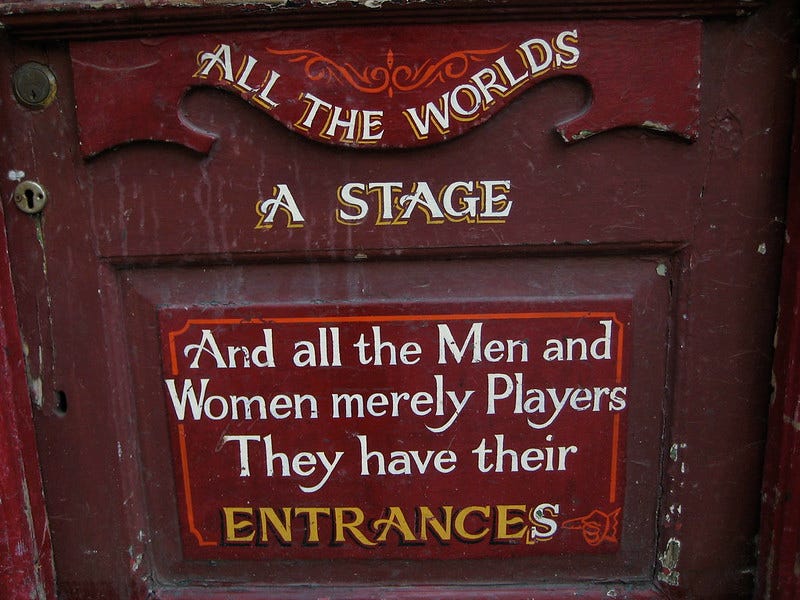
One of the roles of an individual in our world is learning how to exercise free will and enjoy life. Events in our world facilitate identifying individuals who have a desirable combination of Plato’s parts (appetitive, spirited and rationale) and who know their place. Each of us has free will to decide whether to reincarnate in a universe where a fundamental feature is Plato’s concept of justice.
In brief, our world is a prelude to exploring the idea of ‘What if Plato ruled the world’. Findings of current scientific research seem to be consistent with the theme of exploring Plato’s concept of justice. Ideas in these articles are potentially testable as the logical foundations underlying this approach provide new explanations for the force of gravity, dark matter and dark energy.
Some ancient esoteric teachings claim knowledge of the origin of our universe is unknowable. The interpretation of modern scientific research outlined in these articles, however, suggests that the origin is logically explicable. Science evolves in order to describe the universe. Insights about the foundations of science may be used to influence the future evolution of our society.
Each of these articles ends with a question that is intended to encourage exploration of your intuitive knowledge. The question for this article is:
Is growth in scientific knowledge related to social evolution?
For a copy of all 47 articles in this series please see my book ‘Orbiting Stars’ available at https://www.amazon.com/dp/B09L6VK75K/ . My amazon page also includes books containing some of my earlier ideas.