avatarChristopher P Jones

Free AI web copilot to create summaries, insights and extended knowledge, download it at here

3003

Abstract

ade a pilgrimage to the Abbey at Silos, she experienced a dream of giving birth to a dog.</p><figure id="6558"><img src="https://cdn-images-1.readmedium.com/v2/resize:fit:800/1*6590wJS_oOg3M6XI2LjH8g.jpeg"><figcaption></figcaption></figure><figure id="7a42"><img src="https://cdn-images-1.readmedium.com/v2/resize:fit:800/1*aHoEXbEE_T4bFBt2SvEHSg.jpeg"><figcaption>Saint Dominic (c.1685) by Gaspar de Crayer. Oil on canvas. 240 × 160 cm. Museo del Prado, Madrid, Spain. Image source <a href="https://commons.wikimedia.org/wiki/File:Claudio_Coello_-_St_Dominic_of_Guzman_-_WGA5129.jpg">Wikimedia Commons</a></figcaption></figure><p id="925e">St. Dominic’s first biographer and successor, Jordan of Saxony (d. 1237), tells us about this vision in his <i>Libellus de principiis Ordinis Praedicatorum</i> (“Booklet on the beginnings of the Order of Preachers”):</p><blockquote id="a02a"><p>“Before his mother conceived him, she saw in a vision that she would bear in her womb a dog who, with a burning torch in his mouth and leaping from her womb, seemed to set the whole earth on fire.”</p></blockquote><p id="8868">The meaning of these signs is to suggest that the “blazing” word of Dominic would be carried around the world. Hence the presence of the globe — which has long stood as a signifier of sovereignty over the earth, was used by Roman emperors and modern-day monarchs alike.</p><h1 id="a4ce">Origins of the Legend</h1><p id="c504">The link between the dog and the Dominican Order — who became known as the “watchdogs of the Lord” — is thought to have come from two sources combined.</p><p id="d9fd">The first is the association often made by medieval hagiographers between preachers and the image of a watchdog. Preachers would go out into the world, and like a dog barking to frighten adversaries, would “hound away” evil thoughts and practices.</p><figure id="d65a"><img src="https://cdn-images-1.readmedium.com/v2/resize:fit:800/1*YI-wR93DCvlIQBo1LgNSwg.jpeg"><figcaption>Detail of ‘Allegory of the Active and Triumphant Church and the Dominican order’ (1365-1367) by Andrea da Firenze. Fresco. Santa Maria Novella Church, Florence, Italy. Image source <a href="https://commons.wikimedia.org/wiki/File:Andrea_di_Bonaiuto._Santa_Maria_Novella_1366-7_fresco_0011.jpg">Wikimedia Commons</a></figcaption></figure><p id="4560">The link was reinforced by the tale of Dominic’s mother, and then solidified by the representation of Dominic and his followers in art. Imagery began to appear with dogs pitted against wolves, representing the faithful against the heretics.</p><p id="f6b3">Take the fresco painting above, located on the walls of Florence’s Santa Maria Novella Church, where the artist Andrea da Firenze (d. 1415) portrayed the Dominican preachers as fervent dogs setting upon a pack of wolves. Read as an allegory, it tells us much about the mission of the Friars Preachers: to combat the non-believers through preaching.</p><h1 id="4dc7">Pun Intended</h1><p id="b9da">As if they confir

Options

m the link between the Dominicans and dogs, at some point in time it was noted — and often repeated — that the Latin name for a member of the Order, <i>Dominicanus</i> (a Dominican monk), had more than a passing resemblance to the Latin <i>Domini canis</i> (meaning Dog of the Lord).</p><figure id="7440"><img src="https://cdn-images-1.readmedium.com/v2/resize:fit:800/1*nZszOh3wrN-g6DVUpOy4SQ.jpeg"><figcaption></figcaption></figure><figure id="c14a"><img src="https://cdn-images-1.readmedium.com/v2/resize:fit:800/1*6dSeJ4jUEEPf-X5SuGpaQg.jpeg"><figcaption>Saint Dominic (c.1655) by Gaspar de Crayer. Oil on canvas. 273 × 176 cm. Museo del Prado, Madrid, Spain. Image source <a href="https://commons.wikimedia.org/wiki/File:Gaspar_de_Crayer_-_Saint_Dominic.jpg">Wikimedia Commons</a></figcaption></figure><p id="84c5">History is not clear on the exact chronology of these associations. It’s likely that the connection with dogs was already made before the <i>Domini canis </i>pun was popularised.</p><p id="1787">Still, the wordplay makes the link to dogs all the more assured.</p><figure id="1771"><img src="https://cdn-images-1.readmedium.com/v2/resize:fit:800/1*1ynOvd_-tGI9g9CAQzsMuw.jpeg"><figcaption></figcaption></figure><figure id="0385"><img src="https://cdn-images-1.readmedium.com/v2/resize:fit:800/1*07sLFbXYxo9KISCAaUBIiQ.jpeg"><figcaption>Saint Dominic i<i>n Penitence</i> (c.1610–1624) by Luis Tristán. Oil on canvas. 120 × 98 cm. El Greco Museum, Toledo, Spain. Image source <a href="https://commons.wikimedia.org/wiki/File%253ALuis_Trist%C3%A1n_-_St_Dominic_in_Penitence_-_Google_Art_Project.jpg">Wikimedia Commons</a></figcaption></figure><p id="28fc">In art, the appearance of a dog became accepted, especially in the 17th century when a canine friend finds its way into many representations of the saint. And almost always, the dog carries a flaming torch, about to set the world ablaze.</p><p id="6544">Art was an important tool for the Dominicans. Over time, the Order enjoyed the talents of many artists, notably the Italian artists Fra Angelico and Fra Bartolommeo whose paintings are some of the most prized in all of art history.</p><figure id="d294"><img src="https://cdn-images-1.readmedium.com/v2/resize:fit:800/1*igQbKCOI4qGLg6JzYP7H9w.png"><figcaption></figcaption></figure><p id="f49d">If you liked this, you may also be interested in my book <a href="https://www.chrisjoneswrites.co.uk/masterpieces-of-art-explained/"><i>Masterpieces of Art Explained</i></a><i>, </i>an examination of some of art’s most enthralling images.</p><h1 id="f306">Would you like to get…</h1><p id="cabe">A free guide to the <i>Essential Styles in Western Art History</i>, plus updates and exclusive news about me and my writing? <a href="https://www.chrisjoneswrites.co.uk/sign-up-art/">Download for free here</a>.</p><h1 id="ea91">Join me…</h1><p id="7027">On <a href="https://www.instagram.com/greatpaintingsexplained/">Instagram</a> for more great paintings on the go!</p></article></body>

The Symbolic Meaning of Black and White Dogs in Paintings

Old art with surprising meanings
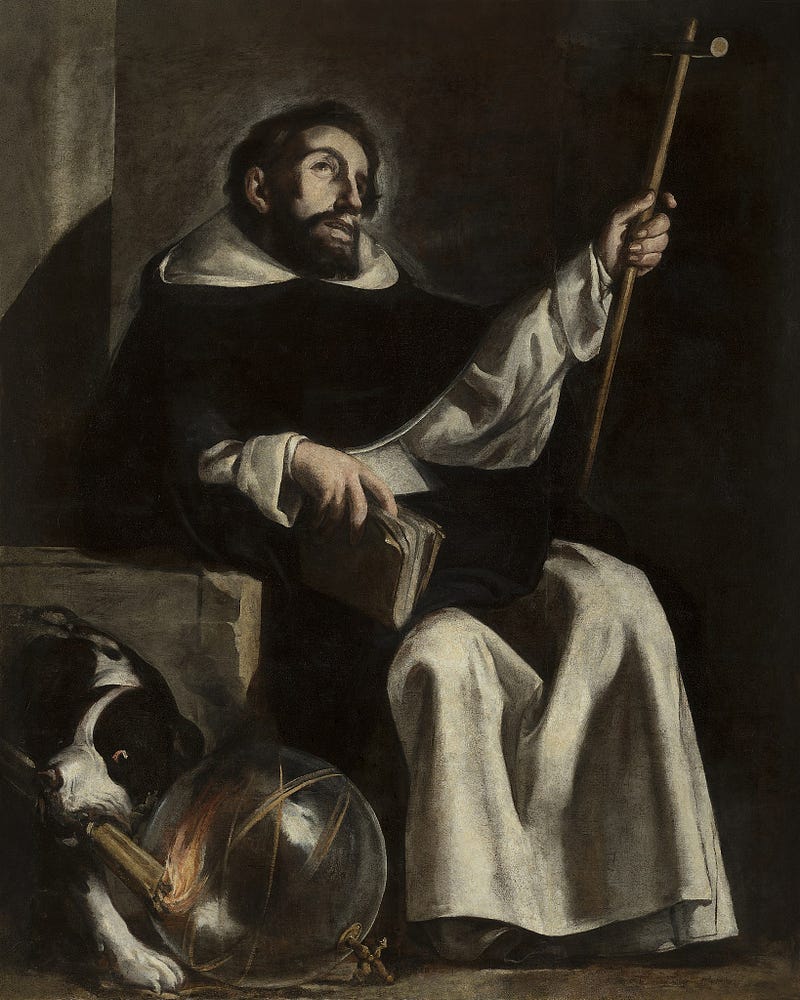
Saint Dominic (c.1650) by Antonio del Castillo y Saavedra. Oil on canvas. 199.5 × 161 cm. Fine Arts Museum of Córdoba, Spain. Image source Wikimedia Commons

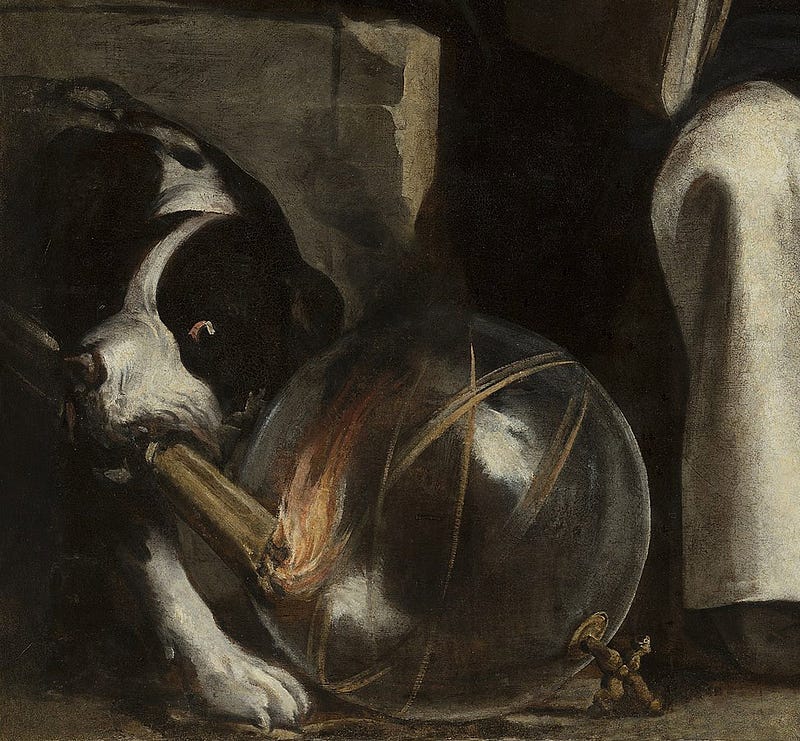
It is hard not to be intrigued by a painting like this. Notice in the bottom left a black and white dog crouched down with what looks like a large cigar in its mouth.

Next to the dog is a globe or an orb. Together, the dog and the globe have symbolic significance. But of what exactly? The answer might surprise you.

The Setting and Background

Looking at the wider painting we see a robed man dressed in black and white.

In art, a robed figure like this is typically St Dominic, the founder of the Dominican Order of preaching monks. He can be identified by the stark colouration of his habit: the white scapular that has come to stand for purity, while the black cloak symbolises penance and mortification. The black cloak gave rise to the alternative name for the Order: Black Friars.
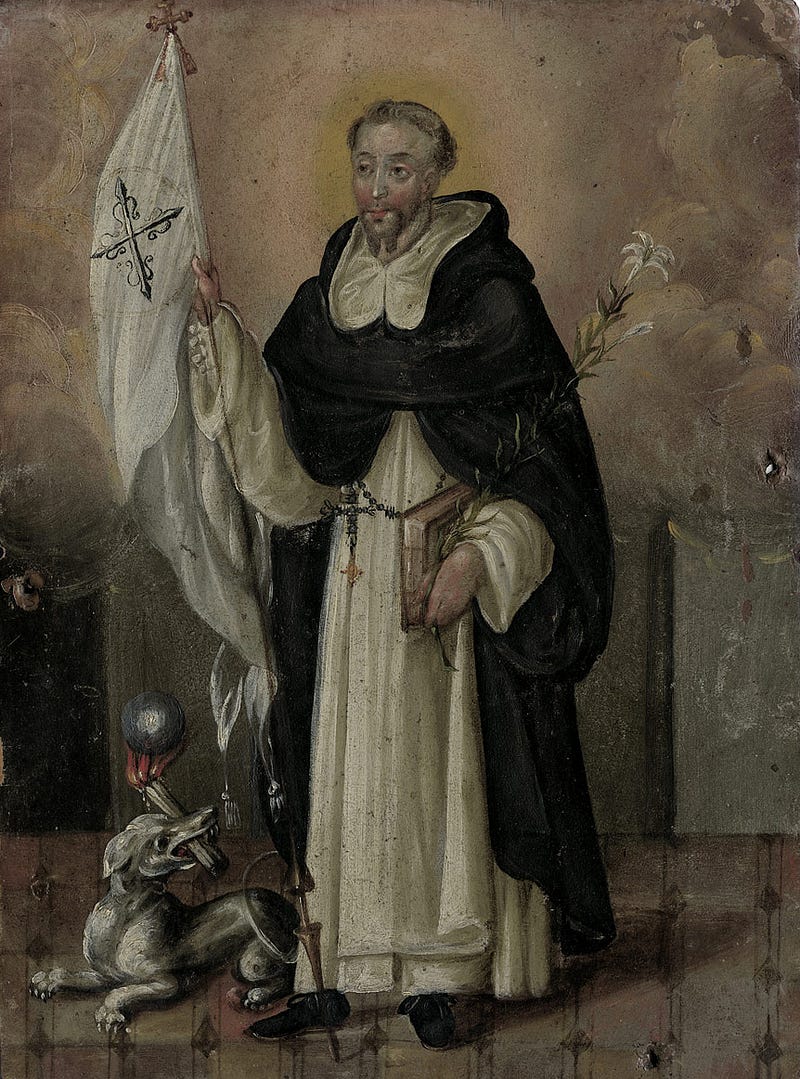
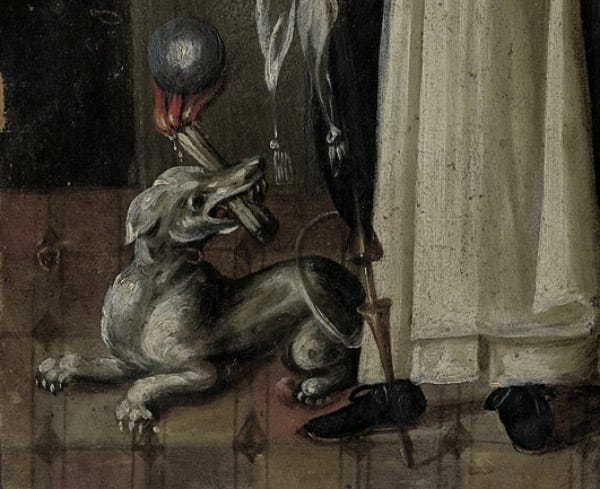
Saint Dominic (c.1600) by unknown German painter. Oil on copper. 22.6 × 16.7 cm. Image source Wikimedia Commons

Dominic became a popular subject in art, especially in Spain, the country of his birth. He was born in the 12th century and travelled throughout much of Europe to spread the message of the gospels.

His scholastic approach to preaching won him many followers; hence in paintings he is often shown rapt in thought, carrying a book (The Bible, naturally), and conveying a wholly reflective manner.

Dreams of a Dog

If you see Dominic in a painting, then look out for a dog at his feet. In keeping with the preacher’s habit, the dog is usually shown as a black and white creature.

The dog is almost always carrying a flaming torch in its mouth. To understand the meaning of this unusual imagery, then we have to go back to the legend of Dominic’s birth.

When Dominic’s mother, later canonised as Saint Joan of Aza, made a pilgrimage to the Abbey at Silos, she experienced a dream of giving birth to a dog.
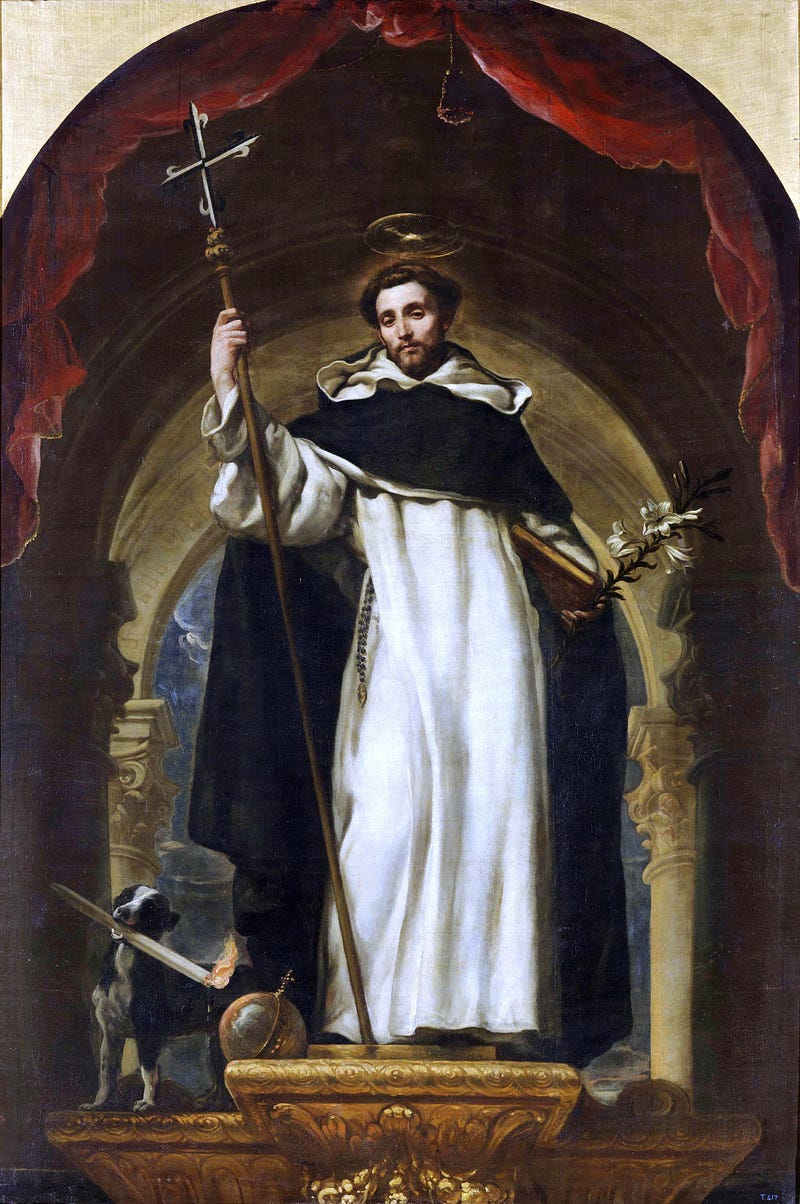
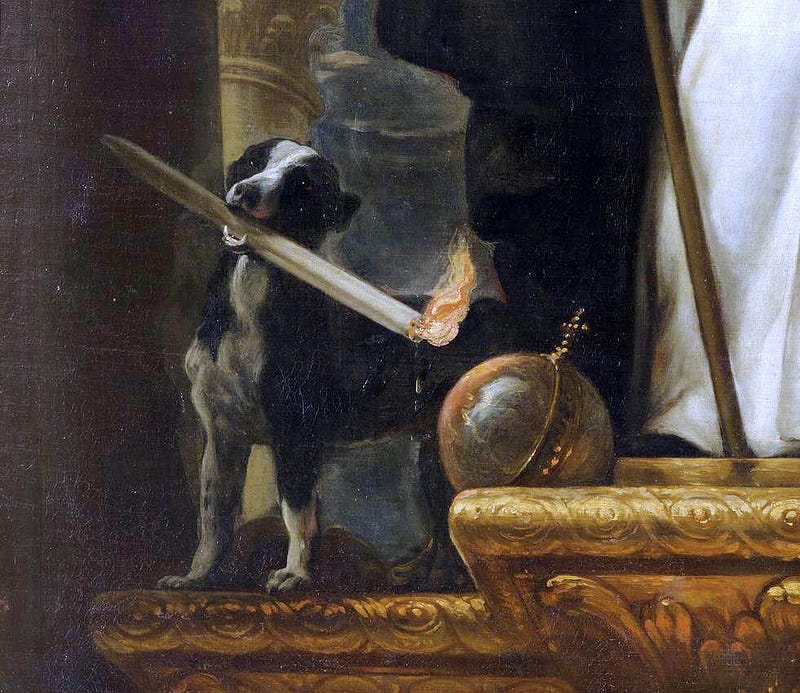
Saint Dominic (c.1685) by Gaspar de Crayer. Oil on canvas. 240 × 160 cm. Museo del Prado, Madrid, Spain. Image source Wikimedia Commons

St. Dominic’s first biographer and successor, Jordan of Saxony (d. 1237), tells us about this vision in his Libellus de principiis Ordinis Praedicatorum (“Booklet on the beginnings of the Order of Preachers”):

“Before his mother conceived him, she saw in a vision that she would bear in her womb a dog who, with a burning torch in his mouth and leaping from her womb, seemed to set the whole earth on fire.”

The meaning of these signs is to suggest that the “blazing” word of Dominic would be carried around the world. Hence the presence of the globe — which has long stood as a signifier of sovereignty over the earth, was used by Roman emperors and modern-day monarchs alike.

Origins of the Legend

The link between the dog and the Dominican Order — who became known as the “watchdogs of the Lord” — is thought to have come from two sources combined.

The first is the association often made by medieval hagiographers between preachers and the image of a watchdog. Preachers would go out into the world, and like a dog barking to frighten adversaries, would “hound away” evil thoughts and practices.
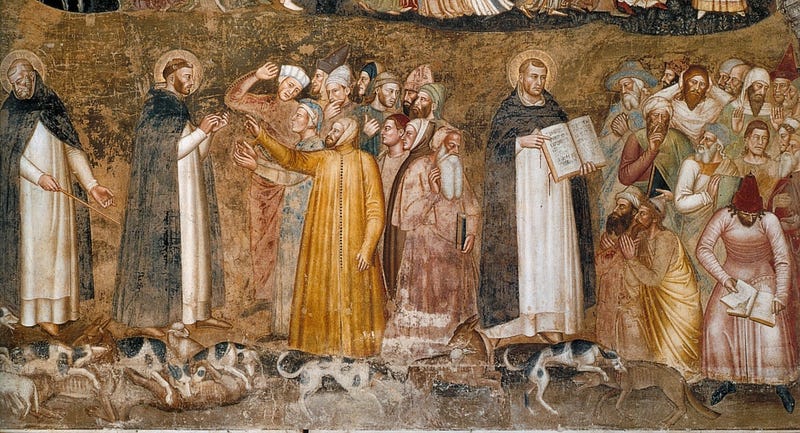
Detail of ‘Allegory of the Active and Triumphant Church and the Dominican order’ (1365-1367) by Andrea da Firenze. Fresco. Santa Maria Novella Church, Florence, Italy. Image source Wikimedia Commons

The link was reinforced by the tale of Dominic’s mother, and then solidified by the representation of Dominic and his followers in art. Imagery began to appear with dogs pitted against wolves, representing the faithful against the heretics.

Take the fresco painting above, located on the walls of Florence’s Santa Maria Novella Church, where the artist Andrea da Firenze (d. 1415) portrayed the Dominican preachers as fervent dogs setting upon a pack of wolves. Read as an allegory, it tells us much about the mission of the Friars Preachers: to combat the non-believers through preaching.

Pun Intended

As if they confirm the link between the Dominicans and dogs, at some point in time it was noted — and often repeated — that the Latin name for a member of the Order, Dominicanus (a Dominican monk), had more than a passing resemblance to the Latin Domini canis (meaning Dog of the Lord).
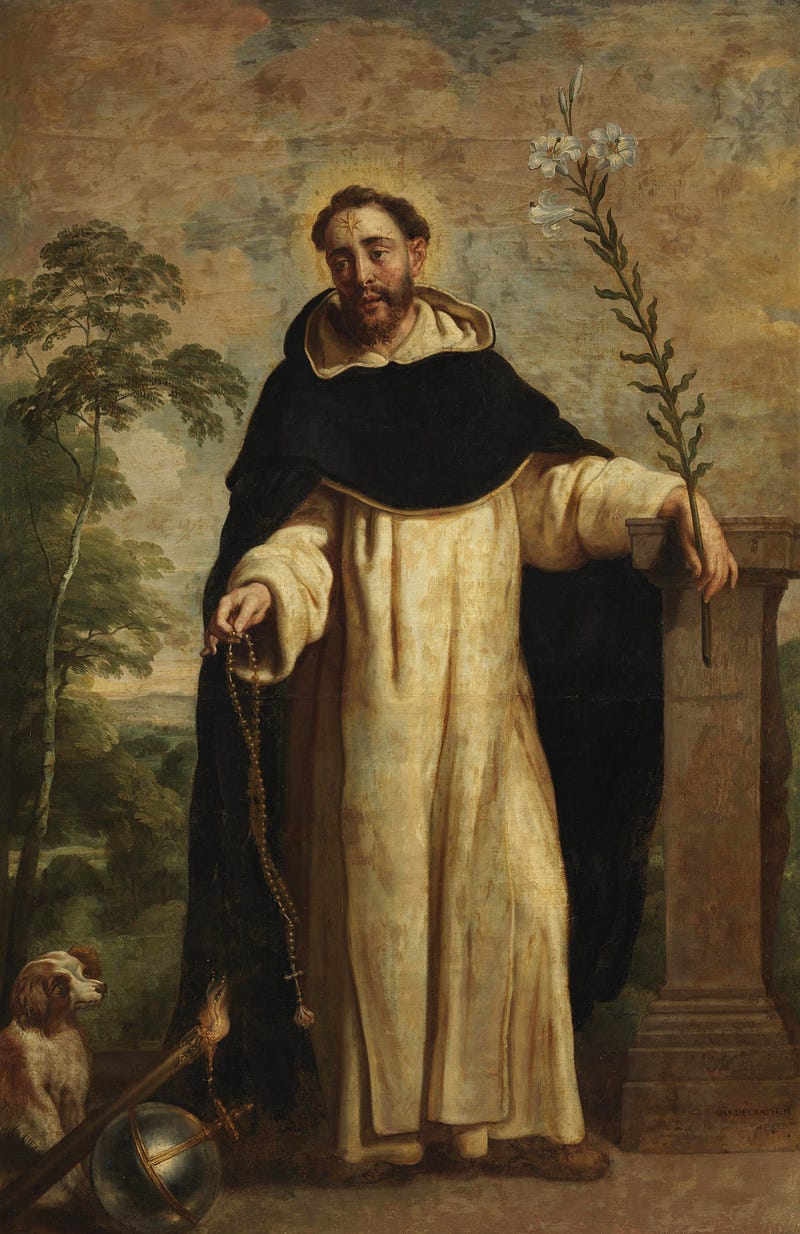
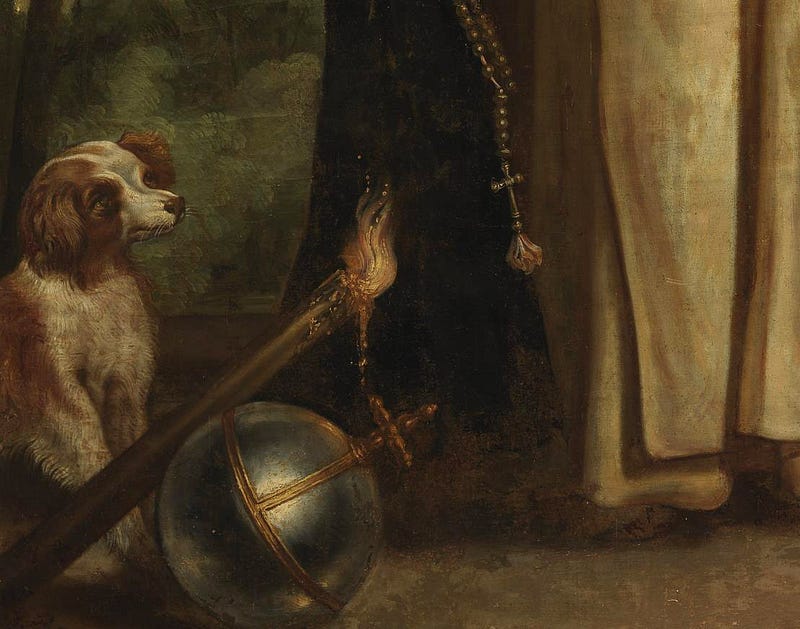
Saint Dominic (c.1655) by Gaspar de Crayer. Oil on canvas. 273 × 176 cm. Museo del Prado, Madrid, Spain. Image source Wikimedia Commons

History is not clear on the exact chronology of these associations. It’s likely that the connection with dogs was already made before the Domini canis pun was popularised.

Still, the wordplay makes the link to dogs all the more assured.
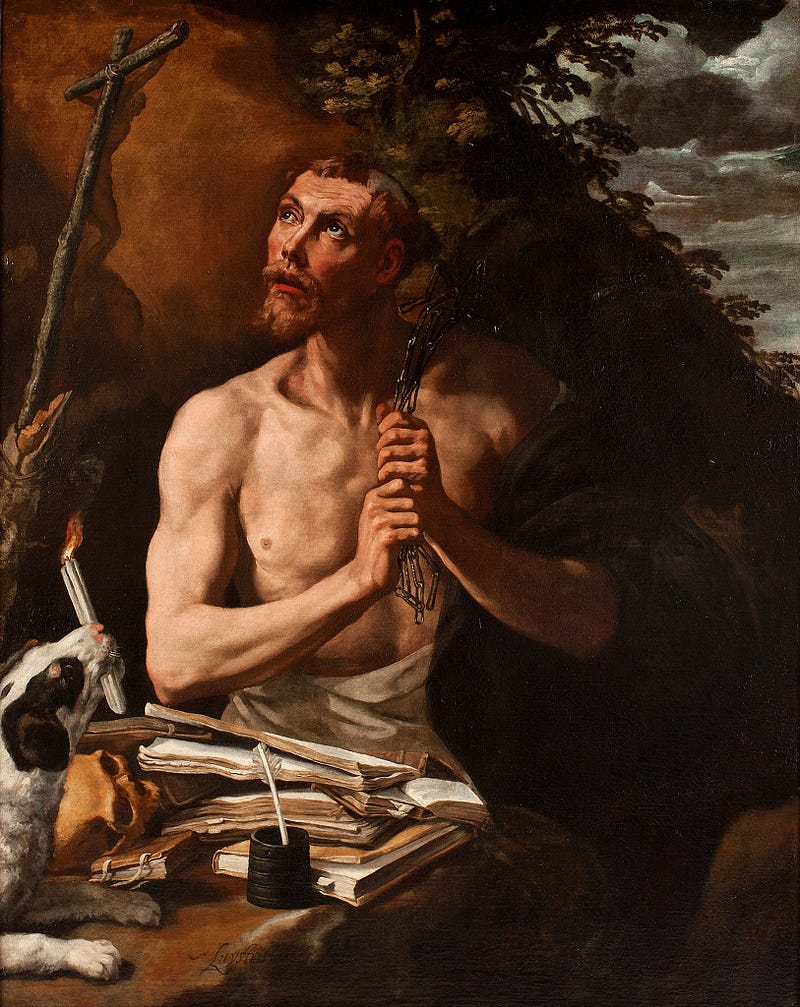
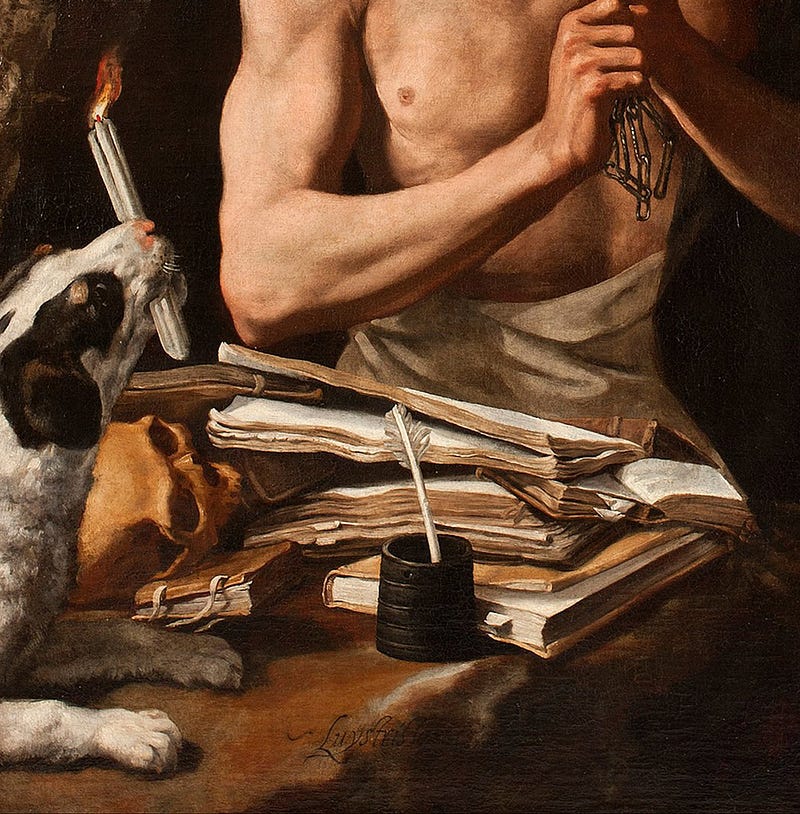
Saint Dominic in Penitence (c.1610–1624) by Luis Tristán. Oil on canvas. 120 × 98 cm. El Greco Museum, Toledo, Spain. Image source Wikimedia Commons

In art, the appearance of a dog became accepted, especially in the 17th century when a canine friend finds its way into many representations of the saint. And almost always, the dog carries a flaming torch, about to set the world ablaze.

Art was an important tool for the Dominicans. Over time, the Order enjoyed the talents of many artists, notably the Italian artists Fra Angelico and Fra Bartolommeo whose paintings are some of the most prized in all of art history.

If you liked this, you may also be interested in my book Masterpieces of Art Explained, an examination of some of art’s most enthralling images.

Would you like to get…

A free guide to the Essential Styles in Western Art History, plus updates and exclusive news about me and my writing? Download for free here.

Join me…

On Instagram for more great paintings on the go!

Art
History
Culture
Dogs
Religion
Recommended from ReadMedium