
Why Do People Still Go to Bookstores?
With the popularity and ease of online marketplaces, why do physical bookstores still exist?
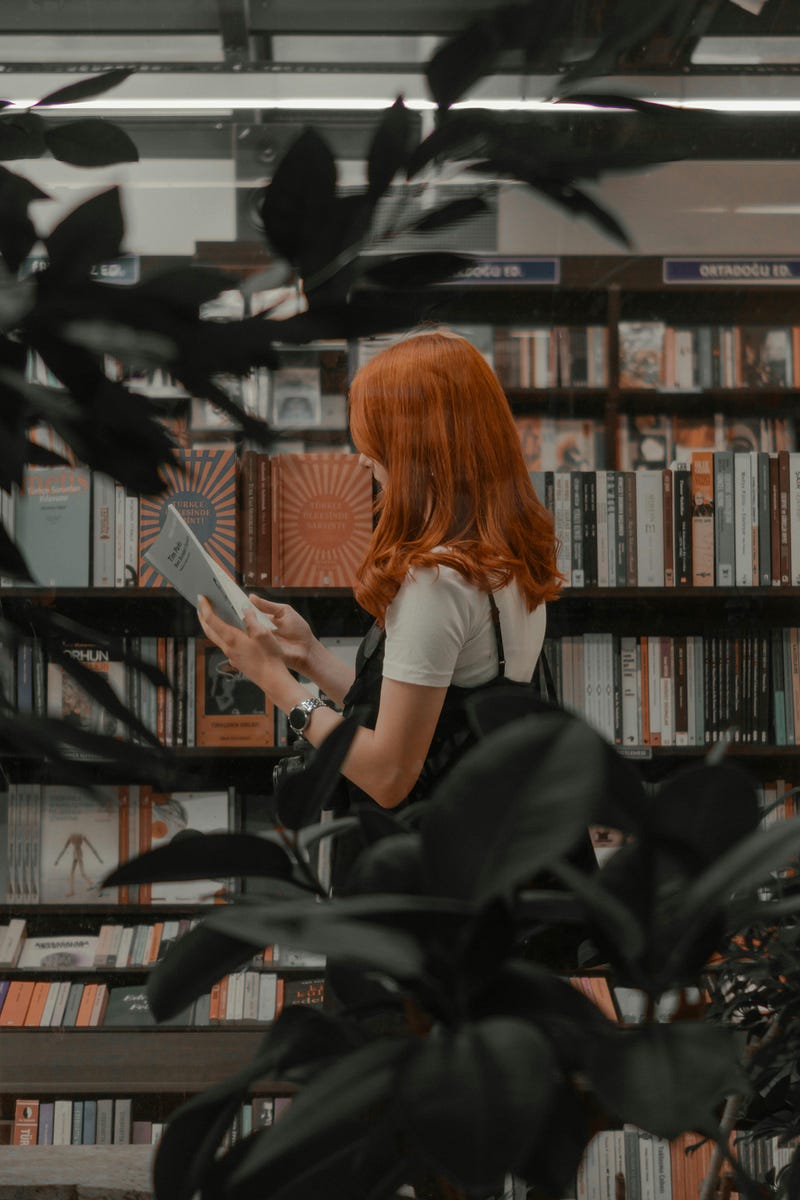
Introduction: With the 2021 Boom, Bookstores Are Back
Why do people still go to bookstores?
Think about that for a second. People continue to bear the costs of travel and physical activity to buy something they could easily order online. Why? In the age of online shopping, why would anybody take that trouble?
Ordering online has multiple advantages. Products are often discounted. There is the comfort factor. And online one can order any title. Offline, you could take a long, cumbersome trip to the biggest bookstore in town, only to find they do not stock your favorite niche, esoteric authors.
And for several years, bookstores did languish:
- In 2018, bookstore sales in the US amounted to $10.28 billion. Which does not sound that bad, until one considers that figure was almost $7 billion higher in 2008. 2007 was the best year for bookstore sales, with $17.17 billion in revenue.
- Sales decreased by a further $2.5 billion — 28.3% — from 2019 to 2020. This was because of the pandemic. People remained indoors. Online marketplaces became the norm.
- According to the American Booksellers Association (ABA), 35 member bookstores were forced due to the decline in revenue to close their doors by late 2020.
- The ABA also projected 20% of the remaining independent bookstores were in danger of closing by the end of 2020.
2020 was a nightmare year for brick-and-mortar businesses. And bookstores were no exception.
However, although COVID has not been eradicated, we have found our footing. We know the precautions. We know the treatments. And business is as a result on an upward trajectory.
The world has not returned to business as usual. But we are getting there.
And bookstore stats reflect that rebound:
- Bookstore sales amounted to roughly $9 billion in 2022, a 38.5% increase when compared to 2020.
- The ABA reports they now have 2023 member stores in 2561 locations, which is an about 20% increase compared to 2020.
- Around 80% of the ABA’s member bookstores reported higher sales in 2021 than in 2020, and almost 70% said their sales in 2021 were higher than in 2019, which was pre-pandemic.
- The New England Independent Booksellers Association (NEBA) reported 30 new members in 2022, which was huge, because usually their membership increases by fewer than 10 stores per year.
- In 2018 the Mountains and Plains Independent Booksellers Association (MPIBA) had 11 member stores in Texas. In 2023 they had 79. Their executive director Heather Duncan believes, of all the states, Texas has seen the biggest bookstore boom.
Precise numbers are impossible to attain. But compared to 2020, when they were closing at the rate of roughly one every week, bookstores have made a comeback.
Although their revenue does not rival the 2000s peak, that was to be expected. Online shopping was always going to change spending habits. But new bookstores are opening across the country, and the existing ones are seeing profit, which seemed remote in the nadir of 2020.
The stats are there. The bookstore boom is real.
Community, Diversity, and Human Experiences: The Reasons Behind the Bookstore Boom
There will always be a demand for physical bookstores because, on an elemental level, there will always be those who are inexorably attracted to paperbacks and book discussions over coffee in bookstores.
As long as there are people who are passionate about books, there will be bookstores.
I said before 2020 was the lowest point in terms of bookstore sales. But even then, the revenue was around $6.5 billion. Which, to me, is a lot. There was always a love for bookstores. I believe the pandemic merely reinforced and reminded us of that.
During the pandemic people were starved of physical, human contact. We remained at home. We went for walks on the roof. There was no automatic, inevitable social contact, such as the kind at colleges and offices.
We had to look for human contact. That was new. That was terrifying.
Thus, in a way, the nadir of 2020 created the boom of 2021. We were lonely, so we went to bookstores to revel in the unspoken bond among ardent bibliophiles.
Bookstores provide something online marketplaces never can: the personal touch. This is especially true of independent bookstores, where the owners personally greet every customer, engage in pleasantries, order specific titles they need, provide recommendations, and just talk.
Besides, independent bookstores are inherently communal ventures. They become entrenched in the landscape, and consequently the spirit, of their neighborhood. Patrons often personally know the owner. There is love there. A desire to see each other flourish.
Independent bookstores will always have regular supporters. That might not be enough to generate profit, which is why many were forced to close in 2020, but bookstores that have existed for years become part of the neighborhood’s identity.
Imagine you have a couple hours to kill before your next class. What do you and your friends do? You go to a bookstore, you have a coffee, you talk to the owner, who has always been good to you, you walk around, peruse, and laugh about the books.
Such bookstores become hubs of activity, social ‘hangout spots’.
Now, one feature which is, as far as I can tell, unique to the 2021 boom, is the push and support for diversity and inclusiveness.
According to the founder of the African American Literature Book Club, the number of Black bookstores, which are run by Black individuals and promote Black culture, increased from 54 in 2014 to 111 in 2021. Today, that number has risen to 156.
Which, mind you, is still only 6% of all independent US bookstores.
One Asian-American bookstore owner, Ms. Chin, recalled how one time her store held an event to raise awareness about Asian hate and managed to distribute 1000+ safety alarms and pepper spray canisters.
Her store has become a ‘literary hub’, with bilingual poetry readings, book launch events, and lectures by both emerging and established Asian-American authors.
These bookstores become safe spots for their patrons to escape violence, discuss current events, exchange ideas, and much, much more.
Said Ms. Chin of her store:
It’s not just a bookstore, it really is a de facto community space. I don’t think we realized we needed a bookstore until we had one.
These bookstores, the ones by and highlighting racial/ethnic minorities, are on the rise in America. Although they are not as widespread as one would hope, they have a passionate, dedicated following, and generate a steady stream of revenue to stay afloat.
They take, but they also give back.
I do not know what it is like to be a member of a minority community. Although I never think about it or identify as such, I am among the majority where I live. The only way I can relate to being in a minority community is through my mental illness.
If I ever found a space where the people truly understood what it is like to be clinically depressed, where I would not only be accepted, but valued, where I could form friendships with kindred spirits, where they would get it, I think I would never leave.
That is what these bookstores are. You are floating in an endless ocean, alone and misunderstood, and then you find a small island where everybody has gone through what you have, where everybody understands, where everybody accepts. Where you belong.
Especially following the pandemic, there has been a surge in such minority-centric bookstores. People have understood the need for equality and inclusiveness and have rallied behind those from their neighborhood willing to provide a safe haven for their community.
And I think that is beautiful.
Never Knowing What to Expect: Tales from an Insatiable Bibliophile’s Bookstore Escapades
Full disclosure: I do purchase books online.
Sometimes I know exactly which book I want. And I know I will not find it anywhere in the city. The authors I generally read are specialized thriller novelists. Their work is not available everywhere. So I go online.
However, most of my books were bought at bookstores. I remember this one time I told somebody off-hand I wanted to plan a day for myself and go to a bookstore because I loved buying books offline. And they looked surprised.
There was no judgement, nothing malicious. But they were puzzled that I, a notorious couch potato, would go somewhere in person when I could just as well purchase what I needed online.
But I have always loved going to the bookstore, especially when I have no specific title in mind, when I just want to peruse and choose.
When I walk into a bookstore I feel like a kid in a candy store. I feel like a kid, period. Every which way I look awaits a new adventure. New reads, new ideas, new feelings.
Every book represents a portal to a different world. It is like being in an ice cream store, except every scoop is a flavor you have never tasted.
Some might taste bad, mind you. I have bought some absolute duds in my lifetime. But the vast majority have been eye-openers.
I get in bookstores what I never get online: the feeling of being lost, in the best way imaginable. I never know what I am getting, what to expect, but I am so, so excited.
I always keep a solid hour at hand when I go to a bookstore. Because I know I will obsessively scan every shelf, pick up and examine multiple titles, always, always end up spending minutes agonizing between two.
There is a term in Japanese: koi no yokan. It describes the sensation when you meet a stranger and you just know they are special and you will fall in love with them down the line.
I have more than once experienced koi no yokan, but with books.
Sometimes my gaze falls upon a book, and even though the cover might not be the most attractive, I immediately pick it up. This has led me to discover several of my favorite authors, like Karen Cleveland, Frank Gardner, Shari Lapena, and most recently, Paulo Coelho.
Well, one of his books. I knew about The Alchemist for years beforehand. But the moment I laid eyes upon Veronika Decides to Die, I knew I would love it, that it would impact my life in a profound way. And that instinct was correct on both counts.
I usually go to bookstores alone, because to me, selecting a book to read is meditation, and company disrupts meditation.
But the few times I have been to one with people, I have always had a grand time, laughing, chatting, discussing books. We have always come out closer.
And finally, bookstores provide immediacy. Even the quickest deliveries take 24 hours. But offline, you can purchase a book within minutes of seeing it.
For all these reasons, bookstores play a critical role in my life. I sometimes spend hours in them, perusing, reading, simply being. I cannot imagine a world without them. I could not live in one.
So I, for one, am extremely glad they are popular once more.
Closing Thoughts: The Enduring Legacy of Bookstores
Despite all that, I am amazed bookstores still exist.
I am amazed any brick-and-mortar shop still exists. You can buy anything online. Where I live we have eight-minute grocery deliveries.
I swear I am not exaggerating, but while I am not proud of this, my pace when reading my mother tongue, Bengali, is glacial. A few days ago I ordered groceries and started reading a 10-line Bengali paragraph. When I was in the middle of pronouncing the final word the order arrived.
Except for their job, people have no real need to step out of their house anymore.
Which, I suppose, is the point. They want to. And that is why everything from clothes to books can still be bought offline. Because they provide an activity to build an outing around.
But bookstores face a second challenge clothes do not: e-books.
E-books and audiobooks are rapidly rising in popularity. They are convenient and occupy no physical space.
So, because bookstores have managed to not only survive, but thrive, despite these impediments, I salute them. If you are reading this and you own or support a bookstore, especially an independent one, you are doing God’s work.
That said, what do you think? Everybody proclaimed online shopping would spell the death of bookstores, but that has not happened yet. Will it?
Or will our passion for physical books overcome the odds?
If you enjoy my writing, please consider joining my newsletter for exclusive content and buying me a coffee. I am immensely thankful for all your support.


