
Why do most Resident and Non-Resident Indians feel pride over India’s progress as India celebrates 75 years of Freedom?
India celebrates 76th Independence Day.
Our obligations to our country never cease but with our lives. John Adams, 2nd president of the United States of America
The feeling of love and respect for one’s country is unconditional support and devotion to self, others, and the nation-author
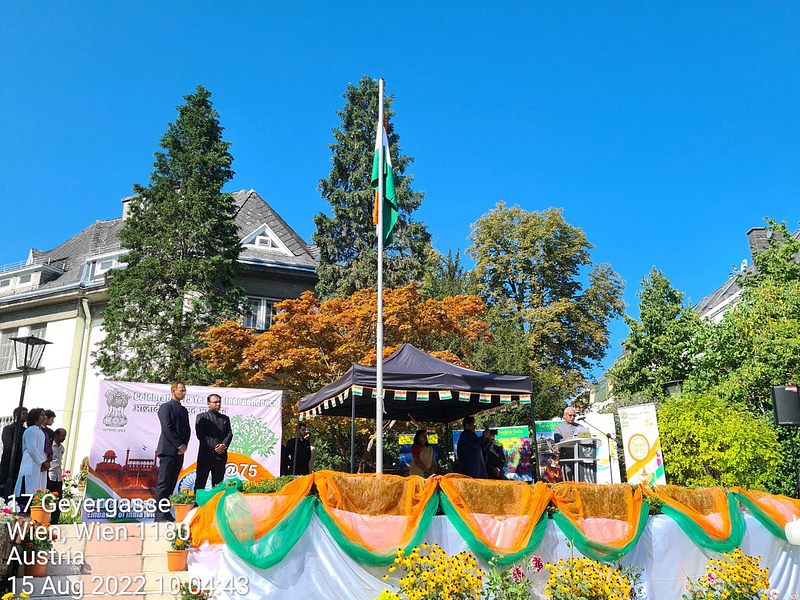
India is celebrating its 76th Independence Day on August 15, 2022, marking its 75 years of Freedom from the clutches of the British.
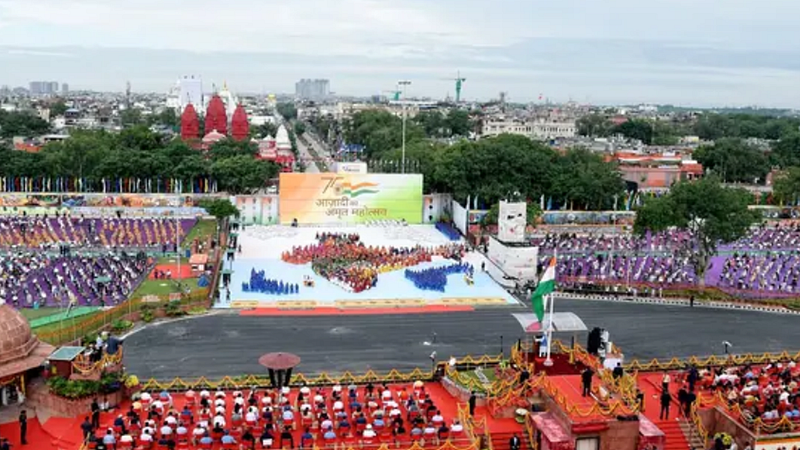
On the occasion of the flag hoisting at The Red Fort, an icon of the freedom struggle in India, Prime Minister Modi said the country’s citizens are grateful to Mahatma Gandhi, Netaji Subhas Chandra Bose, Babasaheb Ambedkar and Veer Savarkar. They spent their lives on the path of duty. The nation is also grateful to the dedication of the freedom fighter; Mangal Pandey, Tatya Tope, Bhagat Singh, Sukhdev, Rajguru, Chandrashekhar Azad, Ashfaqulla Khan, and Ram Prasad Bismil. So many such innumerable revolutionaries shook the foundation of British rule. Further, he said, we, the citizens, are proud of the strength of the women of India like Rani Laxmibai, Jhalkari Bai, Rani Chennamma, and Begum Hazrat Mahal. Indian women symbolise sacrifice and struggle, PM Modi said.
Appreciation for various public personnel for their dedication was also showered by the PM.
A highly ambitious and progressive PM said for the next 25 years, we need to move with a renewed focus on the five resolves: To make a developed India, remove every trace of bondage from our minds, take pride in our glorious heritage, unity of 1.3 billion Indians, and fulfilling our duties.
PM Modi asserted that by the 100th year of Independence, we must work with the vision of accomplishing what our freedom fighters dreamt.
While welcoming the views of the PM, most of the supporting Resident and Non-Resident Indians are determined to help the PM towards the country’s progress.
India is one of the oldest civilisations in the world, with a rich and kaleidoscopic cultural heritage. However, for India, the Vedic civilisation is said to be the earliest civilisation in the history of ancient India.
According to C-14 radio dating, the Archaeological Survey of India (ASI), artifacts found at the Rakhi Garhi, in Indus Valley prove the ancient Indian civilisation began as early as 8000 years ago. The largest and oldest sites of the Harappan Civilization are both in Haryana, India.
From early times Indians lived in harmony and reverence for nature. Ancient India is the home of the most significant Hindu philosophical works like the Vedas, the Upanishads, and the Gita, the fountainhead of Buddhism, Jainism, and Sikhism. India has never invaded any foreign lands but survived tyrannical Muslim and British rule for centuries.
Based on persisting intellectual values, India needs to chart its path.
76th independence day is celebrated with ‘splendour and show’ worldwide by the Indians.
Raja Chari, an Indian-American astronaut from NASA, greeted India from International Space Station to celebrate the 76th Independence Day**.
On Indian Independence eve, I’m reminded of the Indian diaspora that I could see from @Space_Station where my immigrant father’s hometown of Hyderabad shines bright.@nasa is just 1 place for Indian Americans make a difference every day. Looking forward to @IndianEmbassyUS celebration,” tweeted Raja Chari.
While writing this article, my friend Chandra’s sister Ritha Algoo from Durban, South Africa, sent a video showing the celebration in Durban.
A patriotic Hindi song by the local artists in ‘IsiZulu’ language, spoken in the province.
I have a special reverence for the flag hosting ceremonies on 15 August and 26 January. I grew up as a daughter of a police officer, honouring these occasions like a big festival. I recall, as a child watching the preparation for the event that could start a few days in advance.
Police station premises used to be decorated with colourful papers. Guns and swords used to be shiningly polished. My mother would arrange sweet packets for distribution to the public.
My father used to hoist the tricolour flag, and soon some selected girls, including me, would sing the national anthem standing near the flag post.
Then, in a robust voice, my father would deliver a brief speech on the importance of the day, the ceremonial police parade, a forceful police band, a protocol of the day…. Omg, what a beautiful memory lane I have…
India has elections at all levels of government.
People who can’t handle their own family members ridiculously expect the democratically elected government to control and provide free benefits to a large section of the population. It’s undoubtedly not a one-person effort. Such people should realise, question themselves and volunteer their contribution to society.
No country is free from negative criticism. Many people always like to find only faults in others. Those who want to criticise disapprovingly should look somewhere to find an iota of a good action existing in the country and then ask themselves; what have I contributed other than attacking depressingly?
Responsible citizens of India need India, multi-cultural, multi-lingual, secular (means all religions are equal and have no religious privileges), and one rule and one law for all those staying in India.
Most Non-resident Indians strive wherever they are and contribute to the progress of their home and host country.
John F. Kennedy’s historic words inspired his inaugural address.
“Ask not what your country can do for you — ask what you can do for your country”.
See what you can contribute to benefit the public and your country.
Choice is yours
Freedom of mind is the proof of one’s existence — BR Ambedkar
Enjoy the Freedom. Its everyone’s right Tara Desai
Read more at:
- *https://economictimes.indiatimes.com/news/india/independence-day-wishes-pour-in-from-across-the-world-as-india-marks-75-years-of-freedom/articleshow/93567792.cms?utm_source=contentofinterest&utm_medium=text&utm_campaign=cppst
- ** https://twitter.com/Astro_Raja/status/1558951198656499714?ref_src=twsrc%5Etfw%7Ctwcamp%5Etweetembed%7Ctwterm%5E1558951198656499714%7Ctwgr%5E9ee41f40bed228ceccd9d329e80db435a71f2462%7Ctwcon%5Es1_c10&ref_url=https%3A%2F%2Fwww.ndtv.com%2Fworld-news%2Findependence-day-2022-indian-american-astronaut-raja-chari-shares-photo-of-indian-flag-at-space-station-3255585
My special thanks to the following authors for their wonderful contributions Dr. Preeti Singh
Anu Nandkumar Anu Nandakumar
Navi Radjou Navi Radjou