
Why Do Medicines Exist in Multiple Forms?
Identical drugs, non-identical outcomes.
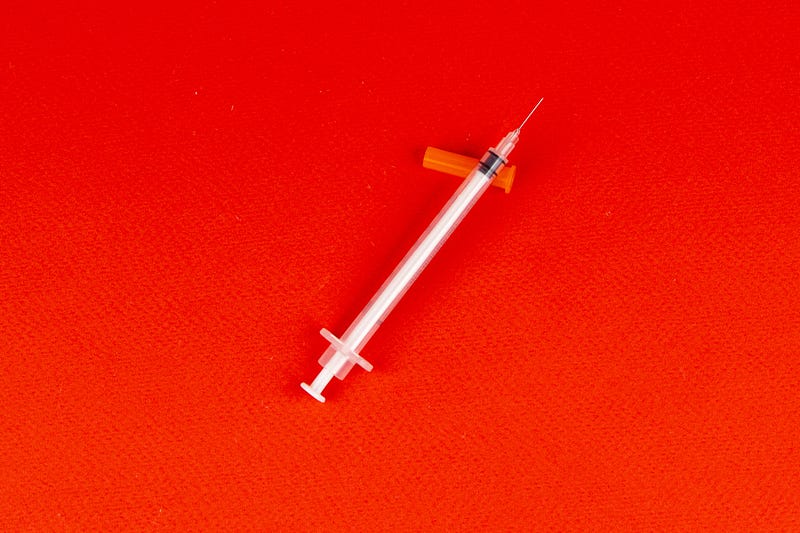
When you step inside a pharmacy, almost all the medicines you see are in tablet and liquid form. Yet in hospitals, these identical medicines are seen in injection form. Why?
Every medicine is developed for a specific therapeutic benefit but the same drug in a different form can change the clinical outcome.
If the drug is identical, how does changing the form alter your body’s response to the drug?
1. Pharmacokinetics: Bioavailability and first-pass metabolism
Pharmacokinetics is a fancy way of saying ‘what the drug does to the body’.
Tablets are the most common drug form (formulation) in the world and for good reason. They are convenient, accessible, and easy to store. But there are also many problems with tablets, the first issue being a lack of complete absorption by your body.
When you take medicines by mouth, they are susceptible to a process called ‘first-pass metabolism’. This is when the oral drug e.g. a tablet, passes through the liver first (hence first-pass) and gets metabolized (broken down) before the remainder is circulated around the body. Drug metabolism is a crucial role of the liver. This means less drug is available to pass into the bloodstream and hence less drug absorbed. In fact, for oral tablets like propranolol, first-pass metabolism can reach up to 85%, leaving less than a quarter of the drug left to enter the blood and be circulated around the body.
This is one key reason why injections are used. Most injections are given into the vein (intravenous). Intravenous administration is 100% ‘bioavailable’ which means all the drug is absorbed into the bloodstream and can be used by the body. First-pass metabolism does not apply to injections because injections are directly delivered to the bloodstream (in other words bypassing the liver) and hence the expected bioavailability of injections is considerably higher than medicines given by mouth.
2. Chemical stability
All medicines, regardless of formulation, must undergo stability assessments before coming to market. One key aim is to find out if the medicine will be fit for use in a given temperature range and how long for i.e. shelf life.
Medicines and food share overlapping similarities. Medicines have expiry dates, as do foods. Once opened, solid food like biscuits and chocolate have a much longer shelf-life than liquids such as milk and sauces. Medicines are the same. Tablets generally have the longest shelf-life and most (but not all) will be fine to use a year later. Once opened, liquid medicines only last for days or weeks whilst injections are single use only due to the risk of bacterial contamination.
Storage conditions also play a role in stability. In the UK, storage is less of a concern because most days here are grey and overcast (yes, I am complaining about the weather) so room temperature is suitable to store most tablets and liquids. However, in hot continents such as Asia, storage considerations require more thought. Liquid medicines placed under direct sunlight for prolonged hours negatively impact chemical stability (which you won’t be able to see). However, physical stability can be seen; you may notice that medicinal creams start to separate into oil and water layers over time.
3. Clinical need
Medicines save lives but the formulation of a medicine can impact on its ability to save lives. In emergency situations, you need the medicine to act within seconds. For example, during a life-threatening allergic reaction (anaphylaxis), epinephrine (adrenaline) is given intramuscularly (injection within the muscle) to reach the bloodstream quicker and have an effect within seconds. Epinephrine does not exist as a tablet form for many reasons, but even if it did, the time it would take for the tablet to work and the amount that gets into your bloodstream because of first-pass metabolism means it would be of little help in anaphylaxis.
If injections work much faster than tablets, why aren’t all medicines developed as IV?
There is a simple, non-scientific reason for this. Injections are painful.
If you ask someone whether they would rather take a tablet or have an injection, you can guess the answer.
Different formulations can also impact side effects. Furosemide is a diuretic (helps the body to remove excess fluid) that exists as both tablet and injection. Giving furosemide too quickly via intravenous injection can lead to temporarily hearing loss (very rare) but this effect is unheard of for furosemide tablets.
Tablets are developed as ‘modified-release’ to change the drug delivery properties. The painkiller naproxen is available as both a standard or ‘enteric-coated’ tablet; this coating reduces stomach upsets because it releases naproxen in the intestine rather than the stomach.
4. Patient preference
This last reason is the simplest one and also happens to be non scientific. Patient preference is a massive factor because we are the ones who decide whether we take the medicine or not.
The best medicine in the world is useless if the patient refuses to take it!
Globally, tablets are the preferred choice. We are used to swallowing food and drink, swallowing tablets is nothing new to us. However, young children may not be able to swallow tablets and will therefore need a liquid formulation.
Some adults dislike swallowing tablets. Giving medicines intravenously as the second option is drastic; some medicines exist in suppositories. However, patient acceptance of suppositories in the UK is low, with many considering suppositories to be too ‘invasive’ (understandable as you are placing the medicine up the back passage). Interestingly, suppositories are much more accepted in France and Spain.
Final thoughts
So it turns out that drug companies do not develop new formulations just to make more profit (although that may well be an incentive). There are many reasons a medicine needs to be developed in a particular form.
You don’t need to fully understand the science behind formulation development, but appreciating that different formulations play a different role for the patient at a specific time is the first step to understanding how these tiny tablets can orchestrate enormous changes to our body.