
Why do Christians Keep Getting the Gospel Wrong?
It’s actually not that complicated.

I served as a youth pastor of a church for six years. In that time, I cannot say with any certainty how much of the curriculum I looked through ended up in the trash. Why? They couldn’t get the gospel right. I don’t mean “right” by my standards, I mean “right” by the Bible’s standards. After all, the gospel is relatively simple. Paul explains it in four verses in 1 Corinthians.
Now I would remind you, brothers, of the gospel I preached to you, which you received, in which you stand, and by which you are being saved, if you hold fast to the word I preached to you — unless you believed in vain. For I delivered to you as of first importance what I also received: that Christ died for our sins in accordance with the Scriptures, that he was buried, that he was raised on the third day in accordance with the Scriptures… (1 Corinthians 15:1–4, ESV)
Notice the elements of the Gospel:
- We are sinners
- Christ died for our sins
- Christ rose from the dead
- We can be saved through faith
Simple right? So why do Christians keep getting this wrong? I’d like to think that the below omissions are an oversight in an attempt to clarify the message, but I fear it is an attempt to try to make the message of Christ more appealing culturally. Let’s look at some examples.
(Note: I should add that the word “believe” in 1 Corinthians 15 might need a more detailed explanation. For that, you can check out the article below.)
What Christians say: (I have seen this countless times in Children’s ministry) The ABC’s of salvation: A- Admit that you are a sinner, B- Believe that Jesus is God’s Son, C-Confess Him as your Lord and you will be saved.
Why it’s wrong: The gospel is the good news that Jesus has risen again from the dead. This is the gospel without the actual gospel. There is no mention of the resurrection or that Jesus even died. In an effort to “simplify” the gospel for children, they removed it altogether.
What Christians say: Sin has made a separation between God and man. Jesus died for our sins. The cross bridges the gap between God and man and gives us a way to God. When we place our faith in Jesus we can have a restored relationship with God.
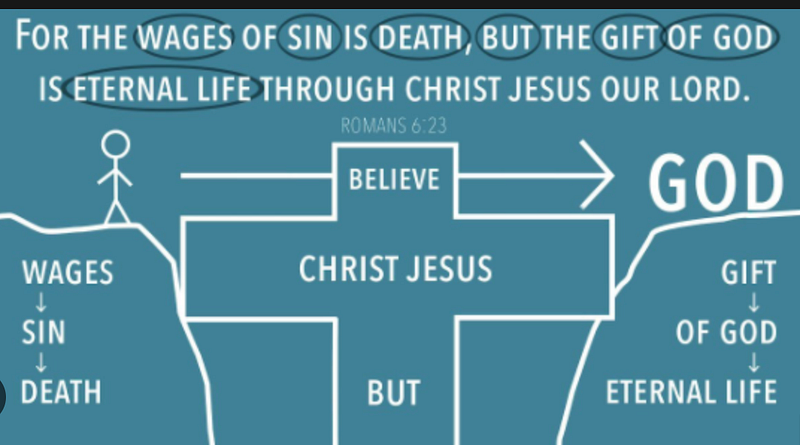
Why it’s wrong: Did you see what’s missing? Just like above, the resurrection was not mentioned. The good news is not that Jesus died, the good news is that Jesus is alive. (To be fair to the Billy Graham association, the offical Bridge outline does include the resurrection, but many people using the diagram fail to mention it).
Okay, try the next one on your own:
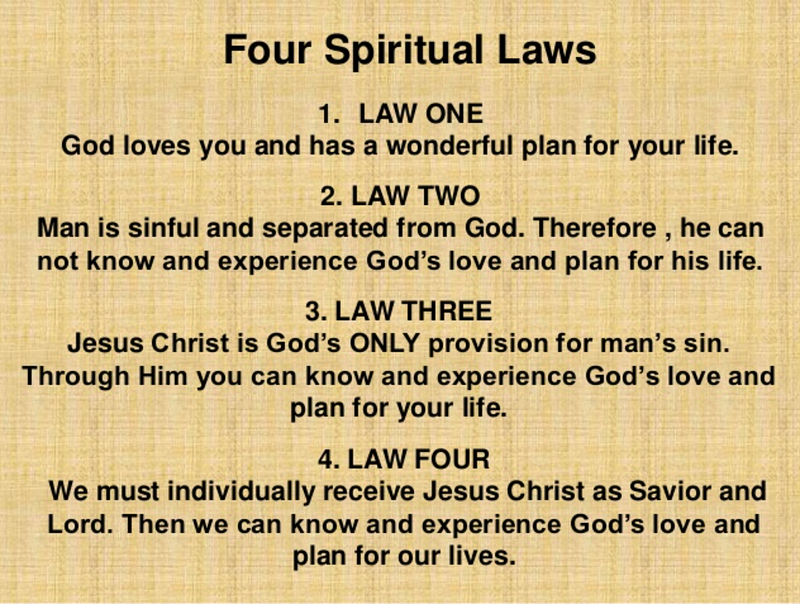
Hopefully, you were able to solve this one on your own. There is no mention of the death and resurrection of Christ. However, some presentations of the gospel come close, consider one more example.
What Christians say: The Bible says that God loved us so much that sent his Son Jesus to die for our sins. But the Bible says that death could not hold him and Jesus raised from the dead in victory to give us eternal life, hallelujah!
Why it’s wrong: Technically, this is the message of the gospel, the problem is that it implies that the benefits of the death and resurrection of Christ are automatically applied to every person. People have to respond to the gospel message, and our presentation of the gospel should include an opportunity for them to do so.
And Peter said to them, “Repent and be baptized every one of you in the name of Jesus Christ for the forgiveness of your sins, and you will receive the gift of the Holy Spirit. (Acts 2:38, ESV)
So the message of the gospel is not complicated, but people need to hear the full message. We are sinners, Christ died for our sins and rose again from the dead, we can have forgiveness of sins and eternal life through faith in Him.
For more on understanding the gospel, check out this article:
…and this one is helpful in thinking through how to share your faith.
Live for Jesus.


