
“SHOCKING: The Rise and Fall of Sheffield’s Hottest Nightclub — What REALLY Happened to Republic?”
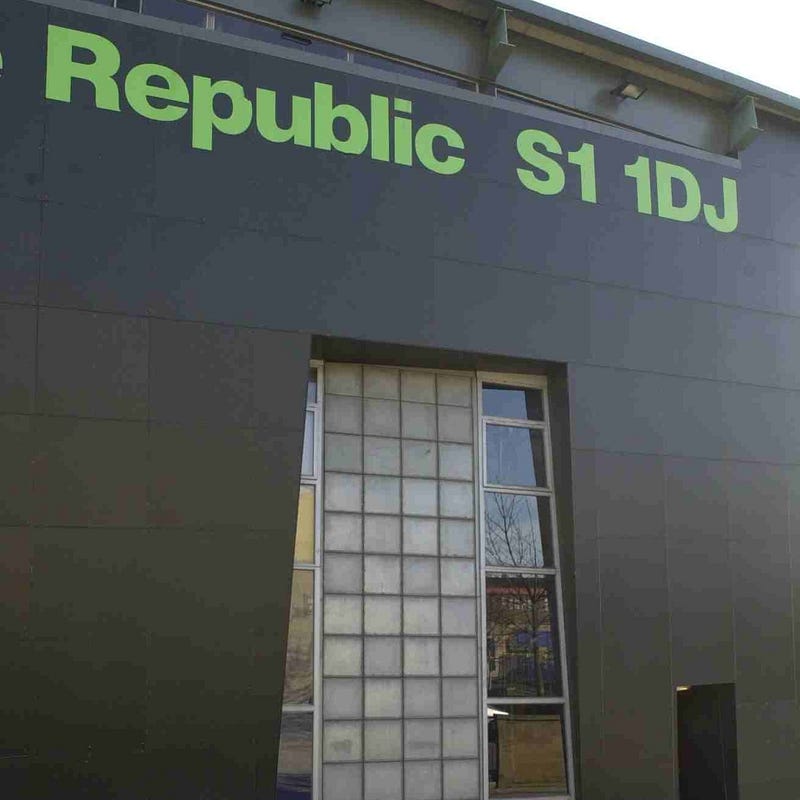
From its tumultuous inception to its eventual demise, Republic’s impact on Sheffield’s nightlife in the late ‘90s cannot be overstated.
The explosive growth of the city’s evening economy owes much to the pivotal role played by this iconic nightclub. It’s difficult to envision what the state of Sheffield’s after-dark scene would be today had Republic never existed — the excitement and energy it generated still resonates years later.
Nightclubs seemed to opening everywhere in the late 1990s. Every vacant city centre building seemed fair game.
But it was the transformation of the former Roper and Wreaks steelworks that lit the blue touchpaper.
The £1.4 million scheme to get the place up and running as a state-of-the-art nightclub lasted nearly three years, with a long-running battle to try and get a drinks licence being played out in the press.
The green light was finally given at Sheffield Crown Court by Judge Tom Cracknell, who overturned a previous ruling. The Republic was the city’s first new nightclub in over 12 years.
Five young entrepreneurs were behind the project: Anwar Akhtar, Neil Midgley, Jerome Curran, Tony Fitzgerald and Fran Hilbert.
Anwar Akhtar and Jerome Curran first came to Sheffield as students and started promoting club nights in the late 1980s at the then Locarno (later to be renamed the Palais, then Music Factory and then, at the end of the decade, BED).
In 1990 they set up Die Hard Promotions (later to become Grade Trade Ltd) which eventually took over promotion of the entire roster of club nights at the Palais.
Anwar Akhtar said of the granting of the licence for the Republic: “It is going to put Sheffield on the map. It will take Sheffield clubbing to a different level. It would have been open now had the original application been granted as it should have been.”
The venue offered a daytime cafe, gallery and exhibition space, office accommodation and more.
Its initial door policy was: “dress up, dress down, dress middle, dress round, we want you for your heart and not for your Armani shirt”.
It opened its doors in late 1995 to huge anticipation. The interior was truly staggering and blended the heavy industry of the Steel City with 20th century clubbing chic.
The Republic incorporated many original design features from the buildings heavy industrial past, including the giant industrial crane that teetered above the dance floor.
It truly tried to do things differently. Admission prices and bar charges were kept affordable and attitude was far more important than dress style when it came to admission policy.
Sally Jordan was one of the first through the door. She said: “The Republic was breathtaking. It was like something out of a Terminator movie. We couldn’t quite believe we’d got something that amazing in sunny Sheffield.”
Sadly, it didn’t last long under its original ownership and the administrators were called in within a year or so of opening but, bizarrely, things seemed to move up a gear after that and it really started to build into a formidable business with a clutch of very popular nights — both midweek and weekend.
House and garage were the mainstay of the weekend with ‘superstar’ DJs like Jeremy Healy and Roger Sanchez performing.
But it took its sale to Gatecrasher to turn the Republic into one of the most successful venues of the era as the Birmingham brand developed its quest for after-dark domination.
The Republic name was eventually resigned to history as it was revamped and renamed Gatecrasher One. Even a high profile drugs raid in early 2000 couldn’t dent its popularity.
Every name DJ worth his or her salt spun the decks at the venue together with a worthy local resident, one Matt Hardwick.
Although the building will be best remembered as the permanent home of Gatecrasher (it burnt down a few years later), it also played host to ground-breaking gigs in its early Republic days.
- If you want to read more about the Republic check out my ‘Dirty Stop Out’s Guide to 1990s Sheffield’ book


