
Why Detransitioners Belong in Trans Spaces
A Long-Overlooked Gap in our Community
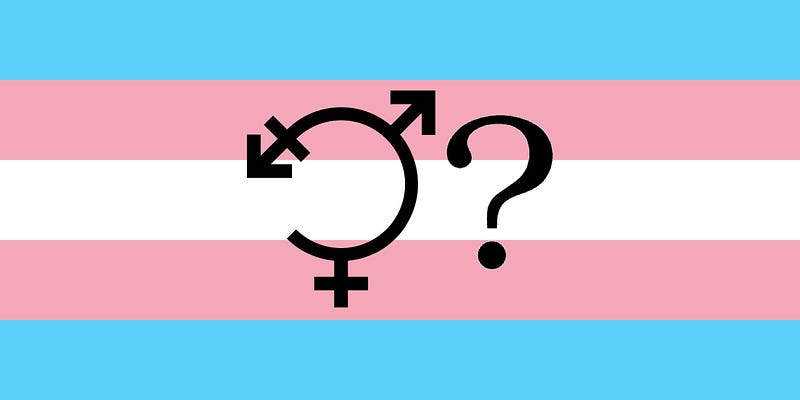
If you are like me, you likely found this article’s title discomforting. As a trans woman myself, and one who has not escaped the seemingly inevitable feelings of doubt that accompany transition, it is difficult to come to terms with even the slightest possibility that I could be mistaken about who I am. It invokes a sense of deep dread — what if all this is for nothing? Or worse, what if the changes I’ve made to my body and to my social life end up making me even more dysphoric?
Perhaps more importantly, the mere existence of detransition has been so heavily weaponized by TERFs and disingenuously “concerned” cis people that admitting it happens at all seems akin to shooting our own movement in the foot. Even with a solid defense against that argument — statistics showing a less than 0.1% detransition rate (which I will circle back to later) — we are still constantly scrambling to repair the damage this argument does. It is even peddled by supposedly well-meaning media, such as a notorious 60 Minutes episode titled just “Transgender Healthcare”.
It was for these reasons that when I came across a video titled “Detransition: a Video Essay,” by trans YouTuber Arthur Rockwell, I was left with a combination of curiosity and terror. Detrans discourse was already on my radar, and a topic of some interest to me, so I added it to my Watch Later, but it would be weeks before I worked up the courage to finally watch it.
Credit where it’s due, this essay will largely be a restatement of Arthur’s great, deeply insightful points, and I would strongly encourage checking that video out. I am writing this essay primarily in an attempt to bring more attention to this important issue, though I hope my own thoughts and contributions will add something of value to the conversation.
Why Does it Matter?
When I actually sat down to Arthur’s video essay, I found it far less painful than I had imagined. In fact, by the end I felt strangely comforted. However, what was difficult to endure was the first five or so minutes, in which he punched a hole in my worldview, debunking the so often quoted “less than 0.1%” statistic. Now, I have not reviewed the data in depth, and am largely choosing to trust Arthur’s statement, which seems well-researched and in good faith, but I would venture to guess, from his description and some surface-level Googling, that the reality is closer to a still small but much more significant 5–8% or so. Ultimately, though, the specific numbers don’t matter to me. What does is the overall conclusion: that detransition is not quite the rare anomaly we like to think it is.
Even if they were less than 0.1% of those who attempt transition, I would argue they are still worth acknowledging and supporting. “It’s only a tiny number of people” is an argument that has been used against us trans people by the general public, and not one I espouse. But the reality that these people are not as rare as we pretend they are brings to light its significance as a social issue.
So what do these people face? They’re just going back to being cis, you might think. How does that earn them a spot in our community?
The answer is that they face most of the same challenges we do.
Firstly, as I think we can all imagine, detransition can be accompanied by deep feelings of shame and embarrassment. Having to admit that a decision as important as transition ended up being wrong for you can be incredibly difficult, and detransition means having to explain that to each and every friend, family member and coworker you came out to when you transitioned.
It can also mean facing new kinds of dysphoria and body struggles — a detransitioner who’s grown breasts while on estrogen, for example, will not simply regain their flat chest by going off it. The changes transition brought on can become uncomfortable and unwanted. It is also likely that their bodies will never again fully appear cis, leaving them susceptible to transphobic treatment in day-to-day life.
Just as coming out as trans can threaten our social lives and safety nets, detransition can also threaten theirs, causing them to be ostracized by trans spaces, queer friends, and chosen family. I would like to be able to say that queer folks as a whole are above that, but sadly it is something that happens. They may also never get back the people they lost when they first came out, leaving them even more isolated, now without the support of the LGBT+ community.
I’m not asking you to believe that they have things equally hard — such comparisons never strike me as productive — but simply to acknowledge that detrans issues do exist. Ultimately, not all trans folks experience the same degrees of oppression or severity of dysphoria (if any), and they are not excluded for it. Detrans people shouldn’t be either.
Changing How we Understand Detransition
Arthur Rockwell’s video makes an important distinction which we often miss, between two very different phenomena: transition regret and detransition. The toxic detransition narrative pushed by transphobes and the media assumes that detransitioners regret their transition. This doesn’t have to be the case.
As he points out, transition is often an empowering experience, accompanied by renewed energy and willingness to work on oneself. It can help pull people out of depression, motivate them to fight back against issues like addiction and disordered eating, and offer them the support of a truly incredible community. I, for one, am incredibly grateful for what it’s given me. This can be the case, though, not only for people who continue their transition forever, but also for some who later choose to detransition. The experience of having transitioned doesn’t have to be a negative element in their lives.
Transition regret, on the other hand, is not exclusive to those who detransition. Though it’s deeply unfortunate (and I think it’s safe to say quite rare), there are those who experience discomfort with the results of their transition or wish they had not done it, but don’t choose to detransition. As Arthur states, it is transition regret, not detransition, that we should be attempting to prevent, by promoting “well-informed, forward-looking, and healthy” transitions (I will again recommend his video, for details on this idea).
This is not to discourage transition in the first place — as transphobes love to do with detransition stories — but rather, I think if we adjust the way we think of detransition, we can actually begin our transitions with more confidence and less fear.
There has been a significant improvement, among trans & queer communities, in understanding that identities can change. In most of our circles, the announcement that you’re actually nonbinary, not a trans woman, or that your gender can fluctuate from one day to the next, is received with overwhelming support. It is only when it comes to detransition that this acceptance lags behind. We need to recognize that these people are navigating the same complex and oppressive societal structures as we are. They may not all identify with the trans umbrella, but they deserve a seat at the table, should they choose to accept it.
How This Affects All of Us
When detrans folks are ostracized from our communities — from being excluded from social media groups, to being disbelieved and ignored, to being told they shouldn’t talk about their experiences for fear of triggering trans folks — they are often indirectly pushed into the hands of toxic detrans spaces and eagerly waiting TERFs. This is not to absolve them of guilt. When detrans people are transphobic, they deserve to be held accountable. But it is undeniable that many of them feel alienated, confused, and even demonized by the trans community.
In the midst of what may be one of the most difficult and isolating experiences of their lives, they are often welcomed only by transphobes. Their anger and vulnerability is preyed on and harnessed, they are told to blame trans people for what happened to them, and in many cases they fall into that trap. This has created a toxic feedback loop between our two communities: transphobic detrans individuals make it harder for us to trust and accept them, which in turn leads to further ostracization. The feelings of pain driving both sides are largely justified, but it’s a cycle that needs to be ended.
It’s important to note that the vocally transphobic members of the detrans community are likely a small minority. Giving detrans people the support and sense of community they need, and showing them the same overwhelming kindness and compassion we have for each other, would go a long way toward preventing others from following that same pipeline.
Conclusion
As trans, nonbinary, or otherwise gender-nonconforming individuals, we often think of ourselves as being at the bottom of the social ladder — at least when it comes to gender-based social positioning. For this reason, it can be difficult to accept the idea that we are partially responsible for some other gender-group’s oppression — especially a group which, to some of us, feels like “cis with extra steps.” As our community continues to learn and evolve, though, I hope recognizing and amending our dysfunctional relationship with the detrans community will be part of that evolution, and I will do my small part to ensure that happens.