Why, Despite Its Problems, I Love Buffalo
And Why You Might Too

One of the worst parts of living in a relatively anonymous part of the US is listening to other people talk about it. I happen to live in one such city, Rochester, NY, which lies about an hour east of a similar city, Buffalo — you know, the one that’s been in the news.
As recent events have shown, our part of the country is an afterthought — that is, of course, until something bad happens. Then we get to listen to the New York Times and NPR tell us how awful, economically depressed, and racist we are. (Even though the lunatic who opened fire at a grocery store in Buffalo came from 200 miles away.)
So rather than deal with that, I’d rather just tell the story of Buffalo myself.
Where Is This Place Anyway?
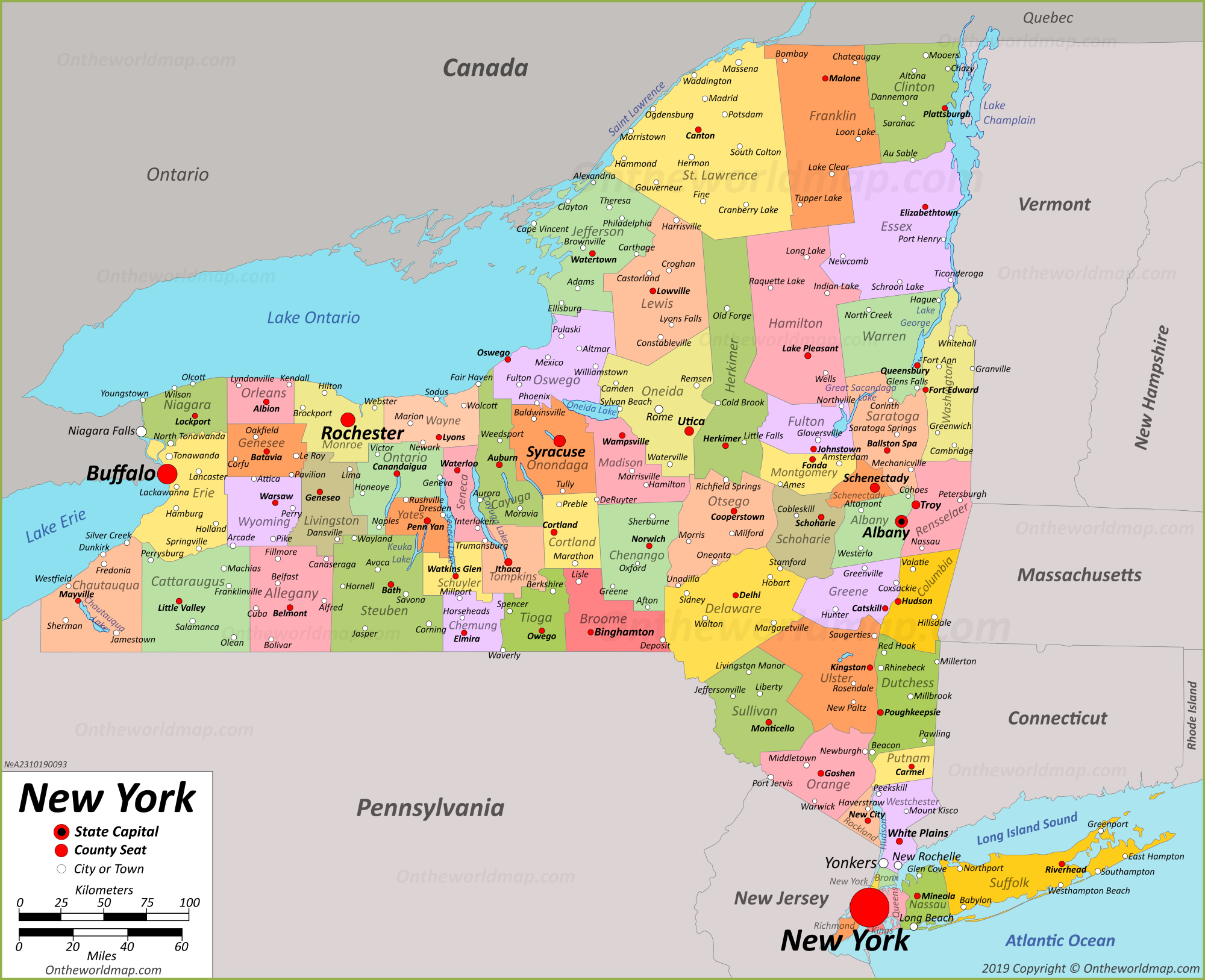
When people hear New York, they immediately think New York City. Trust me when I tell you, I’m not talking about New York City (NYC). I’m referring to the part of New York State that’s not in the immediate NYC area, also known as Upstate New York. And somewhere in that vast wasteland — around 375 miles away from NYC — is New York’s second largest city, Buffalo. As Buffalo finds itself in the western part of the state, it anchors a region known as Western New York, a subsection of Upstate New York, if you will.
Here’s a map.
As you can see, the city of Buffalo lies on the eastern end of Lake Erie and at the head of the Niagara River, the 36-mile northward-flowing river that connects Lake Erie to Lake Ontario and is best known for Niagara Falls. Across the river lies the country of Canada (the province of Ontario to be exact).
As of the 2020 Census, the city had a population of 278,349. The two-county Buffalo metropolitan area has a population of about 1.1 million, good for 49th largest in the US and thus explaining why you don’t hear much about it.
The Quickest History Ever (Courtesy Wikipedia)
As is true for much of the US, the first humans to inhabit the Buffalo region came from a variety of Native American tribes. After the American Revolution, settlers from New England and the eastern part of New York began to lay down roots in the area.
What ultimately turned Buffalo into a legitimate economic player was the Erie Canal, a 363-mile manmade waterway that connects Lake Erie to the Hudson River, thereby connecting the Great Lakes to New York City. Completed in 1825, the waterway suddenly made Buffalo a preferred intermediate destination for shipped goods, specifically grains. Seven years later, the city of Buffalo was formally incorporated.
The latter part of the 19th century saw the city play an important role in the underground railroad (thanks to proximity to Canada) and grow into a manufacturing powerhouse centered on steel production. By 1900, Buffalo was the eighth largest city in the US, slightly larger than San Francisco and over three times the size of Los Angeles.
Sadly, the second part of the 20th century was not so kind. The Erie Canal had already lost significance with the advent of the railroad, and when the St. Lawrence Seaway — connecting the Atlantic Ocean to the Great Lakes — opened in 1959, Buffalo was rendered irrelevant. Similarly, a wide variety of forces coalesced to debilitate the manufacturing industry. In a nutshell, the factors that had given birth to Buffalo had all but disappeared.
Along the way, Buffalonians did still manage to put their stamp on the world. The Buffalo wing was born at the Anchor Bar in 1964, and in 1981, Rick James released this classic song (granted he no longer lived in Buffalo, but no need to sweat the details).
The Rust Belt Phase
Given that Buffalo’s slide lasted for decades, several generations of Americans came to know it only as the shrinking and decaying Rust Belt city it would become. (As a reminder, rust refers to the fate of iron — or its alloys like steel — when the shine is a thing of the past.)
Between reality and perception, Buffalo became the place that — when circumstances allowed — you would leave. From 1950 to 2010, the city’s population plummeted from 580,132 to 261,310. Even Erie County, within which Buffalo lies, downsized from a peak of 1.1 million to 919,040 over a similar time span.
As was the case for essentially all American cities, housing segregation based on the false premise of race reigned supreme in Buffalo. As jobs vanished, animosity and crime increased, and the economic forces that can serve as an antidote to the frailty of humanity were nowhere to be found.
Throw in a bit of cloudy weather (311 days with at least partial cloud cover per year), a few flurries (close to 100 inches of snow per year), and the suboptimal performance of the Buffalo Bills in the NFL, and it’s safe to say the region had developed a serious branding issue.
The Rebirth
Thankfully, as the saying goes, all bad things must come to an end. (I just made that up.)
The 2020 Census confirmed what many had been suspecting for quite some time — Buffalo is quietly reinventing itself as an alluring 21st-century city. For the first time since the 1950 Census, the city actually gained population, jumping from 261,310 in 2010 to the aforementioned 278,349. Similarly, Erie County moved from 919,040 to 954,236.
Buffalo had always boasted the street design of Washington, DC, a park system modeled after Paris (and designed largely by Frederick Law Olmsted), architecture that rivals Chicago, and an abundance of water. What it now finally has again is some meat to go along with those bones, resulting in a palpable spirit that screams only one thing — rebirth. That spirit is captured by this short film, one that has been known to reduce Buffalonians to tears.
Modern Buffalo has a far more diversified economy than its predecessor, serving as home to M&T Bank (an almost Fortune 500 company), a Tesla gigafactory, and all those other things — health care, education, a thriving service sector, and numerous cultural institutions — that make a city tick. The annual GDP of the metropolitan area is estimated to be in the range of $53 billion. (On a per capita basis, that isn’t all that great, but work with me here.)
If you like to party, last call in Buffalo is at 4 a.m., and in a shocking turn of events, the Bills are one of the best teams in the NFL!
It may sound crazy, but the case could be made for Buffalo to be added to your bucket list. Because wrapped up in the story of this humble, mid-sized city on the shores of Lake Erie, you’ll find something that’s more elusive and significantly larger — the American story.
Just be prepared for some empty buildings.