
Why Creativity Ought to Become a School Subject
Identifying an underrated skill
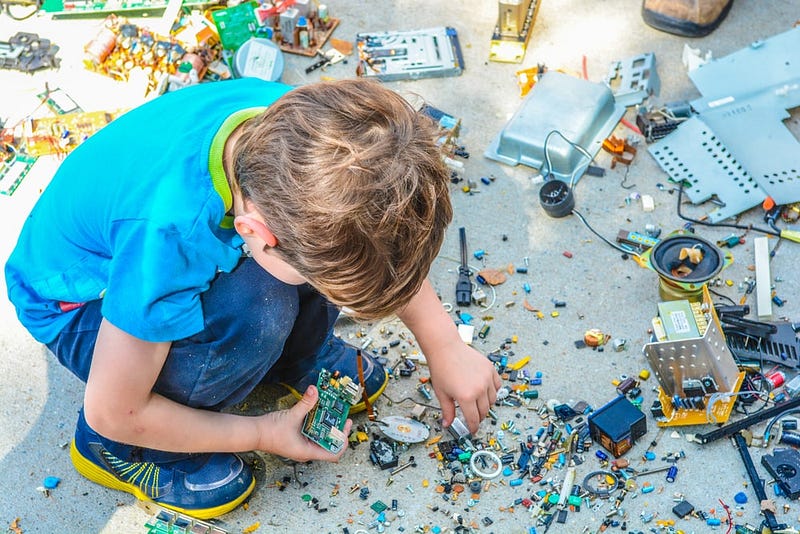
Schools are the embodiment of knowledge; we attend them so that we learn. Along with learning comes understanding more of ourselves and the world around us. Creativity is just one aspect of us. The ability to come up with an idea out of thin air, and use it to help change the world — bit by bit. No change has occurred without an idea giving rise from someone. So, why do we avoid the notion of creativity once we reach a certain age, beyond the walls of pre-schools that acted as the last places in which we were allowed to experiment with our imagination?
Of course, this is not to say that schools don’t teach creative subjects, whether it be arts-based, like painting, writing, or indeed, scientific and mathematical courses that prompt our critical thinking and innovation. But we don’t hear much of creativity as a subject itself. A subject that focuses on building the individual talent(s) of a particular person so that they are able to explore it fully.
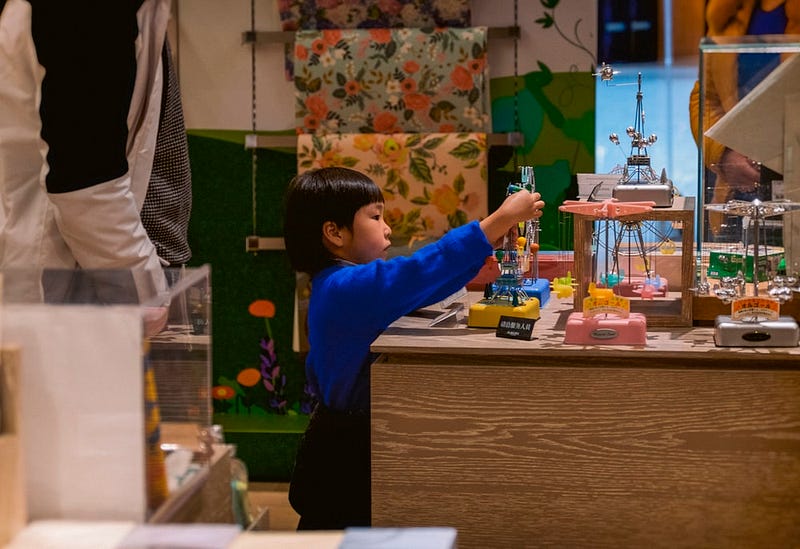
Introducing Creativity From and Beyond Pre-School
Children, as individuals yet to develop a sense of who they are, must be allowed to view the world through more than one perspective. As the newest generation, they need to possess an outlook that differs from their previous counterparts. Why not give them the chance to discover their voice?
“Children, as individuals yet to develop a sense of who they are, must be allowed to view the world through more than one perspective.”
It is no surprise that Finland, a pioneer in leading the example for creative education, allows its students to begin school after the age of 7. In that time frame, they are allowed to be children, as, until then, they are still in the process of making sense of the world around them. No wonder we don’t remember much of our lives before that age.
Beyond the age of 7 though, we resume education as students studying a standardized set of subjects. All of these are crucial for learning facts, and building our skill of responding to questions, but do they actually focus on our ability to initiate and expand an idea, from scratch to finish?
I may be a bit biased as a writer when I tell you that even the subject of creative writing can limit one’s creativity when considering the critique to be received. Feedback can be very helpful, and we need it to help us see where we could improve, but when it is given repeatedly, it can crush motivation.

Creativity in the Workspace
In an ever-competitive society, with more people attending and graduating college than ever before, employers are met with a pool of applicants holding the same degree. What they seem to value is their individuality, and what they have to offer to the table. While anyone can learn qualities of behavior or memorize knowledge, no one can own the same source giving birth to original ideas. Hence why initiative is one of the top 7 skills searched for by companies in any sector.
One often neglected sector of society, the creatives, who seek jobs that focus on their ability to produce content or products through their own means, tend to find it difficult to land such positions, due to a number of reasons, such as a lack of creative jobs.
One important reason, however, may be the lack of prioritization of creativity in the schools they spent years attending, believing that perhaps a popular career choice may serve them with a more secure life; rightly so. If we spent our childhood lives partaking in creative activities as mere extra-curricular hobbies, then we may be prone to thinking that our creative pursuits are simply that: hobbies.
Are we ready to Encourage Creativity?
We are living in an age where people produce as much as they consume. With more opportunities to create, especially ever since our world is slowly shifting towards a virtual space, we are met with endless ways to exhibit our creativity. For an advancing society, however, we have kept one medium of information exchange behind: our education system.
Ideas are everywhere. They originate from us. Let’s use this power to encourage others, especially our young ones, to discover theirs.
Thank you for reading. 🙏
Angelina Der Arakelian