
Why Craft Cocktails Cost $14
It’s the same reason why you should charge more for your work
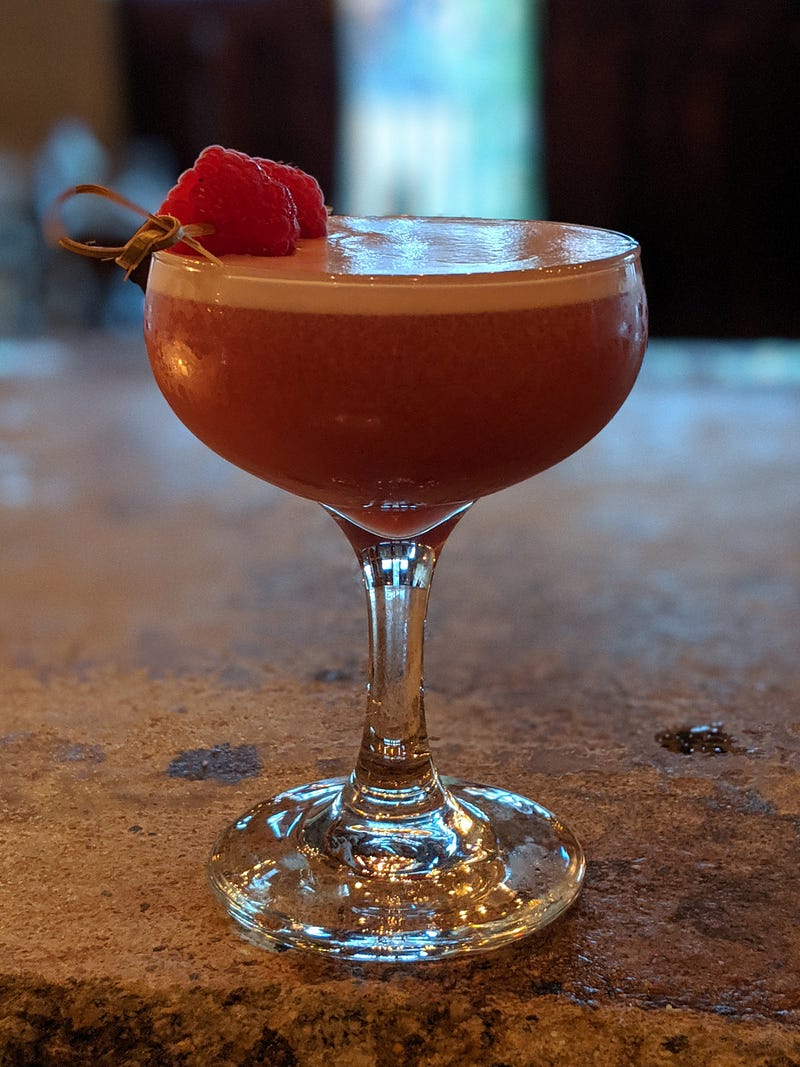
$14 — the going rate for a craft cocktail in most cities.
I’m on the low end of average. But that’s about right.
To the intuitive eye, $14 is expensive.
Except it’s not.
If the average guest knew what went into a $14, or even $24 cocktail, they would praise it as worth every penny. Because it is. If you’re in a legit bar — like one of the better bars in the world — at least a handful of people did about a dozen things to conceive, create, prepare, and present your drink.
And I’m not even including what happened before the components of the $14 cocktail entered the bar where you consume it.
As freelancers, we can learn from these renegades with the nerve to charge so much for a drink.
The Process
R&D. When I worked at The NoMad in Downtown Los Angeles, bartenders participated in a rigorous research and development process.
You had to have more than an idea for a drink. To join an R&D session, lead bartenders required you to come with a cocktail you had already put to your own test — sort of like a first, but well-polished draft.
You make the drink. Everyone tastes it. They scrutinize it. It either gets discarded or becomes the focus of a discussion on how to make it better. Very few cocktails that enter R&D end up on a cocktail menu at The NoMad.
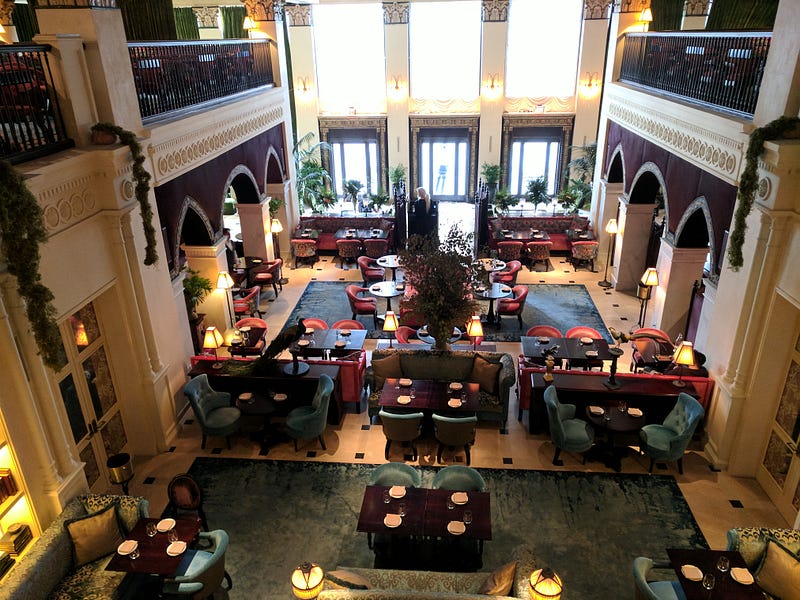
Not all bars take R&D as seriously as The NoMad.
However, most bars do some form of R&D, even if it’s informal or conducted in isolation by individual bartenders.
Implementation. Once you come up with a cocktail, you decide how you’re going to present it.
This happens on several levels.
What type of glass? What will you use for a garnish, if any? What will you name it? (It’s harder than coming up with an article headline.)
Does it go on a special board as a temporary offering?
Or do you print it on an actual section of the menu? If so, which section?
What do you charge for it? This kicks off a whole ‘nother process we don’t have time to cover.
What’s the cost? Do you have a system to determine the cost of the cocktail?
Is it too expensive for your menu? Did you even think of that? Can you replace the featured booze with something less expensive to bring the cost down?
The list goes on.
Then, the bartender who came up with the cocktail needs to teach the rest of the staff how to make it.
This isn’t always easy.
Most bars have bad systems for disseminating information and training staff. Even if they have systems, they break, literally and figuratively.
Ingredients. A good craft cocktail contains, at the very least, fresh citrus juice. That’s part of what makes it a craft cocktail. It includes fresh, often house-made ingredients.
Somebody has to squeeze the citrus and have enough juice on hand for the entire slate of cocktails — on menu and off — the bar puts out. This is usually prep’s job. One person, tucked away in a room with cutting boards, knives, blenders, juicers, dehydrators, an apron, earbuds, sometimes a bad attitude, and a ton of fresh and dry ingredients.
Cocktails tend to include some form of sugar.
Prep usually makes the syrups and other similar concoctions. But the bartender has to provide details on how to do it. Sometimes these go in a master recipe book. Sometimes it’s less formal. Sometimes the bartender just does it themselves. However it happens, it has to happen.
And it’s almost always a multi-step, time-consuming process.
At The NoMad, one of the cocktails calls for mulled wine. It takes more than an hour to make and includes over a dozen ingredients. The mulled wine comprises just 3/4 of an ounce in a 3 and 3/4 ounce (plus egg white) cocktail. I think it cost $18. The New York Sour.
Whew.
I could go on all day. But I won’t. You get the point.
Here’s the most popular cocktail at the bar I used to run.
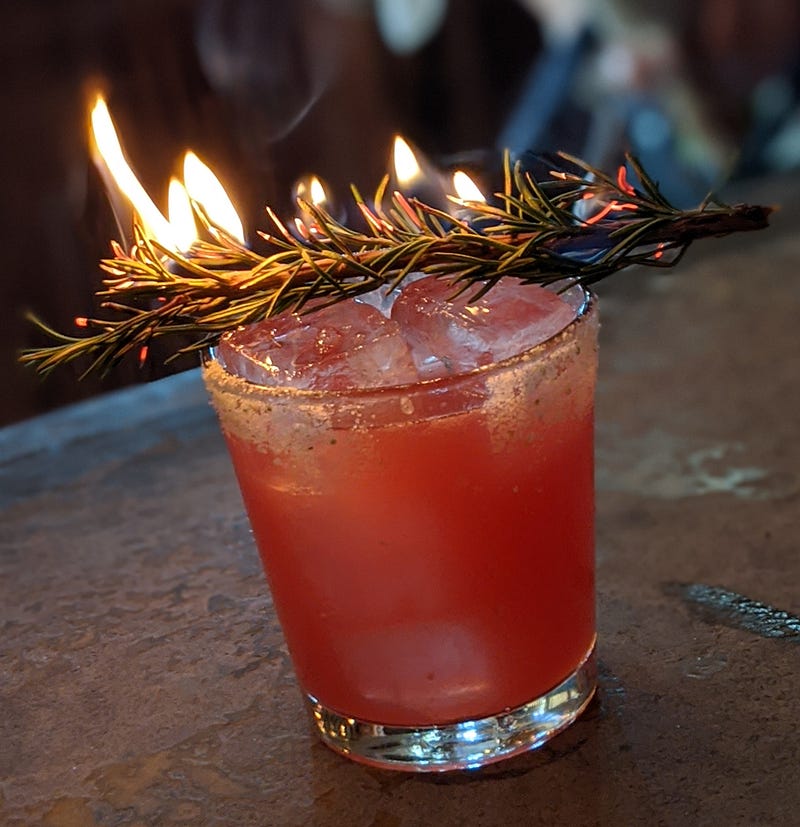
The Mezcali Me Banana — mezcal, fresh grapefruit juice, fresh lime juice, prickly pear puree, agave, banana liqueur with a burnt rosemary sprig, and a house-made serrano-habanero salt rim.
It wasn’t always such a long, complicated, time-consuming, and expensive process.
Before craft cocktails took hold in New York City (via London) at the turn of the century, nothing was fresh. Everything was basic. A group of bartenders changed that. It’s a great story. Robert Simonson wrote an excellent book about how it all went down, called “A Proper Drink.” I highly recommend it.
Don’t Worry About Sticker Shock, and Never Lower Your Price
When I worked in craft cocktail bars, I had to get over sticker shock.
Not mine, my guests.
The reaction you often get from a guest looking at the cost of a cocktail is akin to how a prospective client responds when you quote a price for your work.
In both cases, it’s innocent but absurd.
If you want quality, you have to pay for quality.
Limes aren’t free. Neither are grapefruits.
And they’re a pain in the ass to juice.
Tell the dude making minimum wage, squeezing out citrus juice with his biceps for two hours every morning, that $14 is too expensive.
But fresh citrus makes all of the difference in a cocktail. That’s why good bars squeeze it. And they don’t use it if it’s past a day old. That juice goes in family meal.
Freelancers work hard. We squeeze the juice. We make the syrups. We also do the R&D, the implementation, and the execution. We do it all.
Value yourself this way. As one person who completes the entire process of delivering a craft cocktail on his or her own.
It’s easy not to. Because you’re worried that your client will say no. That they will think you charge too much, reject your offer, and you won’t make money. This will happen repeatedly, and eventually, you’ll have to quit freelancing because you’re poor and need work that pays without all the stress.
Craft cocktail bars get a particular segment of the drinking population. Not everyone who walks into a craft cocktail bar orders a $14 cocktail. Some opt for a $5 bottle of beer or $8 pint (which tends to be more lucrative for the bar, believe it or not).
People who go to craft cocktail bars fan themselves out across the spectrum of drinkers. Others go to bars that don’t sell craft cocktails. They go to nightclubs or dives. There’s nothing wrong with this.
Your clients will do the same.
Some will think you’re not charging enough. Some won’t know any better and pay whatever you request. Others will go with the lowest bidder on Upwork. A few will go with the freelance equivalent of a nightclub or dive bar — whatever that is.
One thing you should never do is something we never do at a craft cocktail bar.
Never lower your price.
When a guest scoffs at “$14 for a cocktail,” bartenders make the humble pitch for why the guest will be happy with their $14 cocktail. If it doesn’t work, they smile and direct the guest to less expensive menu options. I’ll gladly sell you a vodka/soda for $11. Bars also make more money on that popular selection.
A craft cocktail bar will never bargain on the price of a craft cocktail. They rarely put them on happy hour. It dilutes the value of their signature offerings. These are the items you can’t get anyplace else.
Your clients can’t get you anyplace else.
If they don’t want you, they can go someplace else.
Don’t be a dick about it. There’s no reason to be angry. This is all part of the process — be it guest/bartender interaction or client/freelancer negotiation.
As freelancers — whether we write or do something else — we undertake a process similar to the one that spawns a craft cocktail.
- R&D (brainstorming, conceiving, refining ideas)
- Implementation (packaging, presentation, deciding on a price)
- Ingredients (putting together the elements of our craft)
- Execution (doing and delivering the work with precision and pride)
It’s not easy. Even when you do it well and charge a fair price, you have to keep hustling. The same thing applies in the world of craft cocktails.
I’ve done both and the best lesson I can cross between disciplines is to never negotiate on price. You’ll slog through the work at a reduced rate and diminish your standing with the client and, potentially, via word of mouth.
You can subscribe to my Never Retire newsletter — with a free and affordable paid subscription option — here.
If you enjoyed this article and want to know when the next one hits, consider subscribing to Medium through my profile for just $5 a month. You’ll get access to everything on Making of a Millionaire and all of Medium.


