
HISTORY + POLITICS
Why Context is Important When You Call Ida B. Wells a "Republican"
Both major parties have fundamentally changed since the 1800s. An essay about the weaponization of ahistorical narratives
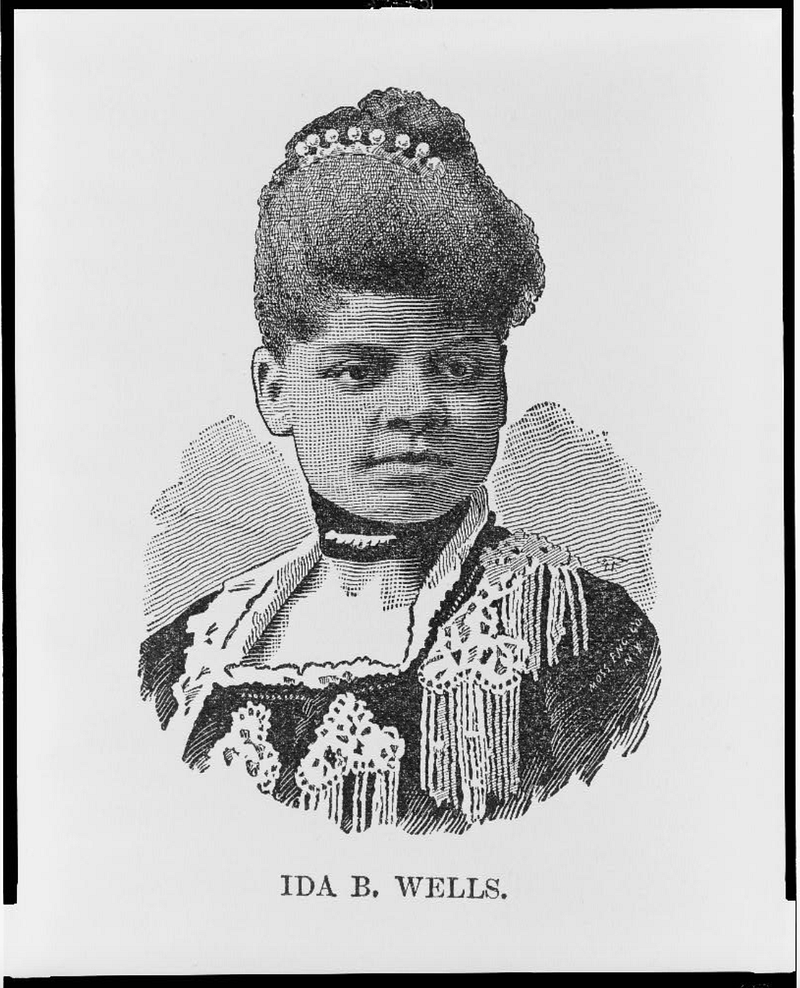
Is that glass of water sitting on the edge of your table half-empty or half-full? While a thirsty person may call the glass half-empty, someone less eager to take another sip may call the glass half-full. It's more than a matter of perspective but also one of context. When it comes to American politics, particularly as we delve into history, context should take center stage. Still, sadly, as censorship and spotty historical curriculum take hold, the waters have become as muddy as the Mississippi River. For instance, one popular meme on social media suggested we never hear about Ida B. Wells, an anti-lynching and voting rights advocate, journalist, and feminist, because she was "Republican." However, this is not an intellectually honest point because it lacks context. The nature of America's two major political parties has shifted, and the Republican party of today can no longer be called "the party of Lincoln," it would be more accurate to call them "the party of Reagan" or the "party of Trump." Let's unpack this.
Ida B. Wells was born enslaved in Holly Springs, Mississippi, in 1862, during the Civil War, and throughout her life, she witnessed a great deal of political turmoil. The Republican party, during Wells' life, was the party of abolitionists, the Union Army, and progressives who fought to end the chattel slavery system and believed Black Americans were entitled to the same civil rights and liberties as White people. Initially, the Democratic party was the party of enslavers, the Confederate Army, and conservatives who fought to maintain the chattel slavery system and believed Black Americans were not entitled to vote, hold political office, or enjoy the same rights and liberties as White people. During the Reconstruction Era, Democrats participated in numerous racial terror lynchings, threatening not only Black people but White allies with violence.
According to historian Raymond Gavins, Democrats were "loyal" to the "Klan" and "enlisted men and women from all classes," targeting Union Leagues, killing "Black and Republican voters and officeholders," burning "black churches and schools." In the 1868 election, "alongside Knights of the White Camellia," they "murdered 1,000 Black and White Republicans in Louisiana alone." In 1871, Congress passed the Ku Klux Klan Act, but the violence and "terrorism" continued and, ultimately, "hastened Reconstruction's end." So, to be clear, when Ida B. Wells became a Republican, she did so at a time when the Democratic party was the party of the Klan. To call her a Republican outside of this context is intentionally misleading, an effort to dissuade Black Americans in the modern era from supporting the Democratic party.
Our country’s national crime is lynching. It is not the creature of an hour, the sudden outburst of uncontrolled fury, or the unspeakable brutality of an insane mob. It represents the cool, calculating deliberation of intelligent people who openly avow that there is an “unwritten law” that justifies them in putting human beings to death without complaint under oath, without trial by jury, without opportunity to make defense, and without right of appeal — Ida B. Wells Lynch Law in America (1900)
Using the pseudonym Lola, Wells often shared her work. She became the editor-in-chief of two Black publications, The Memphis Free Speech and Headlight and Free Speech. In 1892, she published Southern Horrors: Lynch Law in All Its Phases, exposing the injustices Black Americans frequently experienced. Her writing pushed back against the tropes White people used to justify racial terror lynchings. For instance, Wells warned that "Southern white men" relying on the "old thread-bare lie that Negro men rape white women" would ultimately damage "the moral reputation of their women." She added that "Patience under such circumstances is not a virtue" and that Black people should take matters into their own hands, preaching the gospel of self-defense and collectivism to confront southern horrors. Throughout her career, Ida B. Wells traveled throughout the country, following leads, conducting investigations, and publishing her findings.
Ida B. Wells was a Republican in an era when the party supported the advancement of Black Americans’ civil rights, but the same cannot be said about the party today.
In 1892, while Wells was away, a mob of White residents “attacked and destroyed her newspaper’s office in Memphis, Tennessee.” Despite threats, she published her findings in A Red Record. Tabulated Statistics and Alleged Causes of Lynchings in the United States, 1892–1893–1894. Wells successfully cataloged two hundred and forty-one lynchings and brought the matter to an international audience in her speaking tour in Britain between 1893 and 1894. A British newspaper wrote, at the time: "Miss Wells described how the troubles of the colored people in the South did not end, as was fondly anticipated, at the close of the Civil War, but that they were still bitterly oppressed by their old masters. It was stated by one writer that during the reconstruction period, more negroes were killed than during the war itself."
Ida B. Wells, born during the Civil War and raised during the early years of the Reconstruction era, experienced a rare slice of American history. For the first time, Black men could vote, run for office, and pass legislation that challenged the racial hierarchy, a turning point. And yet, the country was far from equitable. Women could not yet vote, and certainly, Black women had few rights and access to opportunities. Wells saw the hope of what America could be: a nation that could extend civil rights and liberties to marginalized groups, but also how racism anchored the nation to white supremacy. During the Reconstruction era, white backlash took center stage as Jim Crow laws and the constant threat of violence successfully limited Black Americans' upward mobility.
In an 1892 speech, Wells told the crowd, "The way to right wrongs is to turn the light of truth upon them," she spent her entire career doing just that. Today's Republican party doesn't want you to learn about the Republican party of yesteryear, how they fought for a more equal, more just society. Remember, most Republicans of today deny that racism impacts Black people; they are nothing like those who came before. They currently oppose diversity, equity, and inclusion efforts and constantly brag about being anti-woke. Sadly, they are trying to weaponize the label "Republican" to suggest that Black Americans have shifted their allegiance or forgot where they came from, but that couldn't be farther from the truth. The parties are the ones who've changed, not Black Americans who have maintained an unwavering political movement to secure equal rights and justice.
According to historians, this shift happened over time. "By the 1870s, many in the Republican Party felt that they had done enough for Black citizens and stopped all efforts to reform the southern states." After passing the Thirteenth Amendment, which abolished slavery, though it did contain a pesky loophole, the 1866 Civil Rights Act, the Fourteenth Amendment, which established birthright citizenship and equal legal protection for the formerly enslaved, and the Fifteenth Amendment, granting Black men the right to vote, the political momentum to ensure Black Americans had equal rights and opportunities dissipated. Southern states passed Jim Crow laws, also called black codes, to control Black people and limit their access to political power. Reconstruction Era events shaped Ida B. Wells' political beliefs. "Indeed, the silence and seeming condonation grow more marked as the years go by," Wells told an audience about White Americans' complicity in lynchings in 1900 during a speech in Chicago, Illinois. Many Northern White people, whose ancestors fought against the Confederates, had softened their approach to fighting racial injustice and referred to the Civil War as “a war between brothers,” allowing Jim Crow legislation to find its roots. Black Americans felt the full brunt of their hands-off approach.
The tectonic plates of the parties continued to shift. Franklin D. Roosevelt was a Democrat who campaigned "on the promise of government intervention, financial assistance, and concern for the welfare of the people," which was much different from those who came before him. Republicans vehemently opposed Roosevelt's position that America should use taxpayers' money to develop a safety net. Indeed, talk of “limited government,” and axing the social security program is popular amongst conservatives. But during the Great Depression, as millions of families suffered in poverty, federal intervention became a necessity. Nevertheless, Republicans argued a limited federal government was best, even if it left the poor in the cold.
Perhaps the last shoe fell during the civil rights era when President Lyndon Jonson signed the Civil Rights Act of 1964. After signing the legislation, he reportedly told an aide, "We have lost the South for a generation," realizing they would no longer have the support of White Southerners after using the federal government to force them to treat Black people as their equals. Since then, the Democratic party has never successfully won the majority of White Americans' votes, and while Republicans have embraced the support of mostly White people, the Democratic party has become increasingly influenced by its multiracial coalition of supporters. Conservatives often mock Black Americans for supporting the Democratic Party, likening their support to being on “a plantation.”
In The Grio, Michael Harriot wrote, “I’ve never met a Black person — even the most loyal Democrat — who wasn’t critical of the Democratic Party’s tendency to chase moderate white voters at the expense of its most loyal demographic.” The truth of the matter is most Black Americans who vote for the Democratic party are not doing so because they are perfect. As Harriot suggested, their attempts to win over moderate White voters (a pipe dream they won’t seem to let go of) instead of tending to the needs of their core supporters is problematic. However, the Republican party has become embedded with racism that keeps progress at a knife’s edge. To do nothing would be to acquiesce all political power to those who want black history erased, who oppose criminal justice reform, and who hope to limit Black Americans’ voting power. So, most Black Americans have supported Democrats since the passing of The Civil Rights Act of 1964 in presidential elections.
Instead of considering America's two major political parties as fixed, we should remember that context changes everything. Black Americans are not naive and childlike, stumbling about in the dark. Nor are they loyal to any political party for namesake alone. They are well-informed citizens and throw their support into political buckets that make sense for them at the time. Ida B. Wells was a Republican in an era when the party supported the advancement of Black Americans' civil rights, but the same cannot be said about the party today. If Wells were alive today, there is no way, based on her writings, she would support the Republican party, which for years opposed passing anti-lynching legislation, opposes criminal justice reform, and wants to remove black history from the classroom and replace it with whitewashed lessons. Ida. B. Wells believed in shining a light on injustices, a notion that is antithetical to conservatives' censorship campaign. And it needs to be said that Ida B. Wells would never agree with Florida Governor Ron DeSantis' claim that Black Americans benefited from slavery.
Politics is rooted in discussions about power, who has it, and how they wield it, but it is also a creature of context. And while it's understandable that many people try to avoid the topic altogether. After all, many feel disappointed at the lack of progress or hold general disdain for the political process in our country. Nevertheless, when apathy is endorsed, misinformation thrives. The meme that suggested we never hear about Ida B. Wells because she is a Republican is a vicious lie that only grew legs because of how uneducated the public is about black history.
Indeed, the irony isn't lost on the black community that we never hear about Ida B. Wells in school because our nation lives in fear of its own shadow. Modern-day Republicans are trying to cut black historical figures like Ida B. Wells out of our body politic because she was a fiery abolitionist, voting, women’s rights, and anti-lynching advocate, not because of her political affiliation. Black historians are more than willing to discuss Black leaders in the Republican party during the Reconstruction era. Indeed, Nikole Hannah-Jones' book, The 1619 Project, frequently cites Black Reconstruction-era Republicans like Frederick Douglass. But, of course, like Wells, Douglas was born an enslaved person and would never align with the Republican party of today. Implying such is ahistorical. When the context is removed, calling Ida B. Wells "Republican" is nothing more than a cheap parlor trick, an effort to deceive those who haven't had the opportunity to learn much about the Reconstruction Era. Their goal is to muddy the waters. And the best filter is the truth.
🌹Learn more about the author here.


