
Why Comparing Covid-19 Vaccines Based on Efficacies Is Wrong
The best vaccine is the one available to you
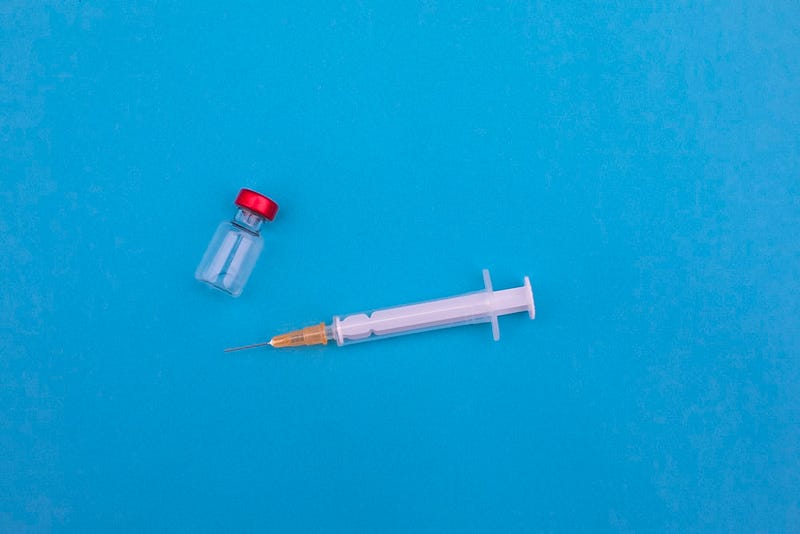
It has been more than a since the covid-19 pandemic hit the world. Scientists and researchers have been working for countless hours to fight this deadly virus. They have been able to make the vaccine for covid-19 in one year which is miraculous. There are 3 most popular vaccines in the U.S. right now — Pfizer, Moderna, and Johnson & Johnson. However, people are still wondering which one is best.
People have to understand that this is not the time to ponder over the vaccines. Take which one is immediately available to you.
Recently, the mayor of Detroit refused to take the Johnson & Johnson vaccine saying Pfizer and Moderna are the best. The basic assumption people are making is that higher efficacy vaccines are better than lower efficacy vaccines. Pfizer, Moderna, and Johnson & Johnson vaccines have efficacies of 95%, 94%, and 66% respectively.
This is a wrong assumption to make. First, we have to understand what efficacy is and how efficacy is determined.
Vaccine Efficacy Meaning and Determination
If a vaccine’s efficacy is 95% that does not mean the vaccine is 95% effective. To understand the efficacy meaning, first, we need to understand how efficacy is determined.
Vaccine efficacy is determined by distributing a population into two equal parts. The first part receives the vaccine dose (vaccine group) and another part receives the placebo (placebo group). After that, the population is allowed to live their normal life. The population is monitored over certain months to observe if anybody from the population gets infected with the virus.
Suppose, x people get infected from the placebo group and y people get infected from the vaccine group then vaccine efficacy is determined using the formula (x/(x+y))*100%.
So, 95% efficacy means a person is 95% less likely to catch the virus after receiving the vaccine.
After understanding what efficacy is and how efficacy is determined, let’s look at a couple of reason why direct comparison of efficacies is not feasible:
(i) Variation in population
The trials of different vaccines have been performed on different people. As we know, the immune systems of people are completely different from each other. Therefore, one vaccine might have been tested on the population where more people had good immunity while in the case of other vaccine trials fewer people might have had good immunity.
Unless the trial has been performed on the same population, a direct comparison of efficacies can’t be made.
(ii) Variation in time period
The vaccine trials were conducted at different times of the year. For instance, Pfizer and Moderna vaccine trials were done from August to November when the cases in the U.S. were between 20k to 40k per day. On the other hand, the Johnson & Johnson trials were done from December to February where cases were between 50k to 100k.
So people were more likely to get infected during the later time period which could have affected the Johnson & Johnson vaccine efficacy.
(iii) Variation in Covid-19 mutants
Pfizer and Moderna vaccines were tested only in the U.S. while Johnson & Johnson vaccines were tested in Brazil and Africa as well against the more infectious mutants of covid-19. Again, if the vaccines are tested against the different mutants of covid-19 then a direct comparison of efficacies is not valid.
Based on the above reasons, it can be said that comparing vaccines is wrong.
All vaccines are the best
If we look at the efficacies with respect to the infected people then efficacies are different for each vaccine. However, if efficacies are determined based on the people who get hospitalized or die then all vaccines are the same.
In all the trials, all of the people who received any of the three vaccines, none of them got hospitalized or died. So vaccinated people did not suffer any severe symptoms even after getting infected with covid-19.
Vaccine’s goal is not to eradicate the virus but to tame the virus
In conclusion, we should not think one vaccine is superior to another. All vaccines are good to prevent hospitalization and death. So take any vaccine available to you as soon as possible to help end this pandemic.