
Why Community Is the Make-or-Break of Niche Marketing
It’s what customers look for the most

I stopped reading on news sites because I can’t stand to click through another ad.
I’m not alone in this feeling. Most millennials don’t like advertising.
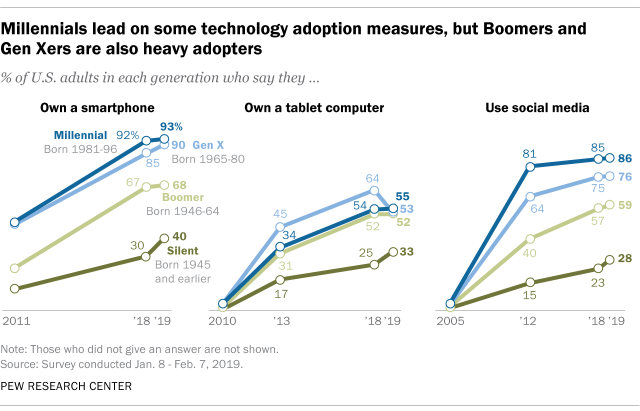
84% of the generation that’s the largest adopter of mobile technology and social media say they don’t like ads. This is troubling if you’re a business that relies on digital advertising to get the majority of your customers.
In a world that is increasingly globalized and digitized, it’s quite a conundrum to advertise and market effectively. Because there’s more mobile adoption than ever before, it’s easier to literally have your brand in a potential customer’s pocket.
But the aspect of community — or places where people come together and can talk about your brand — is missing.
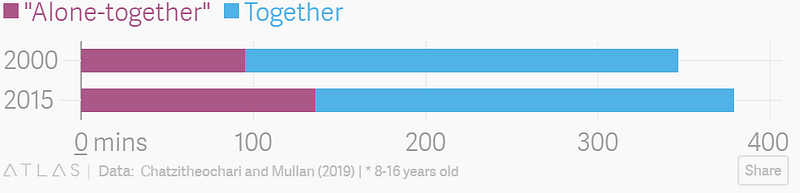
A 2019 study from Oxford University found that while UK families spend more time together overall, they spend more “alone-together time”. Alone-together time “jumped by 43%” in the study, between 2000 and 2015.
“But the biggest change was the rise in “alone-together” time — that is, in the same house but not in the presence of one another. So called alone-together time jumped by 43% over the period of study, to 136 minutes per day in 2015.” — Quartz, March 2019
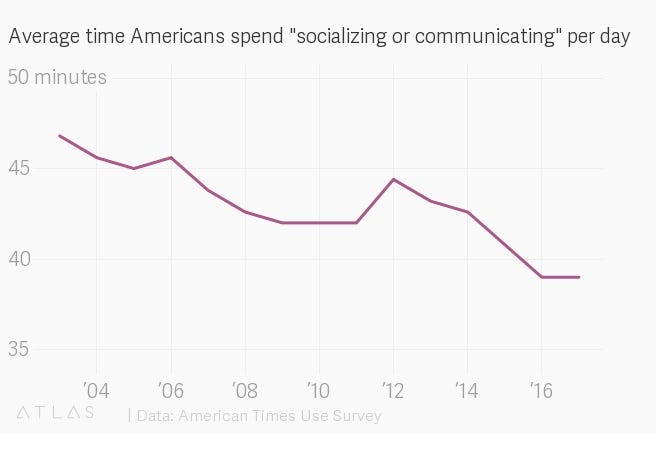
In addition to spending less “together-time” in households, people are socializing less in general.
A 2017 report from the U.S. Bureau of Labor Statistics examined how Americans spend their time. The result? Socializing was the activity that saw the greatest decline. It “includes time spent talking to family or friends that isn’t for work.”
This poses a dilemma for businesses.
Word of mouth, something that can only happen when people are together, is one of the most effective formats of influencing a consumer’s purchasing decision. 66% of buyers “trust consumer opinions posted online”, whereas 83% of them “completely or somewhat trust the recommendations of friends and family.”
How can we create conversations about our brand and product if the people who’d buy them aren’t together? What’s the solution to this?
Creating communities.
Niche vs. Community
Whereas a niche is the composition of a group of people who share a similar interest and engage with that interest, a community is where people within the niches engage with each other.
The difference between niche marketing and community marketing is that the former serves customers as individuals, the latter brings them together.
How can the customer engage with other customers? How can you create a conversation about your brand that brings them together? What benefits does bringing your customers together have for both you and them?
Bringing customers together to have a conversation about your product is probably the best thing you can do. This enables word of mouth marketing, which makes “five times more sales than paid media impression(s).”
And does word of mouth have to be someone recommending your product to their friends?
No — that’s not the only reason why customers talk about your product. Sometimes your product either creates or is part of the conversation.
Salesforce is an example of a business that regularly creates a conversation.
The largest tech company in San Francisco regularly appears in the media for its unconventional culture. Instead of having “swanky perks” like “chef-made meals”— something that helps attract recruits to go to places such as Google — Salesforce employees “get paid 56 hours a year to volunteer in their community.”
Salesforce’s values aren’t only ingrained in its work culture.
Equally important it has created a community of people who adhere to the Salesforce mantra. In a January 2020 article on Harvard Business Review, the authors found that although there’s a “precipitous decline” in membership of civic organizations, firms like Salesforce have managed to be the exception of this rule. Take their word, not mine.
“Take Salesforce for example. While you might think its $140 billion valuation is due purely to its innovation of software delivered on demand through the cloud, it has also created a community of nearly two million members who support each other, organize events, produce content, and are a critical part of its global operations. This community is an international network of minds, talent, and time, all supporting the success of Salesforce. The company’s annual ‘Dreamforce’ conference, which attracts nearly 200,000 acolytes to San Francisco each year, represents a mecca for its ecosystem to convene, build relationships, and advance its corporate agenda.” — HBR, January 2020
Marc Benioff, the founder and CEO of the company, has even managed to transcend the community in his books. Trailblazer — his most recent penned work — helps readers understand how they, too can take the lessons of community building from Salesforce and apply them to their businesses.
It’s not surprising to see that the company even let its 48,000 employees expense the book.
The enormity of Salesforce’s community is impressive considering the space that the firm is in.
Despite high margins, B2B is a more difficult space to create a community in. It’s difficult to arrange a large amount of C-suite executives and VPs in events that aren’t expensive conferences or dinners.
Yet Salesforce has managed to figure out a formula for creating community among its enterprise customers.
Because the community is already assembled and in constant contact, members can interact with your product more easily. You’re not viewed by them as another business. You’re viewed as part of their lives.
Salesforce built a brand so powerful that customers even engage with the firm after working hours. The Salesforce Philadelphia Meetup, for example, regularly gets 50+ people participating in after-work events.
The brand is so important to them that they meet out of work to talk about Salesforce. Who does that? For any company?
It’s much easier to have traction when you create communities and conversations via your brand. Word of mouth can’t happen if there isn’t a place to talk.
You might ponder that Salesforce’s success is due to a superior product. I am not saying that it is not.
But how many companies are capable of bringing together hundreds of thousands of customers solely due to their product? How many companies are able to get people to meet after work just to talk about a brand?
There are plenty of spectacular products on the market, but great products alone don’t bring customers together. That’s what community is for.
Customers don’t just talk about Salesforce by themselves. Nor do they need ads to engage in conversation about it. They do so via the community Salesforce created.


