avatarBritanny Levy

Free AI web copilot to create summaries, insights and extended knowledge, download it at here

2257

Abstract

wer your ability to focus on your thoughts and emotions and improve your decision-making process.</p><p id="6a64">You also connect yourself with your deepest emotions and express them through colours.</p><p id="2b53">Another reason for the relaxing effect of colouring mandalas is that, unconsciously, you will associate the activity with your childhood - a period with no stress and less problem; which generates an immediate wellbeing sensation.</p><blockquote id="3f7e"><p>Colouring is that warm cosy hug or the familiar scent of your Grandmother’s cookies baking in the oven that takes you back to your childhood. It’s a magical portal from this (chaotic) adult world to the simpler, easier days of being a carefree kid. — Johanna Basford</p></blockquote><h1 id="c30b">Preparing your colouring session</h1><p id="57f7">There is no rules or instructions to colour mandalas. You don’t have to be an artist nor having specific knowledge about art or design.</p><p id="1f5b">To achieve the purpose of relaxation, you can create an atmosphere: soft music, warm lighting, or fragrances (candles or incense). But you can also colour the mandala in a neutral environment, without any distraction.</p><p id="a234">Chose whatever will make you feel relaxed but committed with the practice.</p><p id="c725"><b><i>Suggestion</i></b><i>: before you start, write in a journal how you are feeling at that moment: your emotions and state of mind. When you finish colouring the mandala, write about how you felt while colouring it and how you feel now, after the activity.</i></p><figure id="3426"><img src="https://cdn-images-1.readmedium.com/v2/resize:fit:800/0*ExszWXqoocBYqbcS"><figcaption>Photo by <a href="https://unsplash.com/@bymintowl?utm_source=medium&amp;utm_medium=referral">Mint Owl</a> on <a href="https://unsplash.com?utm_source=medium&amp;utm_medium=referral">Unsplash</a></figcaption></figure><h1 id="6063">How to colour a Mandala</h1><p id="218a">When colouring, abstain yourself from overthinking about the choice of colours. Also, don’t worry if they match. Let your instincts guide you.</p><p id="c259">After you begin with the first colour, the rest will follow naturally.</p><blockquote id="3482"><p>One color on the mandala invites another, like a

Options

guest who asks to bring his friend to your party. — <a href="http://creatingmandalas.com/coloring-your-mandala">Susan F. Fincher</a></p></blockquote><h1 id="2108">What to do with your coloured Mandala</h1><p id="bf6f">Tibetian monks always destroy their coloured mandalas as a reminder that nothing lasts forever. It’s is a lesson of non-attachment.</p><p id="2aef">By destroying your coloured mandala, you are getting rid of the emotions freed during your colouring session.</p><p id="b395">You can also choose to keep your mandala, in plain sight, where you can look at it and see if its forms and colours still have anything to transmit to you. While colouring it, you expressed your emotions and deep thoughs; you might need more time to deal with them, and looking at the mandala will help you.</p><p id="af44">Take the time you need. Either destroying the coloured mandala immediately or after a couple of days, it’s okay. There is no right or wrong decision.</p><h1 id="0a6d">Find Mandalas to Colour</h1><p id="be1e">You can easily find mandalas to colour, either in books or printing them from websites.</p><p id="8228">You can also draw your mandala, that, by itself, it’s also a relaxing activity. Start by creating a large circle and, inside, create shapes and forms. Then, colour it!</p><p id="d861">Colouring a mandala is a form of art therapy. You can do it any time of the day and at any place. It’s a simple, effective and a cheap way to promote your mental health.</p><p id="c389"><b><i>Reading suggestion:</i></b></p><div id="ffea" class="link-block"> <a href="https://readmedium.com/enrich-your-self-knowledge-path-by-answering-one-question-9574f24044dc"> <div> <div> <h2>Enrich Your Self-Knowledge Path by Answering One Question</h2> <div><h3>You won’t find balance in life until you truly know yourself. Answer this question and engage in a marvellous process…</h3></div> <div><p>medium.com</p></div> </div> <div> <div style="background-image: url(https://miro.readmedium.com/v2/resize:fit:320/0*WcieiiW2KhOXUcnF)"></div> </div> </div> </a> </div></article></body>

Why Colouring Mandalas is the Perfect Anti-stress

Colouring as art therapy

Photo by Agence Olloweb on Unsplash

Colouring pictures is mostly seen as a children’s activity; however, colouring Mandalas is an ancient adulthood practice.

What is a Mandala?

A Mandala is a circular outline pattern made of geometric forms and symbols, designed with repeated symmetrical patterns inside.

In Sanskrit, the word mandala means ‘circle,’ which is, according to several cultures, a significant symbol. Hinduism and Buddhism religions use this sacred circle as a way to facilitate meditation, as it allows you to focus on yourself and dismiss negative thoughs.

Colouring Mandalas as Art Therapy

The phycologist Carl G. Jung was a pioneer using, in the early ’90s, mandalas as a psychotherapy resource.

I sketched every morning in a notebook a small circular drawing, a mandala, which seemed to correspond to my inner situation at the time… Only gradually did I discover what the mandala really is: … the Self, the wholeness of the personality, which if all goes well, is harmonious. –C.G. Jung

In 2013, Johanna Basford published the “Secret Garden”, a book collection of colouring books for adults. Her wide-world success was immediate.

Its simplicity, easy access and immediate results, made colouring mandalas a successful form of art therapy.

Colouring mandalas not only focus your attention but also allows you to express your creative side, so many times neglected.

When colouring mandalas, you are focused, you ally your logic and critical thought with creativity; which will empower your ability to focus on your thoughts and emotions and improve your decision-making process.

You also connect yourself with your deepest emotions and express them through colours.

Another reason for the relaxing effect of colouring mandalas is that, unconsciously, you will associate the activity with your childhood - a period with no stress and less problem; which generates an immediate wellbeing sensation.

Colouring is that warm cosy hug or the familiar scent of your Grandmother’s cookies baking in the oven that takes you back to your childhood. It’s a magical portal from this (chaotic) adult world to the simpler, easier days of being a carefree kid. — Johanna Basford

Preparing your colouring session

There is no rules or instructions to colour mandalas. You don’t have to be an artist nor having specific knowledge about art or design.

To achieve the purpose of relaxation, you can create an atmosphere: soft music, warm lighting, or fragrances (candles or incense). But you can also colour the mandala in a neutral environment, without any distraction.

Chose whatever will make you feel relaxed but committed with the practice.

Suggestion: before you start, write in a journal how you are feeling at that moment: your emotions and state of mind. When you finish colouring the mandala, write about how you felt while colouring it and how you feel now, after the activity.
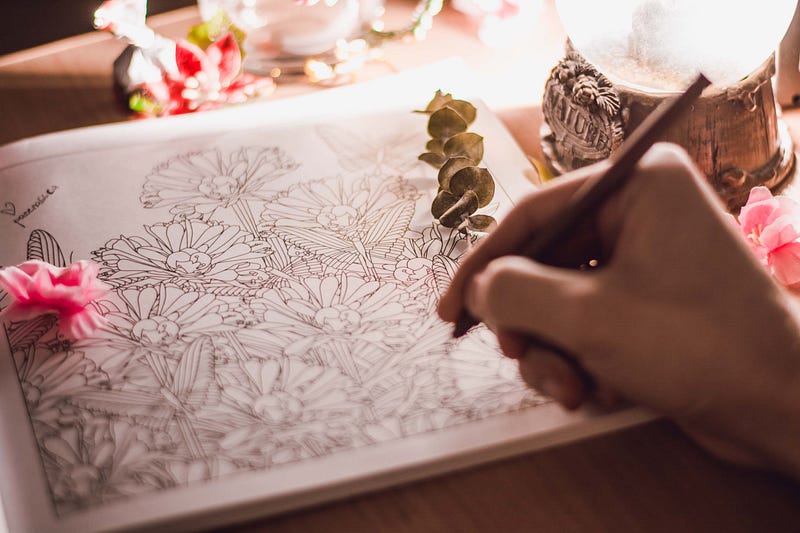
Photo by Mint Owl on Unsplash

How to colour a Mandala

When colouring, abstain yourself from overthinking about the choice of colours. Also, don’t worry if they match. Let your instincts guide you.

After you begin with the first colour, the rest will follow naturally.

One color on the mandala invites another, like a guest who asks to bring his friend to your party. — Susan F. Fincher

What to do with your coloured Mandala

Tibetian monks always destroy their coloured mandalas as a reminder that nothing lasts forever. It’s is a lesson of non-attachment.

By destroying your coloured mandala, you are getting rid of the emotions freed during your colouring session.

You can also choose to keep your mandala, in plain sight, where you can look at it and see if its forms and colours still have anything to transmit to you. While colouring it, you expressed your emotions and deep thoughs; you might need more time to deal with them, and looking at the mandala will help you.

Take the time you need. Either destroying the coloured mandala immediately or after a couple of days, it’s okay. There is no right or wrong decision.

Find Mandalas to Colour

You can easily find mandalas to colour, either in books or printing them from websites.

You can also draw your mandala, that, by itself, it’s also a relaxing activity. Start by creating a large circle and, inside, create shapes and forms. Then, colour it!

Colouring a mandala is a form of art therapy. You can do it any time of the day and at any place. It’s a simple, effective and a cheap way to promote your mental health.

Reading suggestion:

Mindfulness
Self Improvement
Self
Personal Development
Mental Health
Recommended from ReadMedium