
The one thing that can make or break your project
Why Clear Project Documentation is a Gamechanger
And why you should never skip it

History is the best teacher. Albeit sometimes tough ones, its lessons are usually unforgettable since they carry their essence through real life events — events which we build upon so that mistakes are avoided, and beneficial actions are repeated.
On January 28, 1986, the Space Shuttle Challenger was on it’s way for its last flight ever. Attributed to the failure of adequately documenting and communicating critical information regarding the O-rings, the shuttle broke apart 73 seconds into its flight.
To give context, O-rings were crucial components in the solid rocket boosters of the Space Shuttle. They were designed to seal joints between segments of the boosters to prevent hot gases from escaping. O-rings however were particularly prone to failure in cold temperatures causing them not to seal properly — an important piece of information that was not properly communicated and documented by NASA and it’s contractor, Morton Thiokol — which led to the shuttle’s explosion following its launch on a very cold morning.
In contrast, a truly remarkable example of successful project deliveries through clear documentation is the London 2012 Olympics project.
Having personally seen excerpts from the project’s documentation during my studies — reams of papers of budget trackers, resource matrices, project briefs, etc — the project was delivered successfully on budget, time, and scope. Value and benefits are still being gained to this day — one example are the residences originally built for the athletes which have been converted to flats that formed the current residential area.
Admittedly extreme examples, project management practitioners all over the world learned through such lessons the importance of clear project documentation.

It’s not just in project management
Interestingly enough (and unsurprisingly), documentation exists in all aspects of life — either be it in a professional level or a personal level.
Architects are using blueprints to describe their designs, and meticulously include all important information that need to be considered in order to have a sound structure.
So do engineers. Even though not my profession, I do understand that multiple documents must be carefully composed, reviewed, and approved, before proceeding to any sort of activity.
Medical personnel also rely heavily on proper documentation. Doctors prescribe medicine and therapies by writing down the correct information on a piece of paper.
Any omission of critical information in any of the above examples can have negative consequences.
The benefits are real
There may be people out there who feel like they don’t have time to invest in doing this. Or carry the mentality of “we’ll be fine without it”. And that’s perhaps because it’s already hard enough to get a project off the ground in the first place.
However I would strongly argue that’s a grave mistake.
Give me six hours to chop down a tree and I will spend the first four sharpening the axe — Abraham Lincoln
Although it always depends on the context, planning a project usually takes most of the part of its execution. A huge part of this is getting your documentation clear.
There is an objective with a beginning and an end
Having clear documentation means that the work to be caried out is finite and does not expand indefinitely. That’s big.
Your work must be specific, measurable, achievable, realistic, and time-bound.
In other words, SMART.
This is particularly relevant considering that almost all projects suffer from scope creep.
Having managed numerous web development projects — in which clients love to constantly add more work — the one thing that saved me from keeping my resources on track was crafting detailed scope of work documents for each phase of the project.
If a request wasn’t in the brief, then we would re-evaluate at a later stage once the agreed upon work was completed.
You have a clear plan and set of actions that need to be followed
Finite scope, means the activities and steps that have to be carried out in order to complete the work begin to emerge within the limits of where the work starts and where it ends.
That provides a clear pathway for the plan that you need to create, along with the relevant actions at each step.
The scope of work becomes tangible
When you write something on a piece of paper, it’s like transferring it from the mental world into the physical world, making it tangible. The actual work that needs to be done is not an idea anymore but something physical that can be grasped.
By clearly documenting your work along with all relevant information, it becomes trackable. You can assign roles and responsibilities within your project and the project tasks, and their progress is traceable as you know who is supposed to complete what work by what deadline.
This is something I employ vigorously. Based on what needs to be done, I assign each person’s tasks and responsibilities, and have them agree to it upon their review of the document itself. Through that, I ensure I have their acceptance. In other words, I confirm an agreement and a mutual understanding of responsibilities between us.
Improved communication for all parties involved
With clear project documentation, any assumptions in the project become explicit — meaning that all possible explanations that can exist of any given statement are reduced down to one specific interpretation.
This leads to better communication between stakeholders and the team. Stakeholders can understand what a project involves, how much it’s going to cost and how long it’s going to take.
Plus, any information relating to the project is readily available so that clear communication is made possible.
I cannot count the number of times where people ask me all sorts of questions about a project at random points in time during its progress. Instead of interrupting my workflow to source that piece of information, I refer them back to the documentation.
Last but not least: Risk Mitigation
Clearly documenting the project means that you are less likely to omit important information.
Apart from extreme scenarios that could even lead to fatal consequences (relative to the project’s context) such as the Challenger’s case, leaving out key material can cost money and time.
Speaking from experience, trust me when I say this is something you want to avoid at all costs. The last thing you want is to be a few months in a project and suddenly realise that one minor detail that was missed means the entire development cycle must be redone in order to accommodate that piece of functionality.
Think about it. People always refer to the documentation to find out the single point of truth. It’s the same as legal contracts: people check to see what’s included in them to see what applies and what not; they check to see if they are exposed in any way.
There’s more benefits to these but you get the idea.
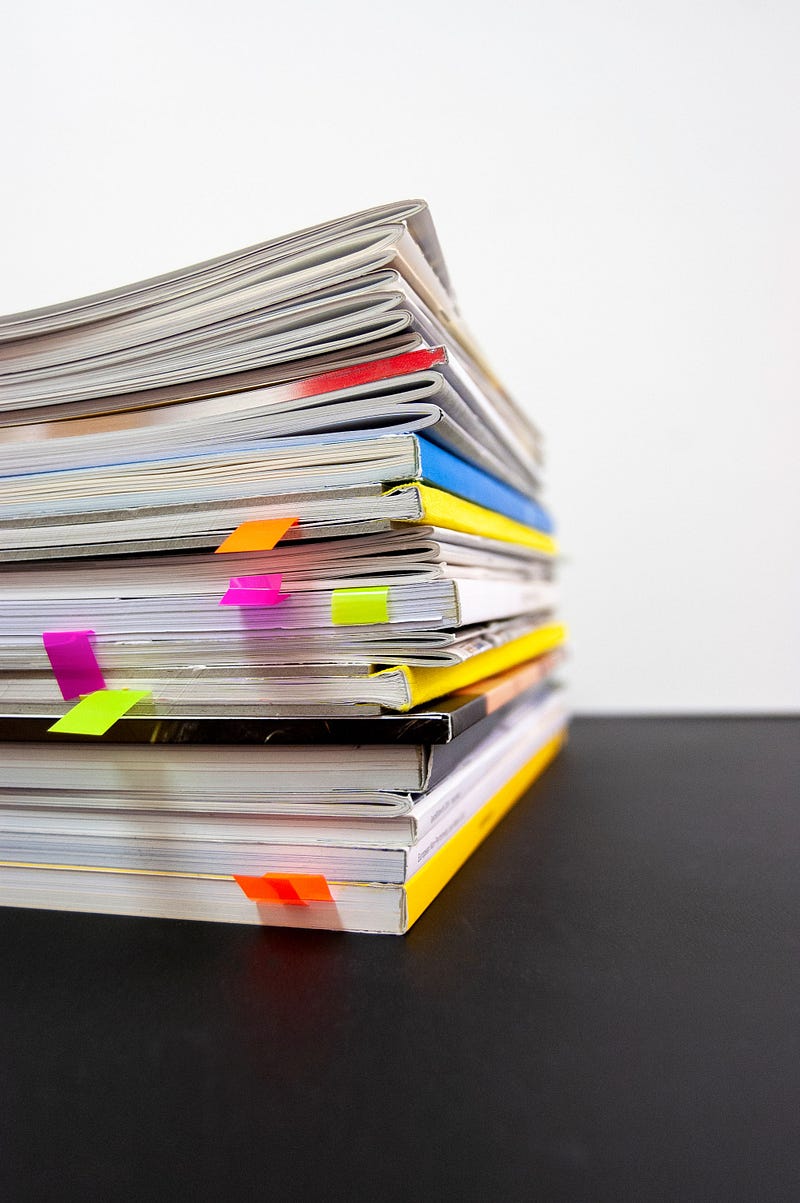
Why is it a game changer
The answer to this question lies in the collective value drawn by the benefits included in this article and on tonnes of others.
However, the bottom line is this:
Documentation can make or break your project.
It can be the deciding factor whether your project succeeds or not, whether it delivers the desired results, whether lives will be at risk or if they will be safe, or whether the activity in which you are engaging in to complete a specific objective with a group of people will not be a waste of time.
It may sound dramatic and extreme, but it is the reality.
As humans, we are accustomed to considering written communication as the source of truth — the official response to our inquiry about something.
It feels like once we have something documented, we tether ourselves around it and follow it religiously. And that’s ok because how else would we know where we stand?
Verbal communication exists nowhere other than the air when it’s spoken and in our minds when it is received.
And let me tell you one more thing. Getting your documentation right is a hard thing to do. It’s not simple. It takes time and effort, requiring multiple discussions with lots and lots of people, revisions, repetitions, discussing the same things over and over again, so that the exact accurate information can be extracted from people’s minds and be captured on a piece of paper.
That’s the real skill, and that’s why it makes all the difference in the world.
Because at the end of the day, if done correctly, nothing is left to chance.
To sum it up
Even though the importance and benefits are there, people still tend to omit drafting clear documentation thinking the consequences will not be dire.
That’s a grave mistake and the sooner we realise this the better results we will have.
It may seem a daunting and challenging task at first, but that should not be used as an excuse to avoid doing it.
Instead, we must take a deep breath and realise that the more refined our documentation is, the less we have to worry about things going wrong down the line.


