
Why Chinese Restaurant Syndrome Shouldn’t Scare You, Because It Is All A Hoax
Are you afraid of MSG in your food?
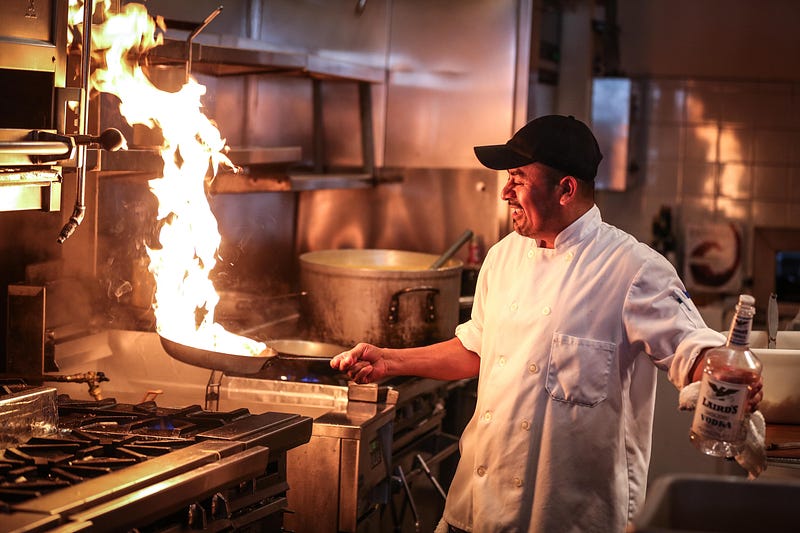
What is the best way to start our conversation? Let me ask you, what is your favorite Chinese food? And because I’m Asian, Chinese food is a staple in my diet, from rice to noodles and egg rolls.
As Filipinos, we have our version of egg fried rice, which to us is known as “sinangag,” we have “pancit,” or noodles, and “lumpia” or egg rolls.
But one thing we can all agree about, we have in the past talked about the “Chinese Restaurant Syndrome,” and only as I was writing it down today, that it is racist even to say there is such a syndrome.
What is “Chinese Restaurant Syndrome?”
Chinese restaurant syndrome is the term used to describe the feeling of vertigo, nausea, and other unpleasant symptoms caused by consuming a common food additive found in many Asian cuisines.
Although this affects a small percentage of diners, it can cause quite a scare among those who have never experienced such side effects before. So if you are one of the people with worry about going out for dinner and eating at a Chinese restaurant, don’t be afraid to enjoy your favorite Chinese food because what started our fear for MSG is nothing but a big fat joke.
Although, food allergy is real, and it is possible that you can have an adverse reaction to eating food with MSG, but not necessarily Chinese food.
History of the Chinese Restaurant Syndrome.
If my memory serves me right, MSG is used in our household until one day, Mom said we wouldn’t be using it anymore, there are other ways to make the food tasty without Ajinomoto, the brand of MSG we all grew up with. Later on, I realized it wasn’t just in our household, but other people I know stopped using MSG.
The news that it can be bad for your health has reached everywhere because even New York Times published it as far back as 1968.
It all started with a doctor's letter, Dr. Robert Ho Man Kwok, Senior Research Investigator, National Biomedical Research Foundation, Silver Spring, Md.
Except that there is no Dr. Kwok, there is no National Biomedical Research Foundation, and if you are ready to know the truth, you can read it here.
The Dr. Kwok letter that made MSG the villain of our palate.
“For several years since I have been in this country, I have experienced a strange syndrome whenever I have eaten out in a Chinese restaurant.” It went on to describe symptoms including “numbness in the back of the neck, gradually radiating to both arms and the back, general weakness, and palpitation.”
The letter was signed “Robert Ho Man Kwok, MD, Senior Research Investigator, National Biomedical Research Foundation, Silver Spring, Md.”
Everything became the perfect storm, that started with a letter from a research investigator.
At that time, The New England Journal of Medicine didn’t peer-review the letter and took the letter as truth, especially when other doctors began to collaborate the “findings.”
It will take almost 50 years to unearth the truth, and it will take a Professor from Colgate University her named is Professor Jennifer LeMesurier, who happened to catch a disturbing phrase while watching a show on PBS show The Mind of a Chef with David Chang where a guest talked about the MSG controversy as a hoax.
That bit of a statement from a TV show guest spiraled Prof. LeMesurier to dig deeper, and she found out that what happened in the 60s was more of a cultural bias against everything that was Chinese to think that MSG isn’t a Chinese invention but of a Japanese invention in the early 1900s.
What happens next will leave your mouth dry.
In January 2018, LeMesurier was shocked when she listened to a voicemail message. The caller identified himself as Dr. Howard Steel ’42, a Colgate alumnus and former trustee. “Boy, have I got a surprise for you,” he said. “I am Dr. Ho Man Kwok.”
The real Dr. Kwok is Dr. Howard Steel, who happens to be a Colgate alumnus, the University where Prof LeMesurier is working.
Dr. Steel claims it all started as a wager against his friend if he, an orthopedic surgeon, can write so well that he could have it published in a prestigious journal, and so he did.
He wrote a letter to the New England Journal of Medicine, signed with a fictitious sounding name that anyone could easily flag it as “fake.” And yet, to his surprise, not only did the journal publish it, even when he came out to say it was all a hoax, nobody listened to him.
As other doctors began to join the bandwagon to share their own experience with MSG, the Chinese Restaurant Syndrome was born and became quite a health scare in the 60s.
The truth about MSG.
MSG isn’t a Chinese invention. It is Japanese, and the guy who discovered it is Kikunae Ikeda. Nowadays, MSG is made from fermented starch, sugar beets, sugar cane, or molasses.
MSG stands for monosodium glutamate. So sodium — everybody knows what that is — [is] the first ingredient in common table salt.” (Natural salt found in foods accounts for about 10 percent of a person’s total daily intake, according to the Food and Drug Administration.) Meanwhile, glutamate, the basic component of MSG, “is a synonym for glutamic acid [and] is a naturally occurring amino acid. It’s one of the building blocks of protein,” says Lee. In aqueous solutions, MSG breaks down to sodium and glutamate.
And you can find MSG in most processed food. Let us start with the chips that we all love, Doritos. It has MSG, that is why it tastes so good.
Final words.
At the pandemic's beginning, the US President wanted to call it the “Chinese virus,” and some did buy his lies. I would like to point out that it is elementary to believe a lie, especially if we have a preconceived bias against a group of people, in this case, the Chinese.
The same thing happened in the 60s, although it started a joke between friends, it became accepted as scientific fact because a prestigious medical journal published it, then a very reputable newspaper shared it with its readers, the New York Times, and while news then traveled slowly, it reached our family twenty years later, because I remember we stopped using MSG in the 80s.
Today, truth is a tough commodity to verify, but lies travel at lightning speed. Even if you fight off lies or even have proof, people have already believed the lies, the fake news, and the next time you read anything online, don’t believe it outright. You can be deceived or lied to without you even knowing.


