avatarFreda Savahl

Free AI web copilot to create summaries, insights and extended knowledge, download it at here

2183

Abstract

learning about wildlife.</p><figure id="d124"><img src="https://cdn-images-1.readmedium.com/v2/resize:fit:800/1*7LbRGo71q5n_vSIkSIxTRA.png"><figcaption>Brothers, Oliver & Hudson an earlier photo. Author’s photo.</figcaption></figure><h2 id="6c89">The cheetah speed has my interest:</h2><p id="c504">On returning home, I research the physiology behind the speed of this magnificent cat!</p><h2 id="8a34">When we think about speed:</h2><p id="0784">Our thoughts drift to a Supercar- Bugatti Bolide, Usain Bolt- the Jamaican sprinter, the speed of Light, or Cheetahs!</p><figure id="b327"><img src="https://cdn-images-1.readmedium.com/v2/resize:fit:800/0*2IOAGLs0uGZ-pVZC"><figcaption>Photo by <a href="https://unsplash.com/@ahmadgalal?utm_source=medium&amp;utm_medium=referral">Ahmed Galal</a> on <a href="https://unsplash.com?utm_source=medium&amp;utm_medium=referral">Unsplash</a></figcaption></figure><h2 id="4f0b">Why cheetahs are the fastest land mammals, topping out at 75mph in a little over three seconds!</h2><p id="d265">Multiple factors are involved. These are a combination of physical characteristics well-suited for high-speed pursuits:</p><h2 id="e0d7">1. Spine Mobility:</h2><p id="33e2">Unusually long and flexible spines allow them to extend their legs as far as possible when running.</p><h2 id="24e9">2. Claws:</h2><p id="85fb">Cheetahs are the only cats with non-retractable claws that act like cleats, providing traction on the ground during sprints.</p><h2 id="f92d">3. Muscle Fibers:</h2><p id="d99d">The muscle composition of Type II is rapidly twitching muscle fibers that quickly release top energy needs for short periods.</p><h2 id="56e9">4. Aerodynamic Body & fur alignment:</h2><p id="3f5a">It has a long, slender, fluid body with a lightweight skeleton. The cheetah's fur is directed backward to produce as little air resistance as possible.</p><h2 id="f773">5. Powerful leg muscles:</h2><p id="19da">These exceptional muscles provide stride length and speed.</p><h2 id="2c3a">6. Large nasal passages:</h2><p id="4605">Their large nasal passages and efficient lung capacity enable adequate oxygen intake.</p><h2 id="e610">7. Their exceptional ey

Options

esight,</h2><p id="3040">and coordination, contribute to their remarkable speed.</p><h2 id="c0e4">8. Lightweight:</h2><p id="f05b">Its lightweight build reduces air resistance and allows for rapid acceleration. Cheetahs only weigh 120 lbs. Less weight means less force required to move at higher speeds.</p><h2 id="09bf">9. Long muscular tail:</h2><p id="5c64">The tail works like a rudder, stabilizing and acting as a counterbalance to its body weight.</p><h2 id="3b40">Watch the cheetah's speed in this short video if you have time.</h2> <figure id="1971"> <div> <div> <img class="ratio" src="http://placehold.it/16x9"> <iframe class="" src="https://cdn.embedly.com/widgets/media.html?src=https%3A%2F%2Fwww.youtube.com%2Fembed%2FxaV1_M2j200%3Ffeature%3Doembed&amp;display_name=YouTube&amp;url=https%3A%2F%2Fwww.youtube.com%2Fwatch%3Fv%3DxaV1_M2j200&amp;image=https%3A%2F%2Fi.ytimg.com%2Fvi%2FxaV1_M2j200%2Fhqdefault.jpg&amp;key=a19fcc184b9711e1b4764040d3dc5c07&amp;type=text%2Fhtml&amp;schema=youtube" allowfullscreen="" frameborder="0" height="480" width="854"> </div> </div> </figure></iframe></div></div></figure><h2 id="b50a">In conclusion:</h2><p id="e7ab">I know Oliver is too young to absorb the dynamics of the cheetah, but he has seen the animal's speed on the National Geographic channel.</p><figure id="e42b"><img src="https://cdn-images-1.readmedium.com/v2/resize:fit:800/0*8x3pTHa429GHNkZJ"><figcaption>Oliver's cat-Author's photo. 2024</figcaption></figure><h2 id="22b8">Thank you, readers, for your time & support. Wildlife is fascinating, and so are little boys and their cats. I am so fortunate!</h2><p id="b1cf"><i>Source: https://<a href="https://cheetah.org/learn/about-cheetahs/"> cheetah.org/learn/about- Cheetahs/</a></i></p><p id="8a24"><i>Source: https://sco.wikipedia.org/wiki/Cheetah</i></p><p id="3a9b"><i>Join Medium for as little as US5 or US15 a month and become a Friend of Medium. Enjoy the experience of being paid for publishing your articles and reading wonderful stories & great poetry on this unique platform.</i></p></article></body>

Why Can the Cheetah Run So Fast?

I present the dynamics of the speed of the cheetah.
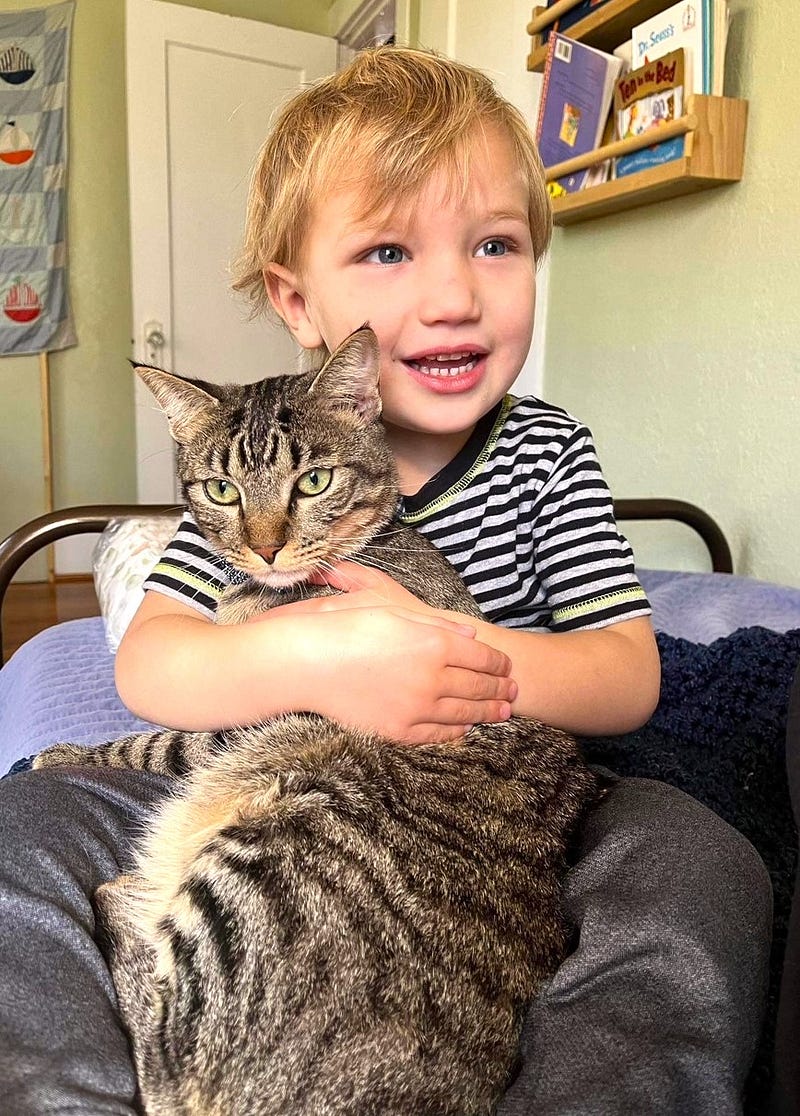
Oliver and Cake, his cat. Author's photo.

Oliver's interest:

On a visit to the grandkids & their parents, Jill, my granddaughter, asks what I am writing about. I tell her about my article on the cheetah.

Hearing this, Oliver runs after his kitty & scoops it up to show me how big it has grown.

He tells me his cat runs faster than a cheetah because it is hard to catch him.

I thought, well, this little feller has no idea that the cheetah is the fastest big cat on the planet. So, in easy words, I explain how fast the cheetah can run.

I tell him, "'Cake," his kitty, is no match for the cheetah's speed. Cheetahs are wild cats hunting for food, whereas he feeds his kitty.

On hearing this, Oliver asks his mom to allow him to see the cheetah on their wildlife channel.

We are delighted & sit down with a bowl of popcorn to watch the cheetah!

What a delight! The two boys clap for the chase and hide their faces as the cheetah captures its prey. Then, they share big smiles, watching the cute cheetah cubs with their mama.

I am thrilled these boys are learning about wildlife.

Brothers, Oliver & Hudson an earlier photo. Author’s photo.

The cheetah speed has my interest:

On returning home, I research the physiology behind the speed of this magnificent cat!

When we think about speed:

Our thoughts drift to a Supercar- Bugatti Bolide, Usain Bolt- the Jamaican sprinter, the speed of Light, or Cheetahs!
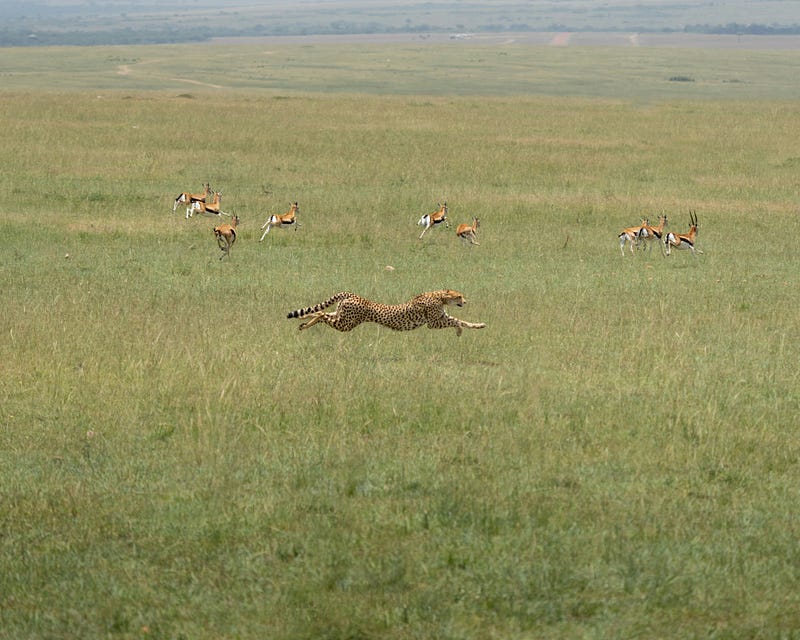
Photo by Ahmed Galal on Unsplash

Why cheetahs are the fastest land mammals, topping out at 75mph in a little over three seconds!

Multiple factors are involved. These are a combination of physical characteristics well-suited for high-speed pursuits:

1. Spine Mobility:

Unusually long and flexible spines allow them to extend their legs as far as possible when running.

2. Claws:

Cheetahs are the only cats with non-retractable claws that act like cleats, providing traction on the ground during sprints.

3. Muscle Fibers:

The muscle composition of Type II is rapidly twitching muscle fibers that quickly release top energy needs for short periods.

4. Aerodynamic Body & fur alignment:

It has a long, slender, fluid body with a lightweight skeleton. The cheetah's fur is directed backward to produce as little air resistance as possible.

5. Powerful leg muscles:

These exceptional muscles provide stride length and speed.

6. Large nasal passages:

Their large nasal passages and efficient lung capacity enable adequate oxygen intake.

7. Their exceptional eyesight,

and coordination, contribute to their remarkable speed.

8. Lightweight:

Its lightweight build reduces air resistance and allows for rapid acceleration. Cheetahs only weigh 120 lbs. Less weight means less force required to move at higher speeds.

9. Long muscular tail:

The tail works like a rudder, stabilizing and acting as a counterbalance to its body weight.

Watch the cheetah's speed in this short video if you have time.

In conclusion:

I know Oliver is too young to absorb the dynamics of the cheetah, but he has seen the animal's speed on the National Geographic channel.

Oliver's cat-Author's photo. 2024

Thank you, readers, for your time & support. Wildlife is fascinating, and so are little boys and their cats. I am so fortunate!

Source: https:// cheetah.org/learn/about- Cheetahs/

Source: https://sco.wikipedia.org/wiki/Cheetah

Join Medium for as little as US$5 or US$15 a month and become a Friend of Medium. Enjoy the experience of being paid for publishing your articles and reading wonderful stories & great poetry on this unique platform.

Cheetah
Dynamics
Speed
Kids
National Geographic
Recommended from ReadMedium