
Why Blue Space is Better Than Green Space
Spending time near water improves psychological and physical well-being
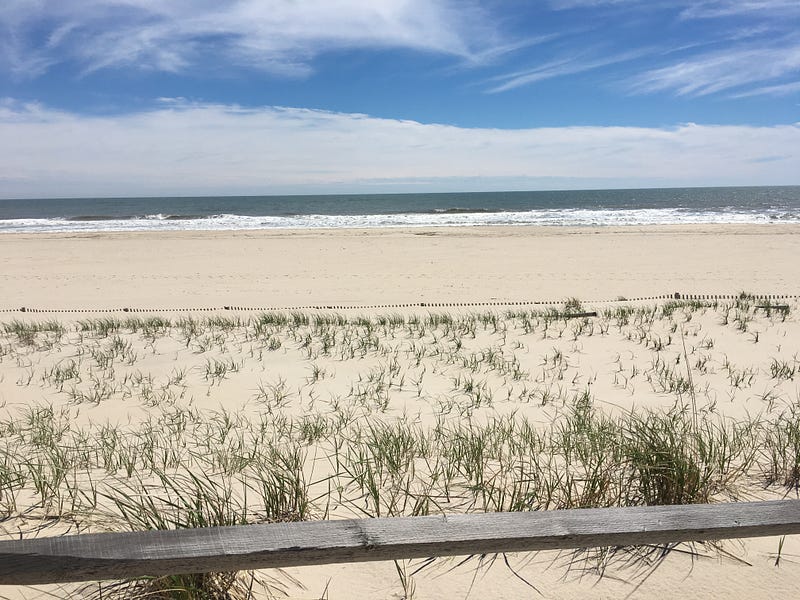
A few years ago — aided by selling a rental property we’d owned for decades — my husband and I bought a beach house that we could almost afford. We texted our three children from the real estate office, telling them we had both good news and bad news. The good news was, of course, that we had bought a beach house. The bad news was that we could now only afford to send two of them to college (a comment meant in jest, although our middle child eagerly volunteered to skip college).
This house is about five hours from our home in Massachusetts, so the trip is not easy. But every time we arrive, we see the ocean and the stress of the drive — the traffic jams, the suboptimal bathrooms, the fast food snacking — fades away.
And our experience is not at all unusual. There’s a reason why people pay more for a hotel room — or house — with a view of water: Looking at water helps calm the body and reduce arousal. It decreases our heart rate and blood pressure and increases hormones, such as serotonin and endorphins, in the body that make us feel good.
Reduces physiological arousal
In one of the earliest studies to examine the beneficial effects of looking at water, a researcher at the University of Delaware measured people’s brain waves while they looked at pictures of nature that included either green space (natural vegetation) or blue spaces (water). People who were looking at blue-space pictures showed lower levels of brain activation, indicating simply looking at pictures of water is relaxing for the brain.
But looking at water doesn’t just help us relax. More recent research suggests images of water can lessen help people manage routine dental procedures, such as having a cavity filled or a tooth pulled. Researchers in this study randomly assigned patients to one of three conditions: Some took a virtual walk — using a virtual reality headset — around a local beach; others took a virtual walk around a local city; and still others received standard care.
Patients who took a virtual walk around a local beach reported less anxiety and pain than those who received standard care or took a virtual walk around a city. They also remembered the dental procedure more positively a week later, indicating that even virtual exposure to water leads to lasting beneficial effects.
Increases happiness
One of the largest studies to examine the impact of so-called “blue spaces” — oceans, rivers, lakes — collected data from more than 20,000 people in the United Kingdom. Using a smartphone app that tracked people’s specific location, researchers asked the participants to report their overall sense of well-being at random points throughout the day. They then calculated how close people were to different types of natural environments, including marine and coastal locations as well as different types of green spaces.
No surprise: People were generally much happier when in any type of natural environment than in urban locations. But all nature was not equally beneficial. People were happiest in marine and coastal locations.
Why does spending time in marine and coastal locations make us feel better? One explanation is that looking at a vast body of water puts our own stressors in proper perspective.
“Seeing ourselves in a coastal space allows us to let go of things in a way that other spaces don’t,” notes Catherine Kelly, author of Blue Spaces: How & Why Water Can Make You Feel Better. “Here I am, this small thing. So my problems are maybe not that big after all.”
And for anyone not fortunate enough to live near water, here’s some encouraging news: Looking at water even in an urban environment — such as a river or canal in the midst of a city — can make you feel better.
In one study, researchers in New Zealand examined whether blue spaces (the Tasman Sea on the north, the Pacific Ocean on the south) and green spaces (forests, parks) were visible from various residential locations. They also examined residents’ overall level of psychological distress. As predicted, people with a view of the ocean had significantly better mental health than those without. (Interestingly, there was no association between having a view of green space and mental health.)
Now, you might be thinking that other factors may explain this relationship. After all, it’s pretty likely that people living in a home with an ocean view are wealthier and/or older, which could account for these findings. But the researchers controlled for these factors when analyzing their data, and still found clear evidence that people whose homes have a water view have better mental health.
Improves mental health
Spending time near blue spaces may even have lasting benefits for mental health. A study last year examined data from more than 15,000 people living in 18 different countries. Participants reported how much time they had spent near water — rivers, lakes, oceans — during childhood, including how close they lived to blue spaces, how often they visited, and how much they played in these settings. They also reported on their current mental well-being and regular exposure to blue spaces in the last month.
As predicted, people with more exposure to blue spaces during childhood were more likely to spend time in blue spaces as adults. These early life experiences seem to lead to lasting preferences.
But more importantly, their data also revealed that people with more exposure to blue spaces during childhood reported better mental health during adulthood. Why? Childhood exposure to blue spaces led people to spend more time in such spaces later in life, which in turn led to better mental well-being.
“Our findings suggest that building familiarity and confidence in and around blue spaces during childhood may stimulate an inherent joy of nature and encourage people to seek out recreational nature experiences, with beneficial consequences for adult mental health,” said Valeria Vitale, a doctoral candidate at Sapienza University of Rome and the lead researcher.
If you are interested in learning more about the benefits of spending time by the water, check out Blue Mind, a book by marine biologist Wallace Nichols that describes how water is good for both mental and physical health.
Thanks for reading! Follow me on Instagram for regular tips on happiness and health!