
Why Barbie Should Be Your Feminist Icon
Don’t throw your dolls out yet.
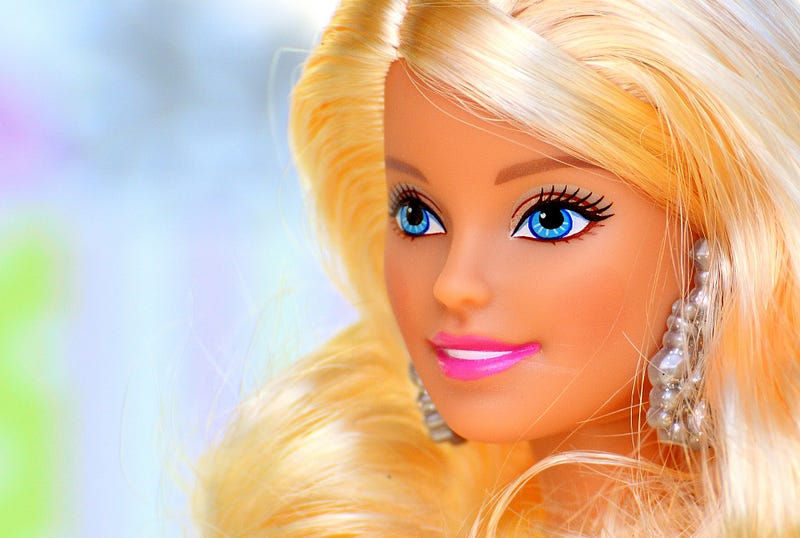
If I asked you who your feminist icon is, you might name at least one of these amazing women: Gloria Steinem, bell hooks, Maya Angelou, Alice Walker, Malala Yousafzai, Greta Thunberg or even Beyoncé.
But I wouldn’t expect you to include Barbie in that list too.
Maybe it’s because she’s a doll. She certainly has an aura of ridiculous and annoying perfection — her size four body, her flawless skin and her tiresome hyper-femininity.
Feminists like Gloria Steinem have criticised Barbie. In the recent documentary Tiny Shoulders, Steinem argues that Barbie is ‘everything we didn’t want to be…everything the feminist movement was trying to escape.’
I would argue quite the opposite though.
Barbie Has Issues: Her Body
It’s true that in 1965, Mattel released a ‘Slumber Party’ ensemble with their Barbie doll. It included a mini-book with the title How to Lose Weight. The back cover of this fascinating book was only one advice: Don’t Eat! Along with the book, Barbie was packaged with a weighing scale permanently displaying 110lbs. Wow!
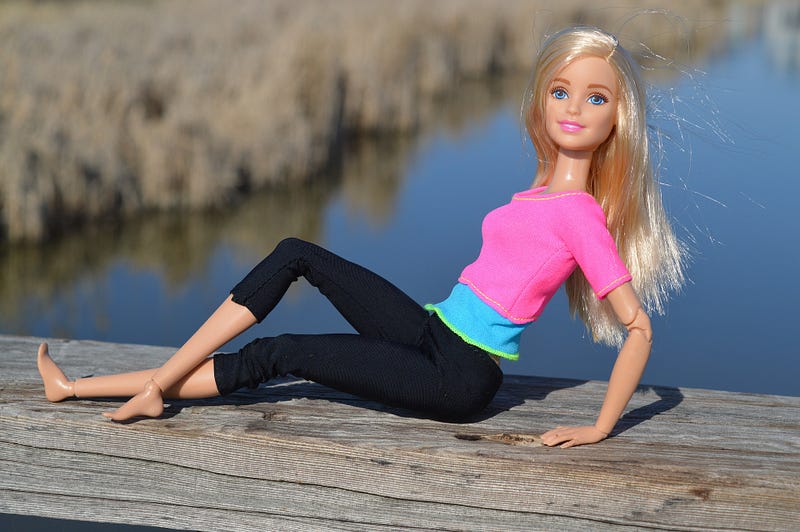
Now, for parents today, this would be a scandal if it were displayed on the shelves. And it doesn’t make it any better that it was only in 1997 Barbie’s body was redesigned and, she was given a wider waist. Still, criticism came knocking at Mattel's door and in 2016, they finally released a range of new body types: ‘tall’, ‘petite’ and ‘curvy’.
Perhaps then the issues of Barbie’s perfect and ridiculously impossible body make her less of an obvious feminist.
Yet, Mattel’s Barbie is so much more than just a doll.
Barbie Is Diverse
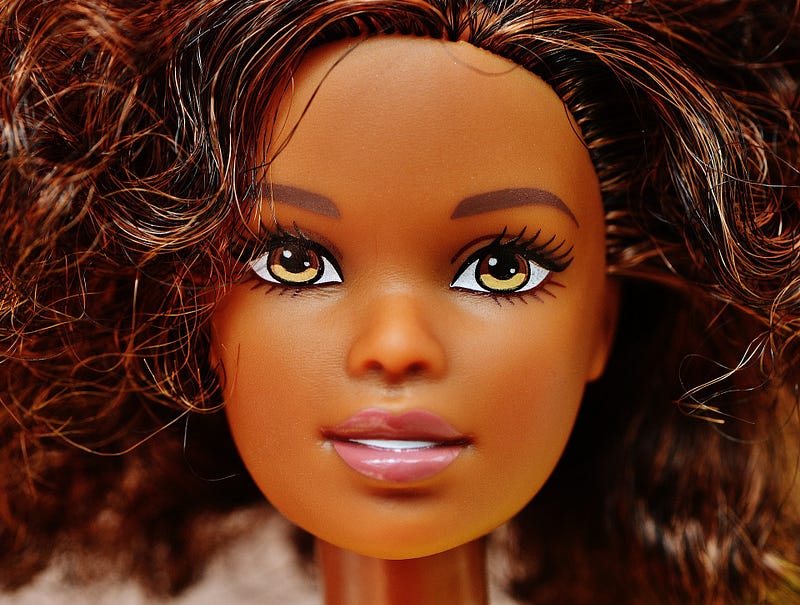
Mattel was way ahead of their time with their inclusive diversity. Although most people associate Mattel’s diverse Barbies with their Rosa Parks Barbie in 2019, they were, in fact, manufacturing racially diverse Barbies since the 1960s. Although this shouldn’t be an achievement, Ruth Handler was very progressive for her time. In the ’60s, she pushed Mattel’s designers to create African-American dolls like Julia and Christie.
Black Barbie was launched in 1980 but still had caucasian features. Later in 1990, after a focus group was created for an authentic African-American doll, Mattel created new moulds for Black Barbie. In addition, facial features, skin tones, hair textures and names were all altered.
In 2016, Mattel expanded this line to include 7 skin tones, 22 eye-colours and 24 hairstyles. This was partly because sales started to deplete. Again in 2020, Mattel diversified its Barbie range so that now she can have no hair, have a prosthetic leg, have vitiligo, have a wheelchair (with working brakes and a ramp!), and many more exciting accessories.
Did you know there’s even a hijab-wearing Barbie? Yes, you heard right! As a practising Muslim, I found this highly empowering. I just wish Mattel made her earlier when I was a little girl.
She was launched in 2017 to honour Ibtihaj Muhammad, the American fencer who became the first to wear the Islamic head-covering whilst competing at the Olympics.
This seemingly diverse move came with criticism as people saw this as promoting regressive thinking. These same people forgot that there are Muslim women, like myself, who need that representation to know that we can do anything.
So no. It’s not regressive to include a hijab-wearing Barbie. On the contrary. It is empowering.
Today, Mattel boasts 176 dolls, 9 body types 35 skin tones and 94 hairstyles. That is impressive.
Barbie Is An Independent Queen
In many ways, Barbie is a true feminist. Prior to 1959, children played with Betsy Wetsy and Chatty Cathy — baby dolls that encouraged children to hold babies. They normalised the expectation of a nurturing mother.
However, Ruth Handler had realised that her daughter much preferred playing with grown-up paper cutouts and tried to dress them. Of course, this led to the first-ever Barbie doll.
The first criticism came in when a lot of male buyers at the New York Toy Fair in 1959 thought Handler was wasting her time because no one wanted to buy a big-breasted toy. Many mothers thought the same describing the toy doll as cheap and vulgar. But Handler ploughed on with her vision.
She was determined to show that girls didn’t want to play mummy — they just wanted to pretend to be older. So when Barbie hit the shelves, girls flocked towards her: they begged their mums to buy them a doll.
Barbie normalised having a career for young girls at a time where women were expected to stay at home and raise their kids. “Barbie was a wildly revolutionary toy,” said M.G. Lord, author of Forever Barbie. “She became things real women couldn’t become.”
For the first time, there was a doll invented by a woman telling other women what — for better or worse — they could be.
Handler’s Barbie unapologetically rejects the roles of women in the domestic sphere. In fact, the closest thing to domestic life Barbie saw was in 1963’s ‘Barbie Babysits’ ensemble with an infant and a baby bottle.
Barbie has always been about girls choosing their own lives.
Since her debut in 1959, Barbie has held over 200 jobs including president (ahem), astronaut (and landed on the moon in 1965, 4 years before Neil Armstrong) and even a computer engineer (she’s got the brains and the body).
Barbie Is A Vlogger
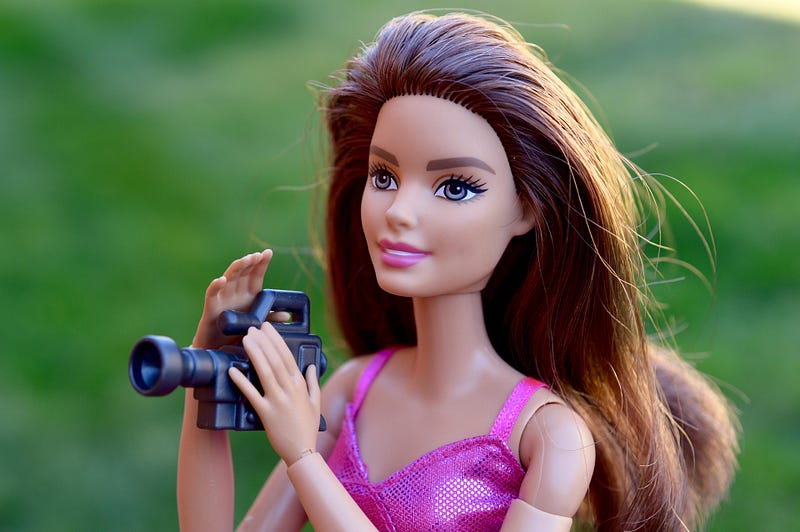
I bet it will take you as a surprise to know that Barbie has a vlog. This has been part and parcel of a rebrand for Barbie.
You see, despite the many empowerments that Barbie stands for, the sales were not looking good. From 2012 to 2017, Barbie’s sales dropped by 25%. But then sales of Barbie dolls started to increase by 14% in 2018 and then increased by 10% more in 2019.
Barbie’s rebrand in a world of modern technology meant seeing her talk to her young audiences through her YouTube channel. The channel boasts 9M subscribers and houses Barbie’s vlogs. Mattel hired America Young, a 35-year-old actress to play our beloved Pantone 219 C queen. America wears a motion-capture suit every month in an attempt to shelter Barbie in the digital world.
As you might expect, children no longer look at dolls to play with — they’d much rather watch other kids play with such toys (the story of Ryan’s Toy Reviews’ s success). So, the battle to keep sales afloat for Barbie is a challenge.
But with a vlog, Barbie moves away from being a doll — she becomes almost like a real person (maybe even a friend). She shares her House Tour, has deeply personal heart-to-hearts on camera and participates in viral YouTube challenges, just like any other Youtuber.
In one of her vlogs, Barbie breaks down the ‘dream gap’, a phenomenon where girls begin to lose confidence in their competence from the age of 5. This is groundbreaking. Barbie is no longer a superficial doll. She’s woke and not in a forced way either.
Barbie Gets A Lot Of BS
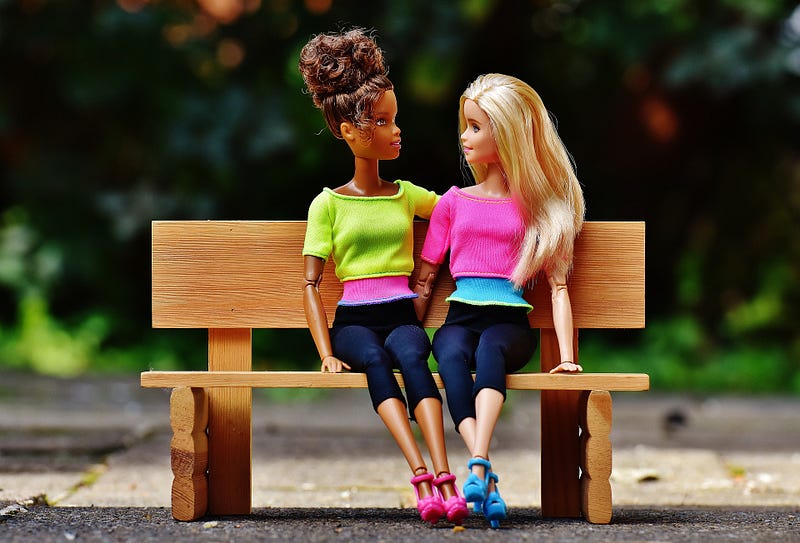
Barbie has become a groundbreaking project that is not typical of a toy doll. She is diverse, inclusive, an independent queen and still, people are not happy. She has dominated the shelves for over 60 years.
When the Bratz dolls were on the shelves rubbing elbows with Barbie, no one ever spoke about ‘diversity’, granted that they were actually racially diverse. The Bratz dolls didn't have a range of body types and I’d argue that their bodies were more problematic compared to Barbie’s.
Barbie was always one girl who was made to do almost everything to prove that she was worthy of people’s hard-earned money.
And yet, there are still criticisms.
Whilst seeing Barbie have all these careers is empowering. There is a certain ceiling. The career outfits are often superficial and lack depth. Perhaps because we never see her study or going through higher education, the gruelling hours before magically getting a successful career seems to be glossed over.
Girls want to be like Barbie and be an astronaut. But they don’t know how to get there. The love for learning at a young age is largely ignored.
On a more superficial level, many believe that Barbie should have more realistic facial features. Her face shouldn’t be symmetrical.
But surely this is taking it too far. This sort of criticism is never directed at dolls like Baby Annabell. In fact, there is an alarming lack of diversity in baby dolls. Even the Bratz girls had symmetrical faces and no one gave a shit.
Symmetrical facial features are not what toys should have. We asked for a more healthy body image, and Mattel delivered. We asked for diversity, Mattel delivered. So long as healthy representations of all cultures and religions are portrayed, Barbie doesn’t owe us anything.
It’s a classic story of a woman. She’s pretty and enviable and so everyone and their grandmothers think that they should make decisions about her appearances and largely overlook the huge achievements Mattel earned in keeping their star daughter on our shelves.
But I don’t care what people say. Barbie is my feminist icon and she should be yours too.


