
Why at Almost 50, I’m Giving up My Pretty Privilege
There’s power in a woman admitting her real age.
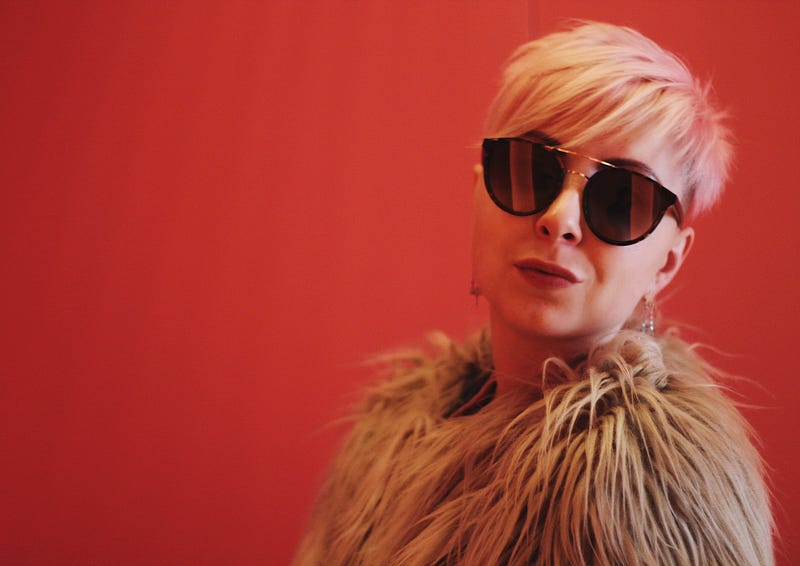
I haven’t manicured my nails in months. I’ve let my highlights grow out. The ends of my hair are broken and split. I badly need a haircut. The bottoms of my feet are calloused. My eyebrows have sprouted hairs where I once plucked. I no longer bother putting on makeup every morning. I rise from bed, throwing on whatever clothes are most convenient without coordinating colors. Then I give my hair a quick brush. Done.
This is a big change for me. As a younger woman, I spent hours perfecting my appearance. I refused to leave the house without a fully made-up face.
My hair was always immaculately styled. I felt naked if I wasn’t dressed to the nines. My nails were never unpainted.
Now I’m pushing fifty, and I’ve given up my need to always look perfect. Why?
Logic says this is exactly when I should be scrambling to maintain my looks. Whatever I have to do not to lose them — dye my grays, get Botox and fillers, a tuck or a lift.
This is because women aren’t allowed to age in our society. At least we’re not allowed to look our age.
In her landmark feminist essay, The Double Standard of Beauty, Susan Sontag wrote: “Only one standard of female beauty is sanctioned: the girl.”
As a result, “every wrinkle, every line, every gray hair is a defeat.”
So why am I permitting myself to admit defeat at the exact moment when I should be fighting to keep up a young and beautiful appearance?
Because although I’ve benefited from beauty, I’ve also felt oppressed by it. In admitting defeat in the beauty game, I’m finally free.
My beauty has brought me success in life.
It’s no lie that I’ve benefited greatly from my appearance. After college, I took a job as a professional dominatrix. My beauty enabled me to rake in large amounts of cash.
I used that money to move to Europe where I landed magazine jobs in Spain not only because of my writing skills but because of my looks. I often modeled alongside the pieces I wrote.
I got a book deal to write about having worked as a dominatrix. As a result, there were more pictorials in more magazines and appearances on television shows.
My looks were always played up. No one really cared about what I had written. I garnered success based on my beauty, not on my brain.
If beauty has afforded me many privileges, why have I decided to give them up?
In her essay for Allure, “Being Pretty Is a Privilege, But We Refuse to Acknowledge It,” model and TV presenter Janet Mock shares how she can attribute her own success to her looks:
“If I did not look the way I do, then I would not be on TV or on two book covers. I would not have a beauty column or an Instagram with more than 100,000 followers…. [Beauty] has opened doors for me, allowing me to be seen and heard. And for me to pretend that it does not exist denies the ways in which being perceived as pretty has contributed to my success and made the road a bit smoother.”
Pretty privilege is real. According to Deborah A. Byrnes in her paper, “Overcoming Student Stereotypes about Physical Attractiveness,” published in the Education Digest, our social preference for beautiful people starts young:
“Children and adults interact more positively with attractive individuals, and this begins as early as infancy.”
Daniel Hamermesh, for his book, Beauty Pays, also gathered proof to show that beautiful people are more successful.
In her essay for Allure, Mock discussed the type of success that beautiful people enjoy:
“…more popularity, higher grades, more positive work reviews, and career advancement. People who are considered pretty are more likely to be hired, have higher salaries, and are less likely to be found guilty and are sentenced less harshly. Pretty people are perceived as smarter, healthier and more competent, and people treat pretty people better.”
And yet, at the same time that beauty affords a woman many privileges, in playing up my own beauty at the expense of my mind, I’ve also suffered. If beauty is a weapon, it’s also a double-edged sword.
There are drawbacks to being judged just for one’s looks.
As much as I’ve been admired for my appearance, I’ve never been completely trusted for my intelligence.
I relate to what Mock writes of her own experiences being dismissed because of her beauty:
“As someone deemed pretty, I have experienced people looking at me but not really listening. I have often gotten the sense that if I serve a look that I am often reduced as someone who cannot contribute anything beyond my beauty. I have been on job interviews and swiftly met with looks from interviewers that said, ‘A girl that pretty cannot be a hard worker,’ despite overwhelming evidence to the contrary.”
Like Mock, my appearance has often been misinterpreted as evidence of my stupidity. And unfortunately, because I have emphasized superficiality in my life, I also used to surround myself with superficial people.
I came off as dumb because I was acting dumb. Yes, I benefited from my beauty but I was miserable.
Though it scares me to give up the power that beauty has afforded me, I also feel like I’m removing my shackles.
I felt like a pawn in a game I could never win. I was always trying to live up to a standard of beauty I could never attain. There’s always someone who’s more beautiful than. I could never be “pretty” enough.
As I stare fifty in the face, I’m more aware of the futility of trying to chase beauty. I look back on the ways that my obsession has negatively impacted my life.
In my twenties, I went into debt because of my clothes-buying addiction. I had an eating disorder in college that led to a small ulcer in my throat. My insecurity about whether I was beautiful enough led to depression.
Though it scares me to give up the power that beauty has given me, I also feel like I’m removing my shackles.
In giving up my beauty, I gain back myself.
I prefer to “age naturally and without embarrassment.”
Sontag wrote in her essay, The Double Standard of Beauty:
“Women have become accustomed so long to the protection of their masks, their smiles, their endearing lies. Without this protection, they know, they would be vulnerable. But in protecting themselves as women, they betray themselves as adults.”
Maybe that’s it — I’m finally ready to live as an adult. I no longer want to pretend I’m much younger than my age. I’m not a girl — I’m almost fifty.
For as much power there is in beauty, there’s also power in truth.
Besides, I finally feel confident enough not to hide behind a mask of makeup. It’s freeing to feel like I don’t have to don a daily costume of expensive clothing to have self-esteem. I don’t need to invest in a whole line of beauty products to be secure in who I am. I’m happy enough now to be the real me.
I’m doing what Sontag advised women do back in the ’70s: “age naturally and without embarrassment.”
For as much power there is in beauty, there’s also power in truth.