
Why we are not on an unsustainable road to the future
Why Aren’t You Up To The Challenge Of Tackling Climate Change?
Can nanotechnology help?

The need to develop nanotechnology for producing clean and affordable energy
If governments and fuel producers take climate change seriously, they will have to accept these new technological advances, even if they may not be driven by economic interests. Countries that are underperforming in current systems dominated by carbon dioxide-based industries and technologies should view the promise and future of nanotechnology as being able to meet the climate change challenge head-on as a once-in-a-lifetime opportunity.
Many simple changes in the way we use existing resources will have a greater impact in the short term than the application of nanotechnology under development. But the global challenge of producing clean and affordable energy is so great that we need to research and develop nanotechnology to use energy in the future. [Sources: 3, 5, 7]
The role of nanotechnology in generating electricity
In fact, the problem is so big that some people believe that although nanotechnology can deliver on its energy promise, we are still on an unsustainable road to the future. It is my personal opinion that this view is both shortsighted and not realistic given the urgency of the climate change challenge! It is fortunate that people are not only hoping that nanotechnology can make energy cheaper and cleaner, but that they are also supporting these hopes with huge amounts of research and development funds!
Responding to climate change means that we need new ways to generate electricity and use it, and nanotechnology is already playing a role. [Sources: 0, 5]
The promise of nanotechnology in creating more energy for electric vehicles and solar panels

This helped create batteries that could store more energy for electric vehicles, and allowed solar panels to convert more sunlight into electricity. New nanomaterials and concepts are currently being developed that demonstrate the potential for generating energy from motion, light, temperature changes, glucose and other sources with high conversion efficiency.
Scientists around the world are developing nanomaterials that can efficiently use carbon dioxide from the air, trap toxic pollutants from water, and decompose solid waste into useful products. [Sources: 0, 4]
The development of nanomaterials and related nanotechnology has opened up tremendous opportunities for traditional environmental technologies. Nanomaterials and nanotechnology have opened up broad biological applications such as detection, diagnosis and treatment that can never be achieved with bulk materials.
Nanomaterials’ complexity and dynamic behavior poses new safety and resilience challenges
If the issues raised can be appropriately addressed, nanomaterials can play an important role in helping us tackle environmental challenges in the coming years. Nonetheless, intelligent nanomaterials and related products can pose new challenges for assessing safety and resilience due to their complexity and dynamic behavior. [Sources: 2, 4, 9]
With the rapid and varied growth of engineered nanomaterials, it is challenging for regulators and risk assessors to understand the potential for exposure and whether the methods used to assess common chemicals can be applied to nanomaterials. The EPA will develop research protocols for characterizing artificial nanomaterials (ENM) and for assessing exposure and toxicity in complex biological or ecological systems.
Research provides the scientific basis for better understanding, predicting, and solving problems related to nanomaterials. Further research is needed to assess the applicability, effectiveness and sustainability of nanotechnology under more realistic conditions, and to validate nano material(NM)systems against existing technologies. [Sources: 1, 11]
There are many examples of the potential of nano-applications for solving social and environmental problems, especially in the field of energy production and storage, thereby reducing the load on raw materials, cleaning technologies and promoting environmentally friendly manufactured products.
The National Nanotechnology Initiative (NNI)
The NNI is heavily focused on economic competitiveness, while the Global Climate Change Research Program focuses on understanding climate change and its impacts. Beyond the demands of technology, direct evidence from research, public awareness and government have a joint role to play in tackling climate change. [Sources: 1, 5, 9]
Great efforts are needed to monitor and eliminate environmental pollution. Innovative methods of saving and reusing water that reduce consumption must be rewarded. Reuse of water at home (rapid micro- or nano-recycling) requires the development of technologies not only in recovery methods, but also in improving the environmental compatibility of materials in general.
Consumables such as detergents, clothing, food, packaging, paints, furniture, etc. need to be water audited, and each needs to be reinvented to make cities livable. [Sources: 9, 12]
The role of nanoparticles in water purification treatment
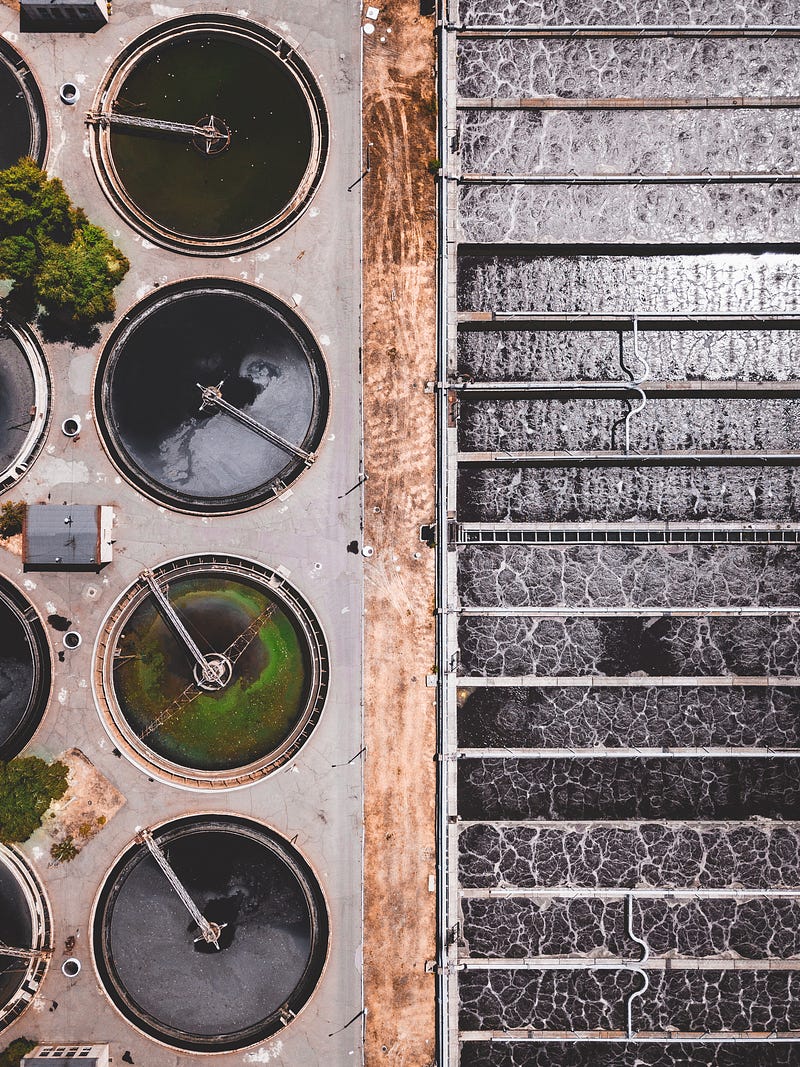
Practical water treatment methods already in use include the use of iron nanoparticles to remove organic solvents from groundwater. According to the research team, the adsorption process using materials containing magnetic nanoparticles is very effective and easy to perform because such nanoparticles have a large number of areas on their surface that can trap pollutants and are not easily decomposed in water. [Sources: 4, 10]
The advantages of changing the structure of materials at the nanoscale

For example, nano-coatings can be applied to an aircraft, which can make the aircraft smoother, reduce drag, and also protect materials from the specific environmental conditions in which they are used (instead of conventional massive metals such as steel).
Changing the structure of materials at the nanoscale can give them some amazing properties, for example, give them a texture that repels water. In the future, nanotechnological coatings or additives may even allow materials to “heal” when damaged or worn out. [Sources: 0, 6]
The possibilities of environmental nanotechnology can be further enhanced by manipulating nanomaterials in terms of morphology (particle size and shape), microstructure (pores and surface), and composition (heterojunction and doping).
Both environmental processes and materials science must be illustrated to optimize environmental nanotechnology. Thus, the fundamental understanding, identification and management of nano / bio interfaces are becoming a major issue in environmental nanotechnology. [Sources: 9]
The challenge of environmental protection

Environmental protection is one of the most important challenges facing humanity. Over the years, we have unintentionally destroyed the environment by creating and discarding plastics, contributing to climate change by extracting and burning fossil fuels, and polluting the air and waterways with man-made creations.
But now is the time to rebuild the environment and our relationship with it, and nanotechnology has a vital role to play in making our planet sustainable in the future. [Sources: 10]
The promise and future of nanotechnology in the energy space
Relatively speaking, nanotechnology is a new area of scientific discovery that has a global impact in many different areas of trade, industry, and even military applications.
Nanotechnology has the potential to make significant changes in several areas, especially in the energy sector, where it can bring significant and possibly sudden productivity gains to renewable energies and smart grids. Nanotechnology can unlock bottlenecks in the direct conversion of solar energy to fuel and energy to gas and fuel cells. [Sources: 3, 6, 7]
Nanotechnology and energy storage
In the future, nanotechnology may also enable objects to obtain energy from the environment. Nanotechnology can have a profound impact on energy storage technologies, i.e. nanotechnology will create light and stiff wind blades that rotate at slower wind speeds than conventional blades; nanotechnology could play an important role in the next generation of batteries. This research could provide safer methods for the production of nanoparticles used in the burgeoning nanotechnology industry. [Sources: 0, 1, 6, 11]
The production of sustainable nanomaterials in the environment
The nano-encapsulated membranes currently being developed and tested by EPA researchers can be useful for a range of water or solvent purification applications. EPA scientists are evaluating the production of sustainable nanomaterials in the environment in which they will be used.
EPA scientists are researching more sustainable ways to manufacture and use nano-materials to minimize their potential impact on the environment and human health. To slow the rise in atmospheric CO 2 levels due to climate change, researchers have developed nano CO 2 collectors that can absorb atmospheric carbon dioxide and use it for industrial purposes. [Sources: 4, 11]
While these important experiments in nanotechnology cannot yet reverse human-induced climate change, they hold promise for potential solutions. In 2015, the World Economic Forum released a short guide detailing how nanotechnology can help tackle climate change. [Sources: 8]
It is my hope that these advances in nanotechnology research will deliver on their promise to make our planet a more hospitable place for all ecosystems and their inhabitants to li a healthy and productive li98fe. That would include humans, animals, and all of the plant species that inhabit their respective eco-system. I hope I have empowered you to now be more able than ever to meet the challenge of climate change. Let me know your sentiments in the comments section, please.
Kudos to @DrmehmetYildiz for providing me the Technology Hits platform to share this vital information concerning nanotechnology and climate change!
Thanks for reading! If you liked my article, subscribe to Medium to get more articles that I publish regularly!
Free or $5/month: Check out Medium — a social media platform venue for freelance writers like me
If you want to support me as a writer, consider signing up to become a Medium member. It’s $5/month, giving you unlimited access to stories on Medium. If you sign up using my link, I’ll earn a small commission.
Join Medium with my referral link:
If you like my article, do remember to clap for me and check my other stories on my Medium Profile page at:
You can find me on LinkedIn (ID: azpat0) I am a freelance writer- available to write YOUR blog posts or articles! Samples of my work are on my website(Full Disclosure: This link will take you offsite outside of Medium):
I also publish a free weekly newsletter on Substack: The Market Algo Newsletter — forecasts the direction of the S&P 500 index for the upcoming week
Full Disclosure: This link will take you offsite outside of Medium:
Sources:
[0]: https://theconversation.com/five-ways-nanotechnology-is-securing-your-future-55254
[1]: https://ehjournal.biomedcentral.com/articles/10.1186/1476-069X-13-78
[2]: https://www.sciencedirect.com/science/article/pii/S2452074821000069
[3]: https://www.openaccessgovernment.org/slow-climate-change/97099/
[5]: https://cns.asu.edu/nanoquestions
[6]: https://nano-magazine.com/news/2017/6/29/7-ways-nanotechnology-could-combat-climate-change
[7]: https://www.weforum.org/agenda/2015/07/5-ways-nanotechnology-can-tackle-climate-change/
[8]: https://www.azocleantech.com/article.aspx?ArticleID=955
[9]: https://www.frontiersin.org/articles/10.3389/fnano.2019.00002/full
[10]: https://www.azonano.com/article.aspx?ArticleID=5597
[11]: https://www.epa.gov/chemical-research/research-nanomaterials


