
Why Aren’t We Honest About The Limitations Of Self Care?
Self care isn’t all that easy. Let’s talk about it.
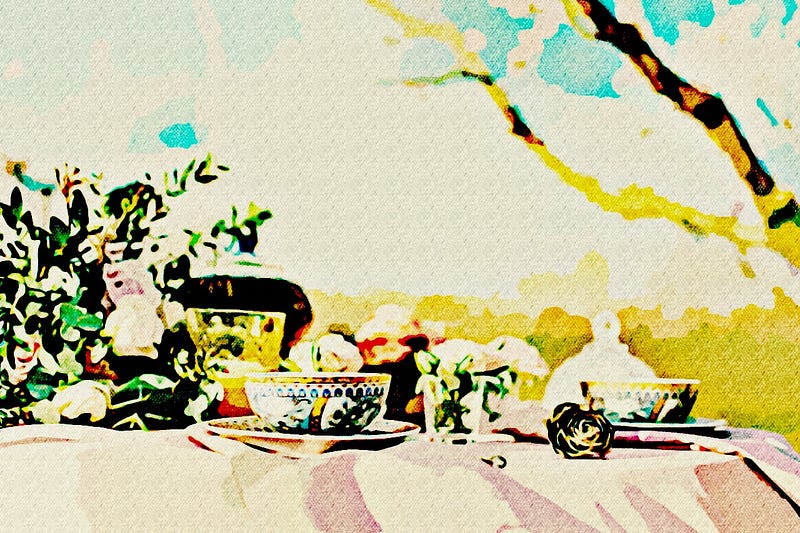
I went to the doctor’s office to see a Cognitive Behavioural Therapist last week. I did the usual. I took an Uber to the hospital in Fairfax, watching the rain fall lightly against the window, wondering if she might have answers. Before long I was seated in a small office filled with decorative mason jars and inspirational boards on the wall. For the sake of this essay, I’ll call my therapist Ms. W, short for Ms. Wonderful. Because that’s the first thing I noticed about her. She was warm and had the kind of smile that made me feel like I’d been invited to tea. I talked about the seizures I’ve been having for a while and watched her taking notes. Googling stuff she didn’t know. Turning every now and then to remind me that she was listening and she only wasn’t looking at me because she had to type.
When the hour was over and I answered all her questions, I asked her if she would recommend any reading or work for the week ahead. She’d already told me that she knew nothing about PNES, the seizure disorder that I have, but I wondered if I should be doing something.
“Oh, just self care,” she smiled, “I don’t want you to worry about anything. We’ll meet next week.”
“Just…self care?” I asked, wanting to make sure I heard right. I mean, my daughter would be home in an hour or two from daycare. I still had a pile of laundry to throw in the dryer. The kitchen floors were sticky. I had to cook dinner. I wanted to know what she meant. I needed a list, I needed something. The vagueness of it all was killing me.
“Yep,” she responded, opening the door and politely showing me out. “Whatever that means for you, you do that.”
That weekend, I began to slur. Whenever I tried to speak, I sounded like I had a lisp. I knew something was wrong. But, hey I had to remember: self care. So I let Dan do the heavy lifting. He helped clean and tidy and play with baby while I snuck off to nap and rest. When I woke up and began to vacuum the floors, I felt my mind wander again. The next thing I knew, I missed a step and fell flat on the stairway landing. And stayed there in paralysis for about ten minutes.
This is why a part of me worries about the way we talk about self care. I mean, I love the scented candles but can we be careful not to set the curtains on fire? I’m at home all day, every day, and the most I can do is read, write, or rest. Those are are my options because I cannot afford to fall on the street. I’d love to open the doors and feel that winter air in my lungs but when I do that, I’m filled with anxiety. What if I go for a walk and I get a flare? Can I make it to the Starbucks across the street without fainting? What I have an episode at the cross-walk?
When I look at memes or viral pieces about self care, they often focus on the to-dos — setting boundaries, knowing your limits, intentionally focusing on emotional health — which is great. It’s absolutely necessary. This piece in Psychology Today by Maria Baratta, a licensed clinical social worker, even gets into the 101s of what someone needs to do. But most of the talk around self care lacks depth. Sure, I can drink an extra glass of water, breathe deeply, or write down my dreams. But why should I do it? And is that really the best form of self care for me?
That’s why I find the ambiguity frustrating. I’m a chronically-ill mum who spends most of her time alone, but I cannot do most things alone even if I want to. It’s not an option. I have to think long and hard about the chances I take. Dan can’t be my side all the time. I also have to stay physically (and emotionally) healthy for my little girl. I’d love to go to a coffee shop and sit with a cup of tea reading Barbara Kingsolver and digging my teeth into the buttery goodness of Starbucks madeleines. But sitting in my own kitchen is a compromise. I can’t untangle myself as a person from two people I love dearly although I’d love to. I can’t care for myself without also caring for them.
And the idea of disconnection is great for some, disconcerting for others. (Honestly, this is a conversation that’s been going on since the mid-nineties.) So much of self care and wellness advertising is amusing; last time Instagram recommended that I use crystals to tighten the pores on my skin. I even get flyers in the mail offering discounts for spa days and handmade soaps. Self care shouldn’t merely be an extension of American capitalism, where to focus on ourselves, we must lose the connection we have with each other and drain our bank accounts in the process. I find this especially hard because communities like mine (the Indian community) function largely like trees. The roots tumble and twist and spill over the ground but they hold up the trunk together through rain and storm. I fight with my sisters, my parents, have petty arguments with cousins, extended family, and old friends who shouldn’t matter to me. Yet, I’m inextricably linked to them and them to me. I don’t mean to say that I embrace all the toxicity because I don’t have a way out, I just deal with it in a way which makes me ask uncomfortable questions too: are they seeing something that I’m missing? What kind of care should I seek for myself? Why should I make this [tough decision]? What’s the bigger picture here?
In 2018, I stopped using Facebook to connect with friends. I disappeared from social media for a while. I joined a singing class. But that wasn’t enough. It wasn’t enough for me to care for myself. And that’s the truth.
So I went to doctors. I asked for their advice. I asked for help.
Self care, the way I see it, is hard work. And sometimes, it’s hard to do it alone. A person who works in a toxic environment might need the support of a co-worker or someone higher up. In some cultures, wanting to make a choice to draw firm boundaries with family also means coming to terms with consequences like estrangement. And prenatal depression, when I suffered from it, didn’t go away with a warm bath or a drink of water. I needed ample medical support and care. Self care without guidance and self reflection could have been detrimental had I tried to do it alone. So, I think we owe it to ourselves to know that it’s okay — sometimes the answers don’t come easy.
Take that shower. Get that extra sleep. But don’t feel bad to pick up the phone and dial the numbers you need to.
I went to meet Ms. W again a week later. This time her room smelled of citrus and balsam, a new Potpourri spray that she said she was using. I sat there in my seat, legs stretched out, recounting my week. I told her about my falls. I told her about the hours I spend alone reading. I told her about the constant arguments with Dan about how to cope with my seizures. Finally, I asked her.
“I don’t know what to do. What should I do?”
She looked at me and put her pen down. Go on a date, she said thoughtfully. Live.
Okay, I replied, unsure if that was an answer to my anxiety. I’ll do it. That evening, I booked a baby-sitter so that we could step out for a few hours on Sunday.
Got to give it a shot, right?
I try to write two blogs a week. If you’d like to read my essays, simply click on Meera Vijayann to follow me on Medium.


