
Why Are We Always Striving?
Trying to surpass ourselves is healthy. Until it’s not.
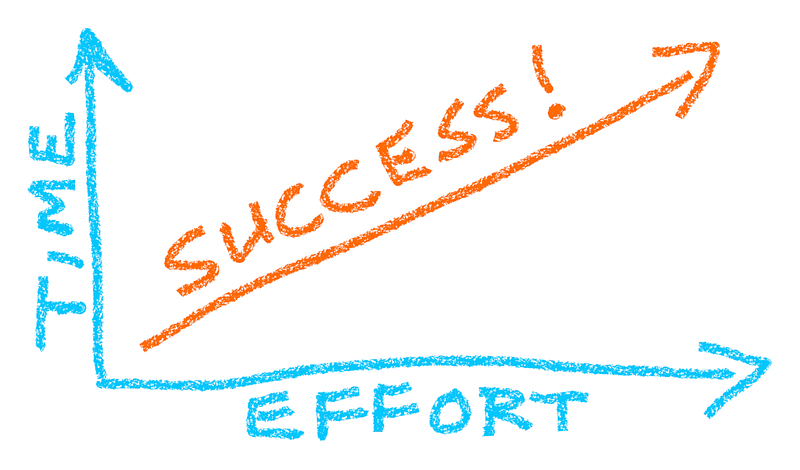
Nobody I know is more hardworking or productive than my wife. I’ve seen her put in 16-hour days for weeks on end, sometimes just to pay the bills, often under the guise of fulfilling some real or imagined obligation. I’ve watched her build two successful businesses while we raised three kids and dealt with all the usual challenges of modern life. She strives. Constantly.
I’m sometimes a total lazy ass, but I’m guilty of excessive striving, too, putting my fair share of time and energy into pursuits both important and frivolous, rewarding and frustrating, but always, always pursuing.
For better or worse, in sickness and in health, we stay busy.
But as empty nesters, a bit of fresh perspective is emerging, and we sometimes busy ourselves by wondering if all that striving was truly productive, if all that productivity was really good for us (or for our kids or humanity more broadly, for that matter).
And here I go again, striving to be productive by writing an article about it all.
Sure, you can argue that striving is an essential part of being human. In fact it’s uniquely human, I would argue. Animals do. Humans strive. Because we need purpose. And indeed, it’s crucial for physical and mental well-being to have strong purpose in life, science tells us, to find things that matter (in a world where much does not) and pursue them with vigor. Idleness breeds illness of mind and body, the prevailing Western wisdom goes. Ehhhhh…
An inner fire is healthy.
If you know when and how to turn it off.
Like a lot of Americans, my wife and I are not very good at turning it off. We’re easily bored without meaningful pursuits, quick to become restless when bored. Don’t get me wrong: Like any good human, we’re adept at procrastination, and not immune to a little lethargy now and then. But still, it seems like we’re always doing something.
So I was surprised the other day when — just as I was typing up a paragraph about the importance of doing nothing for a since-published story about how tired Americans are — she called out from the other room:
“I’m not going to do a damn thing today.”
I laughed out loud. Ha! Glad to hear it! Good luck!
I had zero confidence she’d succeed.
Then as if to prove her intent, she came into my home office and plopped down on my underused recliner. I read to her what I’d just written, the penultimate graph in the story about how Americans are Googling “I am tired” more than ever:
… any chance you get, put your phone down, put your whole life down, and just do nothing for a day, an hour, or even a few minutes. We could all use a little more nothing in our lives, time to sit and think, or just sit.
I believe that firmly. Despite my penchant for restlessness, I am better at doing nothing (it can, after, all, be really something) than my wife is. I just don’t do enough of it.
Anyway, she then launched into a soliloquy about the uncontrollable American obsession to try so damn hard all the time, to strive 24/7/365, to do more and always, always do better. To be forever busy. It went like this:
Every single day of our lives we’re trying to surpass ourselves. We try new stuff all the time, trying to better our previous accomplishments. We set these goals, and for what?
We go to the moon, then we have to go to the far side of the moon. Sometimes we learn something, sometimes not.
But I’m mediocre [for the record, I disagree with her on this point]. I’m not going to the moon. I’m not going to cure cancer.
I’m not saying we should just sit on the couch. I’m saying we should be more thoughtful about life. It’s about perspective.
So I tell ya what. I’m going to fuck off today. I’m going to go into the backyard and sand the wooden handles of the garden tools and stick the metal parts into a bucket of sand and oil so they last longer. And that will be my contribution.
Even in f-ing off, my wife feels the need to do something useful, to contribute. But for her, tending to the garden tools is the rough equivalent of doing nothing. Meanwhile, research strongly indicates that many of us need to get better at f-ing off.
“Many of us have created a ‘busy habit,’” says Susan Weinschenk, PhD, a behavioral psychologist, author, coach, and consultant in neuropsychology. “We’re addicted to doing stuff. We have to prove something to ourselves and the world. I’m not sure what that something is, but it involves striving, being productive, being busy, working hard, playing hard. Everything has to have a purpose and be connected with a goal. Even our leisure time has to be busy, busy, busy.”
These self-destructive notions are so ingrained in American culture we’ve lost all perspective on the value of downtime. And there’s a heavy price to pay. People who believe goofing off is a waste of time have poorer mental health, I’ve reported before.
“Once you believe that, and internalize the message that leisure is a waste, our results suggest you’re going to be more depressed and less happy,” says Rebecca Reczek, PhD, a professor of marketing at Ohio State’s Fisher College of Business.
So why can’t we occasionally embrace being only as good or creative or productive today as we were yesterday, or even a little less so. Why can’t we just let go and relax, hit the pause button now and then and stop trying to surpass ourselves? Why do we need to go climb the ladder, build our resume, live in a bigger house, go back to the moon or even beyond?
And why, for f’s sake, must we plan all our vacations (if we do in fact take them) and spend our days off being more active than during our days on? Why can’t we ever just laze about for a stretch?
Sure, I get it. We have to pay the bills, exercise, take care of the kids, the parents, the lazy husbands, and so on. But there’s more to our psychosis than all that.
Our collective restlessness, our motivation to strive, our need to constantly surpass ourselves is rooted, I argue, in the hope that life will constantly get better.
If I work hard, if I just put enough time and effort into it…
But what is better? And why is better better? My bet is most of us have no clue.
We know intuitively (and scientifically) that more time, rather than more money, makes people happier. But when we have free time on our hands — and most Americans have plenty of free time, despite what they claim — what do we do with it? The smart people do nothing. The rest of us… we busy ourselves. We strive.
In the Ten Percent Happier app, meditation coach Jeff Warren offers a short meditation session called Do Nothing. When I got to this point in drafting my story, I gave it a listen.
“The idea of this practice is to do your best to not control things in any way,” Warren explains. “Your attitude is basically that nothing needs to be any different. The moment is totally fine as it is, even if you’re lost in a blender of neurotic thinking. Of course the irony of this kind of meditation is that it often stresses people out.”
Bingo. Doing nothing stresses us out. Why is that?
“So many of us are in a panic to check items off our existential to-do list,” Warren says. “This practice is about seeing if we can subversively reverse that momentum a bit, and actually, truly relax.”
If you’re not into mindfulness — and I highly recommend giving it a shot — you might just try being a dog.
After my wife headed to the backyard to ostensibly dawdle, I watched our dog, lying near the gate outside my office slider. Staring at the sidewalk and the street beyond. Sniffing the air now and then. Staring some more. Mostly just lying there. Not trying to surpass herself one bit.


