
Why Are the Communists Afraid of Spirituality?
The Communist Party of China’s fear of the spiritual sect Falun Gong betrays its insecurity
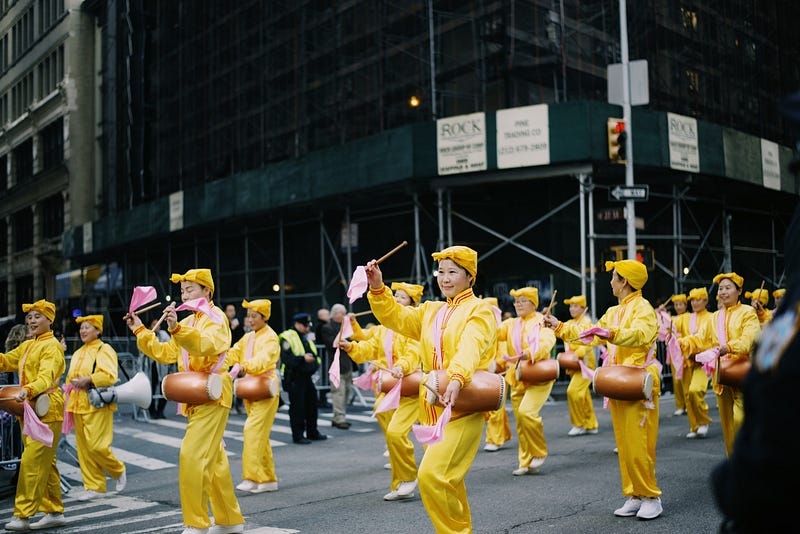
The Communist Party of China ( CPC) was founded in 1921. Recently, it celebrated the centenary of its founding with pomp, ostentation and endless proclamations of self-glory.
The CPC has a monopoly over political power. Xi Jinping, the Chinese President, is the unchallenged ruler. He is the party’s visible face.
Xi Jinping doesn’t care that the world no longer trusts China ever since it exported the Wuhan virus to an unsuspecting world. Under his leadership, China is dreaming of world dominance.
July 2021 also marks another anniversary in China’s modern history. The CPC would not talk about it because it involved a dark chapter in its history.
Ask the Chinese spiritual sect, Falun Gong’s members and they will tell you a story of persecution that paralleled Hitler’s persecution of Jews.
It was in July 1999 that the CPC launched a crackdown on the Falun Gong sect. The immediate provocation was a protest by 10,000 practitioners on April 25, 1999, demanding an end to official harassment.
Thousands of Falun Gong members and leaders were arrested, tortured and killed in the crackdown. The Chinese government banned Falun Gong and called it an evil cult and a terrorist organization.
There have been allegations that China harvested the organs from the dead bodies of Falun Gong members. The lack of evidence is not enough to refute these allegations because the CCP’s past behaviour doesn’t inspire confidence about its morality.
What is Falun Gong?
Falun Gong was part of the ‘qigong’ boom in the 1980s. Qigong is an umbrella term for many practices involving meditation, slow-moving exercises and regulated breathing.
Falun Gong is different from other qigong groups. It combined exercises with moral and spiritual teachings. Followers aim to cultivate “truthfulness, compassion, and forbearance.” They are expected to refine their “xining” or moral character.
Li Hongzhi is the founder of Falun Gong ( also known as Falun Dafa). He is reported to have started this sect in 1992. In 1996, he shifted residence to the US.
Falun Gong is not a cult, although it looks like one. It has no hierarchical command structure or organization. Li Hongzhi has no direct control over the private lives of his followers.
Li Hongzhi has made controversial statements and seems to have messianic notions of grandeur. But that doesn’t make Falun Gong a cult.
David Ownby, author of “Falun Fong and the Future of China,” has said:
“I found that the group generally passed the smell test. Yes, they accord a high degree of veneration to [Li Hongzhi] but he’s not around very much so the possibilities of abuse are much reduced. Yes, members are asked to contribute materially to the organization of events, but in my experience, that is completely voluntary. Members keep their jobs and remain in society.”
Why is the CPC afraid of Falun Gong?
It’s difficult to accept the CPC’s criticism of Falun Gong as a terrorist organization for the following reasons:
- Falun Gong preached non-violence.
- Its members have always protested peacefully
- Falun Gong members do not carry weapons. They receive no training in using weapons.
- Falun Gong has no political ambition. It aims at the spiritual transformation.
- Falun Gong did not ask its members to revolt against the Chinese government.
The CPC was afraid the Falun Gong would ultimately challenge its authority even if the movement did not profess any political goals.
Everywhere in the world, the communists have been fearful of religious and spiritual movements. It is difficult for communists to exercise control over people who follow the spiritual path because they will not believe the lies the party peddled to indoctrinate the people.
Truthfulness and compassion are alien to the communist ideology. The communist party expects unquestioning obedience from the subjects. It is intolerant of dissent. Its empire is built on a foundation of clever propaganda. If people started contemplating the ‘spirit’ or the ‘soul’, they might refuse to obey the party's diktats.
The communist’s fear of spirituality is really about their fear of irrelevance in a world that is no longer beholden to political ideology. Who will believe in political dogmas once people looked inwards to understand the meaning of existence? Who will obey dictators when people moved closer to the source of creation?
The CPC, beneath its facade of invincibility, has been haunted by a deep sense of insecurity.
Conclusion
The CPC and its supreme leader are firmly entrenched in power. However, nobody, however mighty they may be, can suppress the human quest for spiritual meaning permanently. History doesn’t care for ideologies or emperors. No organization or leader is invincible.
The communist regime of Cuba promised utopia. It was a false dawn and the people have recently come out on the streets demanding freedom and food.
In the future, the CPC might meet its nemesis at the most unexpected time and in the most unexpected ways. Guns are of no use when the torrent of spiritual awakening sweeps away the citadels of hegemony and deceit.
Thanks for reading.
Reference
https://www.pri.org/stories/2014-07-14/why-china-fears-falun-gong