Why Are Farmers Protesting in India?
What are the farmers’ demands? What is the Modi led-BJP government’s response? Everything about the latest controversy
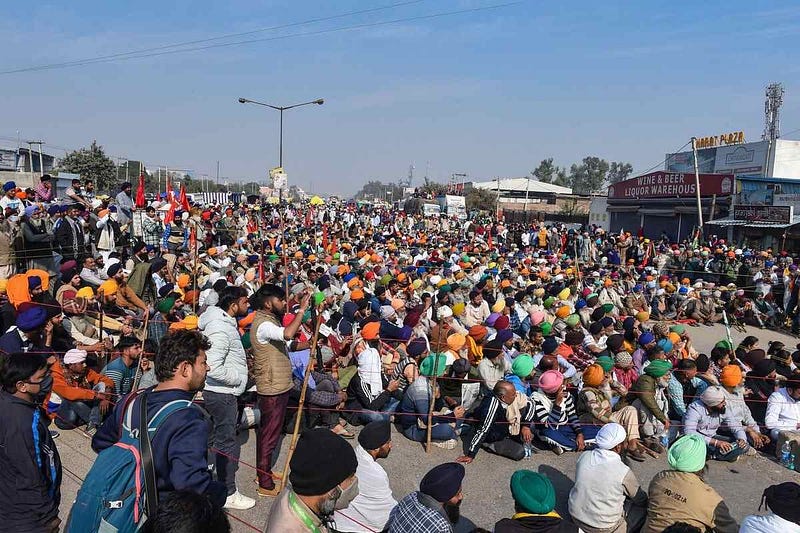
Everything was going well and smoothly with the Modi Government in 2020. Anti-CAA protests have died down, and it will not be a big issue anytime soon. Also, the ruling party BJP has been winning back to back elections in Bihar, Hyderabad, Rajasthan, etc. Then farmer protests broke out in the outskirts of Capital Delhi and thousands of farmers across India are now heading towards the capital to show their protests to the Central Government.
Timeline of Farmer’s Protests
The BJP Government in Centre passed three controversial farm bills in September 2020.
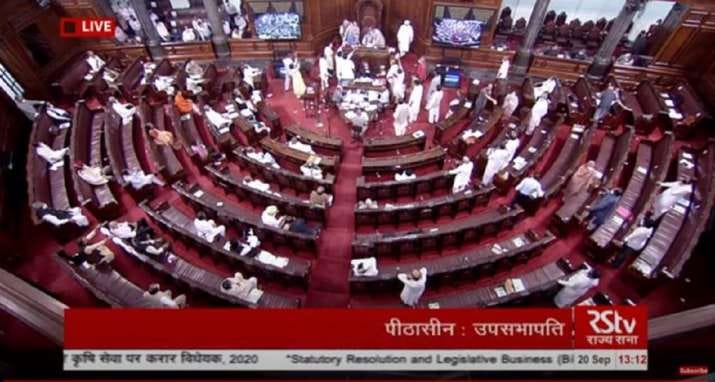
A lot of bills were rushed through both the houses of Parliament. Even though these got passed smoothly in the Lok Sabha, which the BJP has a majority while problems occurred when the bill reached Rajya Sabha and was passed through a voice vote and not through an ordinary vote. Later a massive fight broke out between the ruling and opposition sides.
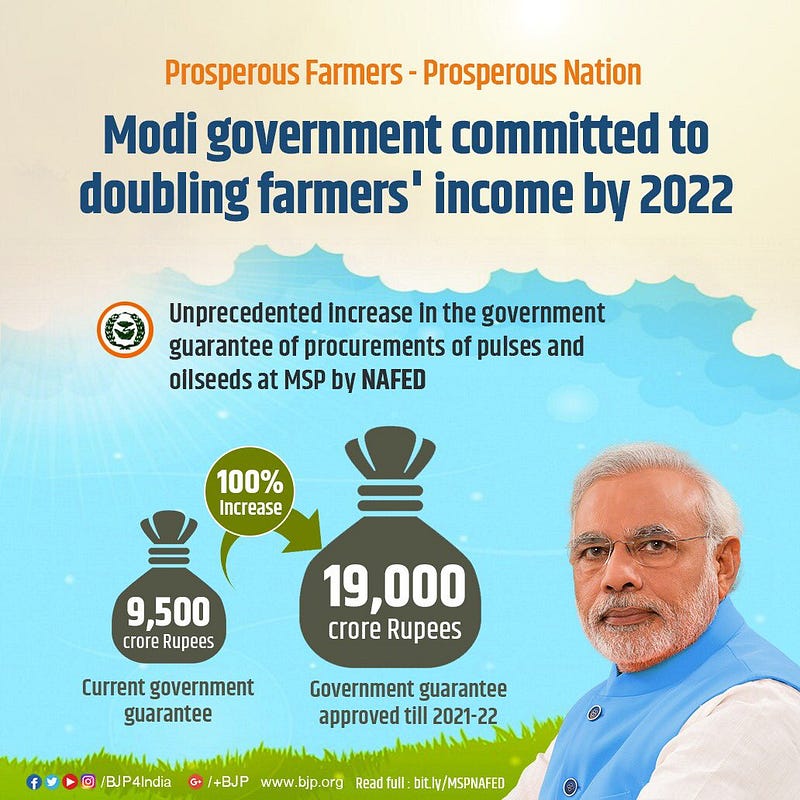
PM and BJP have always tried to keep their socialist and populist image. It has that pro-poor and pro-farmer touch in its way of campaigning while you can still argue how BJP was not able to keep up its promises. In the manifesto, it had also promised that Farmer’s income will be doubled by 2022 and also that India will be a $5 Trillion economy. With Covid-19 lockdown and slowdown, it is clear that both of these will not happen anytime soon. It was then, BJP introduced three farmer’s bills, which analysts say could be the reformist or liberalization of Indian Agriculture.
- The Farmers`Produce Trade and Commerce (Promotion and Facilitation) Act,2020
- The Farmers (Empowerment and Protection) Agreement on Price Assurance and Farm Services Act, 2020
- The Essential Commodities (Amendment) Act, 2020.
We won’t be discussing anything with respect to the bills or stuff, as it is covered very well in the following MUNner’s Daily article.
The entire opposition stood against the bill, thinking that this can be a good chance for them to counter the invincible Modi Jaggurnaut eyeing the popular support as well how it can brand Modi and the govt as “Anti Farmer,” “Anti poor,” “Pro-Rich-Corporate”. The ruling party, pretty much isolated that even its own allies are going confused on the same, claim that Opposition is misleading the farmers.
Farmer’s protests never began this month. It started from the Agrarian state of Punjab in the North. Already during the discussion of the bill, Harsimrat Kaur Badal, the sole SAD minister in the cabinet, decided to resign as the minister showing solidarity with farmers. So it is clear for parties in Punjab itself that there would be a big backlash.
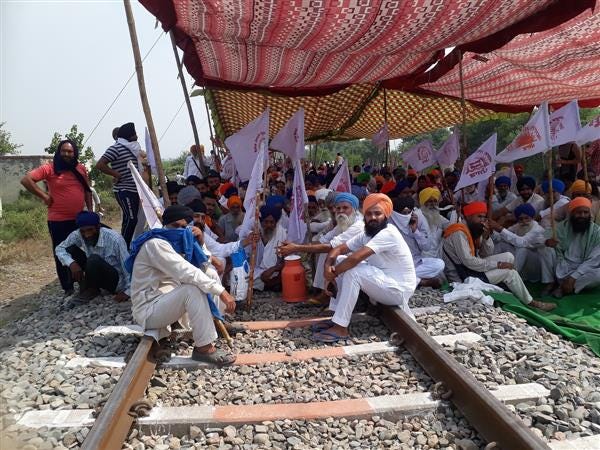
In September itself, farmers had started protests with the “Rail Roko” campaign where Farmers will sit on the Railway track and stop trains to and from Delhi. The protests, later on, spread on to Haryana, Western UP, Rajasthan, etc. Even now, the Railway is not back in normal form.
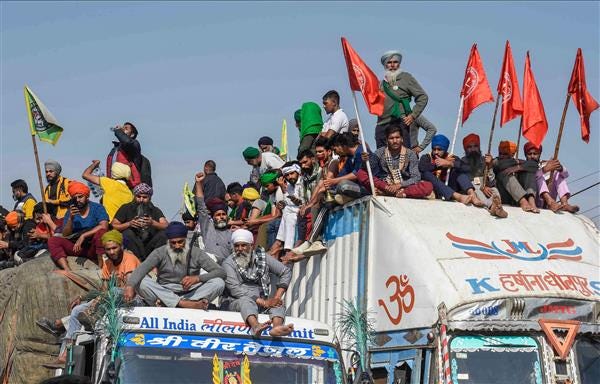
In late November, Farmers started the “Delhi Chalo” march, ie. Go to Delhi using tractors and trucks. Thousands of farmers from these states decided to meet in Delhi and later go on for indefinite long protests against these three laws passed by the Central Government. The major areas of protests now in Delhi’s border with these states, namely Singhu Border, Tikri Border, Faridabad Border.
On 8th December, the Joint Platform of Central Trade Unions (CTUs), which includes multiple unions, decided to go ahead with Bharat Bandh, which means Shutdown India, where shops, public transport, office, etc., will be shut down in support of protests. Almost all opposition parties like INC, NCP, SS, CPI, AAP, CPIM, DMK, SAD, AGP, etc. and the Opposition ruled states like Tamil Nadu, Telangana, Andhra Pradesh, Kerala (No bandh due to elections), Rajasthan, etc. also supported the call for Bharat Bandh.
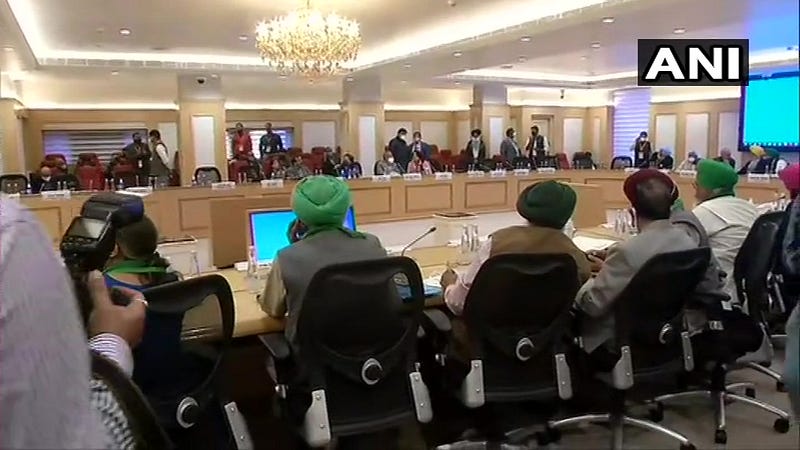
On the parallel, there were multiple talk sessions conducted between these unions and the Government representatives, including the Home Minister Amit Shah and Agriculture Minister Narendra Singh Tomar. PM Modi multiple times has referred to these laws as Historic, Reformative, and Pro-Farmer. He also added that the Opposition parties are misleading the farmers. This week the unions have called for a Boycott of Corporate goods, namely Jio, Jiomart, Reliance, etc., to show that they are against Big Corporates.
Multiple on-ground reporting by Digital Media shows how much farmers are dedicated to these protests. They claim they are having six months of ration, which is enough to survive for more than a year. They are defied until these demands are met by the government. Multiple agencies, Volunteers, Langars (Kitchens operated by the Sikhs), Businesses, Gurudwaras, etc., have come in support of these protests and are helping them with tents, masks, medicines, food, etc. These videos also show Roti/Bread making machines, large vessels with curries being cooked, distributing them, and thousands sitting and having food. A viral clip, during its meet with the Government, shows farmers declining the Lunch offered by them inside. They had brought their food, which was distributed amongst themselves. It looks like the protests will go longer than expected.
What are the demands of farmers?
We have explained how the protests went till now, but we haven't touched upon the exact demands and how these three laws are problematic according to these farmers. They believe they are right in making demands, as well as protesting peacefully, and it is well within their right to do the same. (Not necessarily in order)
- Repeal these three laws The most adamant demand remains to be this. They don’t want a change in the status quo. At the same time, they believe that their present state is much better than the bleak future in which these laws will land them in.
- A parliament session to consider the above demand
- Provide legal status to MSP and promoting govt. procurement of the produce
- APMC act will not be repealed
- Removal of punishment and fine for Stubble Burning and farmers jailed for the same We know that Stubble Burning is mostly discussed when Delhi’s population has on the cards. Now, the government has made it a criminal offence, which Haryana, UP, and Punjab farmers have been doing for years. Automatically they are against the punishment and want this to be withdrawn.
- Abolishment of Electricity Amendment Bill
- Centre’s interference in agriculture, which is a state subject, should be stopped.
- Release and withdrawal of cases against activists, poets, leaders arrested by UAPA act for dissenting against the govt.
- Implementation of the Swaminathan Commission report on MSP with C2+50% formula
- Diesel prices to be slashed by 50% for Agricultural use.
All these demands, except 8, have been based on Farming and Agriculture. Those supporting the government have questioned their 8th demand and ask them how it is even connected to the present issue at hand. They are pretty much sticking to their demand that they won’t go back on their demand regarding the repeal of all three laws, and mere minor changes by the government are not accepted. They also claim that the protest will be much bigger in the coming days. They have called for farmers across the nations to come forward and put pressure on the government. On the 14th, they called for a Hunger strike as well.
Songs and campaigns have taken a centre stage in these protests.
Farmers believe that the coming of private players in the sector will put farmers at a disadvantage. They also cite how the removal of APMC will endanger their income, and for that, they refer to the sorry state of farmers of Bihar where there is no APMC. Also, they believe that MSP will vanish as corporates are only interested in profit-making and procurement at a low cost. And also, for any problems with the dealer, they must go to Sub-District Magistrate to take on a legal battle, which remains unacceptable.
The government’s response
Even though there was initial friction between both farmers and the govt., the government had finally given in for a talk between the two. Initially, the Government has taken a stance that there won’t be any changes in the law to open for negotiation and amendments. With farmers asking for repeal and not agreeing to drafts, the government says that it will not be ready for the same. Many of the ministers have already claimed (without proof) that Opposition parties have a hand in inciting them suddenly as well as how foreign players want to defame the country. A middle-ground for both parties is yet to reach on the same so that these protests will stop and farmers can return back.
Reactions from across the globe
Canadian PM Justin Trudeau’s statements were the most highlighted, while other countries like the UK, US, Australia, etc., have also reacted on the same. British MPs, US Congressmen, Minister of Pakistani Punjab have all spoken up on the issue. UN Secretary-General Antonio Guterres had also said that farmers have all the rights to protest peacefully.
Controversies and Conspiracy Theories
From the very beginning, conspiracies claimed that these Protests are driven by Khalistani interests (Which demand a separate country for Sikhs) as these were mainly concentrated in Punjab. Later, Social Media cells of the ruling BJP claimed that the Opposition is deliberating, sending them to destabilize the Central Govt, Malign the Ruling party as well as work against India.
Later on, many leaders openly claimed that these are not farmers but Congress and AAP members dressed as farmers. While others including Union Minister claim that this is a conspiracy by Pakistan and China to bring down Modi. They also allege that just like Jihadis who protested against CAA, Khalistanis are working with them for the same objective and are getting foreign funds. This got intensified after Trudeau’s statements.
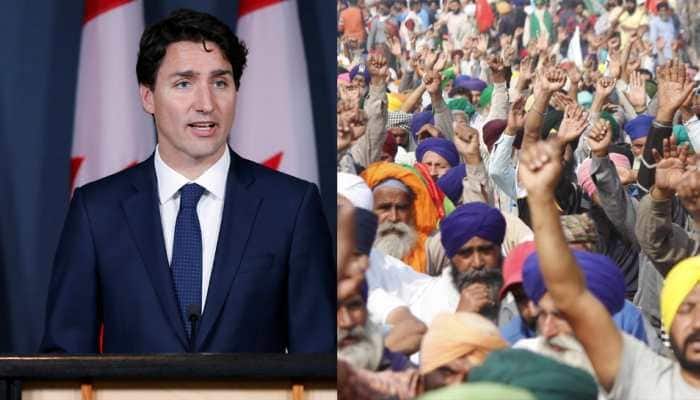
Ordinary people on social media claim that Canada is meddling into India’s internal affairs as well as showing its support for Khalistan by supporting Sikh radicals. Indian Govt reacted sharply to Canada’s reaction by calling the Canadian High Commissioner and warning it of dire consequences. While logical and intelligent people have called out the hypocrisy of Canada of voting against the same demands, India has been rising in international forums like WTO.
Did protest just start a few weeks ago?
A large number of critics of these protests claim that farmers are blocking roads and public places, which is not acceptable, as well as how this will be like Shaheen Bagh 2.0. Supporters of these laws call it a big reform and are asking protesters to stop demanding its repeal. While social media misinformation and political adversaries are spreading claims like farmers can’t wear jeans, they are getting funding for protesting. The farmer is not rich, he is being exploited etc.
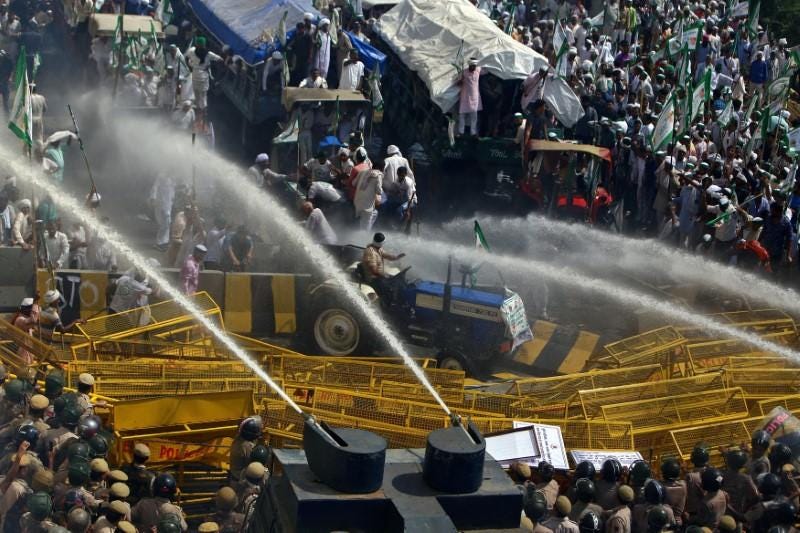
Controversy also happened when Delhi police used force, used water cannons and tear gas to drive off the protests as well it requested the Delhi Govt to convert the stadium into prison.
As usual social media has made everyone experts (pun intended).
Politics of the issue
The majority of rural India is engaged in agriculture and farm-related activities. Every election, all parties dedicate special promises to farmers like the waiver of loans, increasing MSP, etc. Although in reality, multiple policies have failed to protect their interests as well as improve the Agricultural Sector. Even though experts and critics might claim that these bills are pro-liberalization and informative, the same was said for Demonetisation and GST. Still, due to poor implementation, these have miserably failed, and people have no trust in the government with respect to such historic decisions. Farmers are trying to keep it as apolitical as possible.
Are only Punjab’s farmers protesting? That is false, farmers from major North Indian states and also from Karnataka and Tamil Nadu are also present.
BJP is a party with a strongman face- PM Modi. A person who is not deterred by any opposition, any obstacle, etc. This is one of the biggest marketing strategies of BJP, which it has been able to win back to back elections since 2014. He is expected to make tough decisions, bring reforms, and have good communication with his followers. His party and followers have taken a strong stance against the administration’s critics, intellectuals, dissent, etc. They are branded as anti-India, anti-National, Khan market gang, urban Naxals, Maoists, etc.
Read how Modi has evoked India’s love for dictatorship
Coming to Political Economy, all parties in India are socialist, and they don’t like to be called pro-Corporate or vouching for a Free Market. That is why PM Modi is trying to ride by Populist pro-poor economic measures and also has the tag of pro-farmer. In 2019, BJP had made a promise that they will double farmer’s income by 2022.
Congress party in 2019 had promised the same set of reforms in the 2019 manifesto and now they have found it convenient enough to oppose them as they are presently in the opposition.
Farmers are one of the biggest vote banks in rural India. So, no party can win elections without getting the support of the farmers. No party wants to dorn the Anti-Farmer tag. That is why the opposition is aiming to support farmer's protests to bring down the highspeed Modi juggernaut in the country. The opposition has already trained all the guns against Modi and BJP. Although in Punjab, it doesn't matter much for BJP as it has no stake there, it will hurt BJP in Haryana, Rajasthan, and UP. Its alliance with JJP in Haryana is also at stake.
For the same reason, increasing farmer protest is becoming a headache. Modi’s strongman mask, which he has worn from 2014 until now, is under a shake. His decision and stance will decide India’s politics because no one can ignore the farmers, despite whatever people on social media claim to be. Unlike CAA and NRC protests, Modi and team BJP cannot alienate both Sikhs and farmers. At the same time, he has a big challenge ahead of him to revive the economy. This is also one of the major reasons why the government has decided to give in to talks, which Modi had never done before.
New Updates
The government and farmers have been on the negotiating table multiple times but didn't see any major effect. The government at a point even offered to suspend the implementation for 18 months, but farmers refused to accept it. They wanted a full scrap of all the three laws.
On 26th January, which is also India’s Republic Day saw massive tractor rally by farmers. Some incidents of violence have also been reported in the incident. The rally saw the death of one farmer as the tractor overturned. The worst incident happened at the Red fort, where a mob under Deep Sidhu hoisted the Nishan Sahib flag. This was indeed controversial for many days. Farmer’s deny their role in the same and claims it was BJP men who did it.
The government decided to crack down on the protests by evicting them from the Gazhipur border. The government blocked electricity and water supply to the areas as well as cut off the internet in many areas. Long barricades, wires and nails were even plotted on the road. The opposition leaders were barred from meeting the farmers. The GoI accepted oppositions’ demand to have a discussion in both houses of Parliament for 15 hours.
A big Twitter war erupted between pro and against gang after American pop star Rihanna, Greta Thunberg, Mia Khalifa and many others brought the discussion into the limelight. The Govt strongly responded back with hashtags Indian against propaganda, trying to sideline the western celebrity reaction to it. Many Indian sportspersons and Bollywood celebs came out in support of the government claiming it was an internal affair. The war still continues. The Government still alleges International conspiracy to defame India at the Global level.
Conclusions
It is clear that there is a communication gap between the government and the farming community. Both of them are counting the chickens before they hatch. No one knows how the outcome of the law will be. US and EU free and open markets have failed the farmers as per critics. To say that farmers are stupid and that they don’t know how things work is false. They are smart enough that Punjab and Haryana are the first in adopting the Green revolution as well as to adopt modern farming methods making them the richest farming community in the country. At present they have their own concerns. The trust deficit is increasing, both govt and farmers need to sort it out. The implementation of these policies is the most important question, the majority of NDA govt policies were poorly implemented. At present what we need is a middle ground for discussion. Democracy is all about debate, dissent and discussion.
Disclaimer- The intention of the article is not to support any sides but for understanding and awareness. The author doesn’t associate with any political party, political organisation or have any political affiliation. All information quoted here is supported by appropriate citations and not made up.


