
Buying happiness around the world.
Why Are Asians Crazy Rich? While Many of Us Think Money is “Bad,”?
Unmistakable cultural differences in how we approach the subject of money.
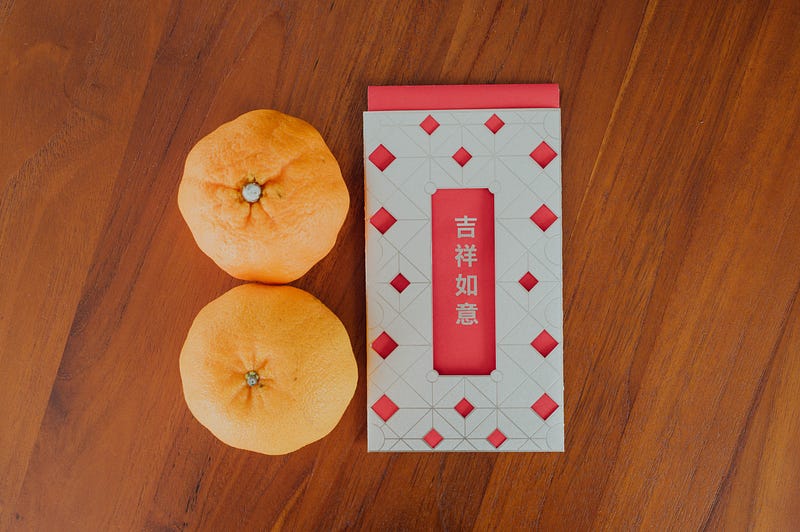
Chinese people are rich and love money. That stereotype about Asians and money — in particular, the Chinese was well played out in the movie “Crazy Rich Asians.”
The only acquaintances who have ever asked me how much I made were Chinese people. It would be the height of impropriety to ask that same question in the west.
Generalizations
I am aware that is a generalization, and much as I am cautious about generalizing, the Chinese people I have spoken to confirm that money is a big part of their culture. I grew up amidst Chinese people in Singapore, which in my experience.
Asians vs. Westerners.
And while, to varying degrees, we may all desire wealth, the Chinese are unabashed about pursuing it.
Why are Asians more comfortable with the idea of money and wealth? In the west, there is still a prevalence of the belief that “the love of money is the root of all evil,” but the Chinese make no bones about seeking out wealth.
In fact, along with filial piety, money is a big part of Chinese culture — from the red packets of cash given out on Chinese Year, along with oranges, the reason for which, I was told, resembled gold to the Chinese proverb, “good manners can be paid with compliments, but only the sound of money will pay your debts.”
Differing views on money.
So, why this vastly different view on money? Maybe it’s because Chinese culture is more closely tied to Buddhism and Confucianism than Judaeo-Christianity.
Buddhist teachings are not anti-wealth. Most Buddhists believe that “the possession of wealth is the outcome of good actions in the past.”
Whereas, in the bible, there are many verses spoken against wealth. Such as the book of Matthew 19, verse 24, “It is easier for a camel to go through a needle’s eye than for a rich man to enter into the kingdom of God.” And the most famous one in 1st Timothy 6;10, “For the love of money is a root of all kinds of evil.”
Bringing it all together.
We need to question our inherited beliefs about money. Money is merely paper. The meaning we ascribe to it determines its power in our lives. Why not embrace it instead of approaching it with a sense of shame?
Can money buy happiness? To the Chinese, maybe it can!
Related Reading
How to Create Financial Habits That Will Make You Rich.
Where Is It Going To? How To Manage Your Money In Alignment With What You Value.
The Latte Factor And What it Does To Your Bottom Line.
Plan For Your Retirement At Any Age.
Are You Financially Ready For The Next Curveball?
Join Medium for $5 a month, enjoy thousands of articles, and get paid to write. Sign up HERE. This is a Medium revenue-sharing affiliate link. If you sign up using this link, you can support me and others as a fellow writer. I will receive a portion of your Partner Program membership fee for the referral; however, it will NOT increase your membership cost.


