
Why Are Ancient Coffins Hanging From China’s Cliffs?
Know the mystery of hanging coffins & the Bo People of China.
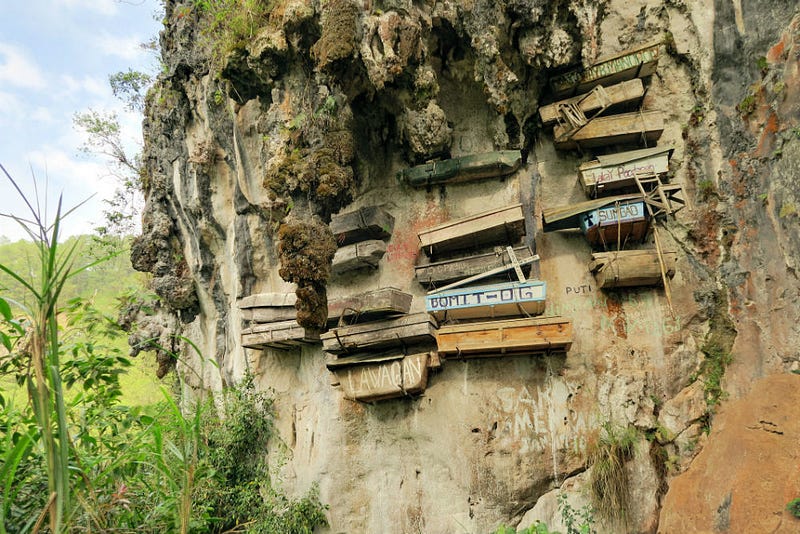
History testifies how we have, for years, used creative burial ways — from elaborate tombs to hanging the coffins. Yes, the hanging coffin is a fascinating funeral Asian custom, mainly found in Southwestern China, the Philippines, and Indonesia.
As the name suggests, the coffins literally hang in the air from a cliff’s side above a flowing river. Some of the coffins still hanging today had been put out there thousands of years ago. Who put them? How? And why? Let’s dig into the details of all such burning questions.
Origins of the burial custom
Guyue and Bo’s People started this interesting burial custom. The latter was an ethnic minority dwelling on the borders of China’s Sichuan and Yunnan provinces. We are talking about the people who existed three thousand years ago but whose traces vanished soon.
Why? The Ming Dynasty (1368–1644 AD) had persecuted many, forcing them to flee to neighboring regions for survival. For their protection, they changed their identities and mingled with the local population. But until they lived fearlessly, the Bo people darted their area with vibrant culture.
Preservation efforts of caskets
Experts have found three hundred hanging coffins of Bo People in the province of Sichuan and Yunnan, where many are still yet to be explored.
Interestingly, the ancient coffins have been renovated by getting them cleaned first, followed by measurement, classification, and record-keeping of their contents.
Protective measures have been taken for coffin preservation with oiling to seal the ancient wood. During the preservation process, human remains were found in some of them, which was carefully studied, recorded, and respectfully placed back in the same coffin.
Local experts found interesting grave goods like two blue and white porcelain bowls, iron spear tips, and iron knives by this preservation process.
Interestingly, some rock paintings were found, which would help the experts to go a bit deeper in their understanding of civilization’s culture and beliefs.
What were the hanging coffins made from?
Several hanging coffins were analyzed — all were made of different sizes and shapes but crafted from the same single Nanmu wood piece, a material often used for furniture production.
The hanging coffins further owned bronze covers and were not painted. Interestingly, not all coffins contain a single body, but some have multiple bodies.
Hinting towards the shape of the casket, the most popular form was to be of the boat to signify the importance this means of communication had for civilization. They were mainly dependent on the ships and used them for undertaking commerce. Other coffins resembled the house roof and different familiar rectangular shapes.
So What Was the Significance of the Hanging Coffins?
Now, why did these people actually hang the coffins so high in the air? Significance? Well, the insights of hanging burials can be traced from the writing of Li Jing (c. 1279–1368) of the Yuan Dynasty, who wrote in his ‘Brief Chronicles of Yunnan’:
Coffins set high are auspicious. The higher they are, the more propitious for the dead. And those whose coffins fell to the ground sooner were considered to be more fortunate.
Getting buried at height also symbolizes proximity to gods — people thought to be placing the coffins closer to heaven. The higher the dead got placed, the greater the chance a spirit can reach a higher state afterlife.
Additionally, having faced the hard times darted with unrest, crop failures, wars, and natural disasters, Bo People sought eternal peace in the afterlife. With closer burial to the heavens, people symbolized how they craved peace from the ever-lasting beauty of paradise.
Contrary to this, the Guyue people penned a different belief. Considering the mountains as sacred, they chose it to be the best place for such proceedings.
They had a deep reverence for places at height. Apart from all those reasons, the coffins were suspended high, so they could not be easily broken apart by wild animals.
How did they hang the coffins?
Now a logical question that can float in many minds is how, in the first place, did people manage to hang the coffins at such a height — wondering the height? The highest caskets were around 130 meters high, and the lowest one hung about 10 meters in the air.
The suspension method was hotly debated, where some put forward the idea of coffins being lowered from the top of the cliffs via rope.
In contrast, others believed the cliff already had wooden stakes, which made climbing easier. Lastly, some experts suggested how Bo people constructed earth ramps at the cliff’s base, which help drag the coffins up — though the evidence is found for ramps construction.
The only evidence found by the expert is regarding the lowering of coffins through ropes as the rubbed marks of the ropes on the cliffs were found.
As far as the burial process of the Guyue people is concerned, then it is quite a big mystery. Why? Well, the Dragon-Tiger Mountain is quite rocky. It seemed pretty impossible to carry a casket with the human body and lower it on something dangerous to reach experts.
When mysteries remain unsolved, myth and legend take birth and precisely what happened with the tale surrounding the Guye people’s burial process. People talked about how the Guy possessed supernatural power and magic with which they created a high burial space.
More from the author:
References:
https://www.atlasobscura.com/places/hanging-coffins-of-sagada


