
Why and How to Turn Your Errors Into Mistakes
And then transform them into mastered knowledge.
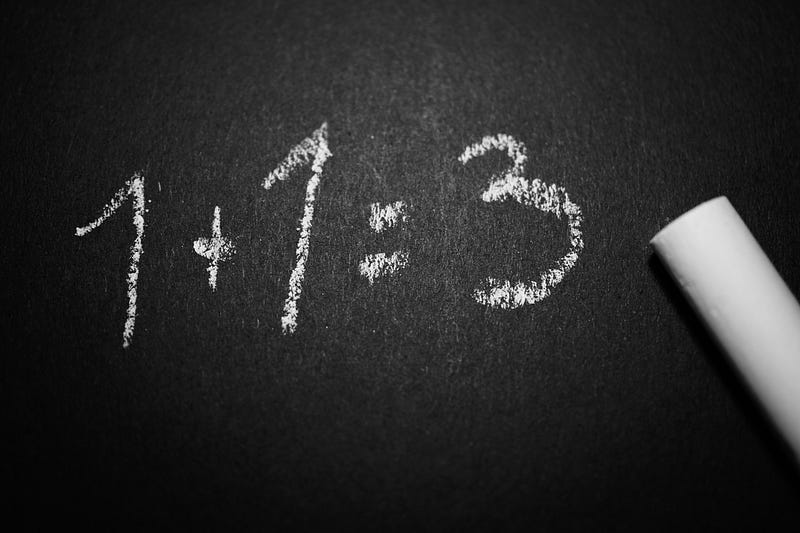
Let’s start by making things clear. Errors are not the same as mistakes.
A mistake is a performance error. It boils down to the wrong use of a piece of knowledge you have already studied. As such, mistakes can be avoided. They can even be corrected without much hassle.
On the contrary, errors come from a lack of knowledge. They happen when someone uses unrelated knowledge and tries to make an educated (or not) guess.
We make both every single day and often get hung up on mistakes. After all, we should already know the correct answer, right? But what about errors then? Should we ignore them because we are not at that stage yet? Should we focus on them to address this shortcoming instead?
In reality, both are useful and crucial parts of a learning journey. Most mistakes will come from errors. And most mastered knowledge will come from mistakes. That’s why we need both. And that’s also why we should make sure errors don’t get stuck in this stage.
2 steps to turn errors into mistakes
I know you might be thinking we can’t work on errors unless someone else helps us out, right? In a way, that’s rather true. And yet, there are steps you can set in place to notice your errors and upgrade them to the “mistake grade”.
Learn to differentiate the two
Now that I’ve explained the difference, you should already be able to notice the vast majority of errors. However, there is one more way to make sure you qualify in the right way which it is.
When you find a fault in what your output, dig deeper into the reason behind it. Let’s say you’re learning a language, you could go back to the grammatical rule associated.
- Have you learned it before? — If not, it is an error.
- Does it even ring a bell? — If not, it is an error.
- Is it a nuanced meaning related to another pattern you learn? — If yes, it is an error.
- Would you have been able to explain the rule without any problem? — If yes, it is most certainly a mistake.
Qualifying your faults is a great way to tackle them the right way afterwards.
List and organize them
Alright. You’ve now made the difference and separated mistakes from errors. So it’s time to start organizing your errors. Write them down by hand. Make a table or a drawing out of it. Errors often come from the same assumption you give to unrelated topics.
For example, I learned Japanese and knew Korean has a similar grammatical structure. As a result, I used to make many wrong assumptions on Korean grammatical patterns. Realizing this allowed me to prevent myself from making these unrelated connections.
After you’ve organized your different errors, start tackling them by error patterns. Understand why these assumptions were made. Find out why you keep on making them. And finally, look for how you can control yourself.
Then you can go back to the basics. As said before, errors happen because you lack the knowledge needed. So go back to the board and acquire it. Learn the rule and practise it in context. Of course, you’ll make mistakes before you master it but, at least, you’ll have passed this error into the next level. It’s become a mistake.

Turn mistakes into mastered knowledge
From there on, you’re already on a positive path to master whatever you’re trying to learn. The good news is that there’s only one more step to go. The “bad” news is that this extra step requires a specific mindset and might have sub-steps.
All you need to do now is to make tons of mistakes. Yes, you heard me. Make more. You need to make mistakes constantly. Today. Tomorrow. Next week. Next month. Next year even if that’s how long it’ll take.
Of course, I’m not asking you to make them on purpose! What I mean by this is that you need to practice. You need to keep on training yourself until the mistake disappears. Because it will! It might take time but you’ll get rid of it through sheer force.
The one crucial mindset needed
Let’s be honest, making mistakes is not the most “fun” thing to do on earth. We can all agree on that. And yet, they are crucial for any real improvement in life and, as a result, in any learning endeavour.
This brings me to two quotes:
The greatest mistake you can make in life is continually fearing that you’ll make one. — Elbert Hubbard
Even a mistake may turn out to be the one thing necessary to a worthwhile achievement. — Henry Ford
Mistakes are a part of life. We need to make some to improve. Avoiding them will only make you stagnate where you are. On the contrary, if you make many mistakes, you can learn from them. You can discover a lot through them and improve at anything.
Potential sub-steps of correcting mistakes
If despite making a whole lot of mistakes, the same ones keep on popping up, you’ll have to change your approach.
Mistakes that you keep on repeating are mistakes you haven’t tackled the right way. After all, there’s no point in noticing the mistake and then moving on. You need to understand why you keep on making it.
If you repeat it due to a stuck habit, then you’ll need to analyze and fix the habit itself. Dissect it and find the exact root cause behind it.
If you’ve understood the right way but still make the same mistake, then you need to find yet another way. Maybe you can study it in a different textbook. Maybe you can find a way to see countless times the right way. Maybe you can create a context in which you don’t make the same mistake and transfer it to others in which you make it.
Errors and mistakes are the first steps to mastery. You’ll need to make a whole lot before you master anything. Try to avoid them and you’re bound to fail for the rest of your life. And I don’t know about you, but I’d rather avoid that.
Still curious about language learning? Sign up for my newsletter and get my ebook for free!


