
Why All Writers Need to be Journaling
The top three ways writing in a journal will improve your writing habit.
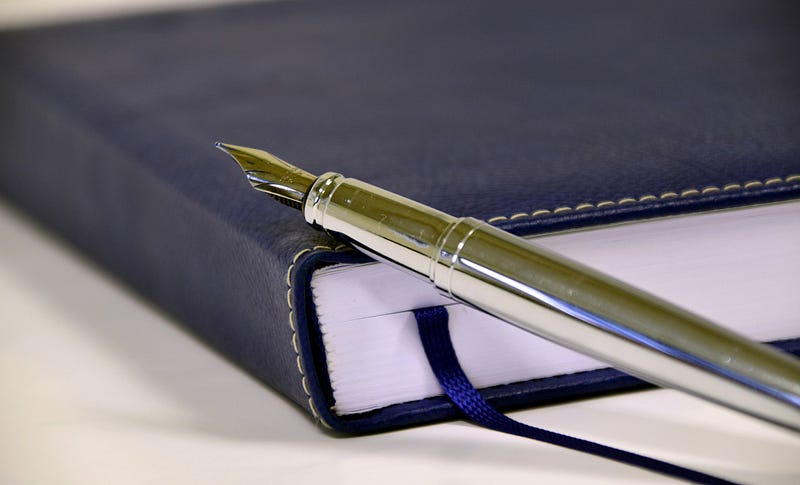
Do you ever feel stuck? Are there days when the words just won’t come? If you are a writer, you can relate.
While there’s some disagreement over whether writer’s block exists, we’ve all experienced days our muse refused to show up. I hate those days. No doubt you do, too.
Writing is an art and an exercise.
Sometimes the art appears like magical butterflies bringing gifts of words and prose. Everything is wonderful on those days.
At other times, it’s like physical exercise — sweaty and exhausting. Those days, you force yourself to sit down at the keyboard and pound out words no matter how much you don’t want to. They’re usually not good words.
There is a way to make the words come more freely. The solution is to write in a journal. Here are three reasons why all writers need to be journaling.
No rules
Writing can feel like it’s all about the rules. Grammar, punctuation, word order, and tense are all things authors have to consider. Those rules occasionally feel oppressive and can suffocate your creative flow.
Keeping a journal allows you to throw all the rules out the window. You can write what you want, how you want. No one will ever see or judge it, so it doesn’t matter what you say.
You can write using no punctuation, capitalization, or paragraph breaks. Words can be a disjointed mess or a spinning masterpiece. It’s your world to do what you want.
There’s something liberating about being able to write without guidelines. Write single words, random punctuation, and split infinitives to your heart’s delight. The freedom is intoxicating.

Write single words, random punctuation, and split infinitives to your heart’s delight.
Mind release
As writers, our minds often get overfilled. Everyday life, jobs, and family and friend drama take their toll on us. All those thoughts compete for attention in our brains. This mayhem can crowd out the inspirational voices.
Pouring those thoughts and feelings out on paper is an excellent way to get them out of your head. Once free, the pervasive thoughts no longer block your creative content.
Julia Cameron’s famous book, The Artist’s Way, recommends writing morning pages. Cameron describes morning pages as three pages of handwritten content composed at the start of your day.
The beauty of these pages is they clear all the clutter out of your head. They can be nonsensical, or even one word written repeatedly. Regardless of the form they take, they will put order to the chaos.
Less congestion allows you to concentrate on writing what’s important. It lets you say the things you want to say, feel concealed emotions, and celebrate the minor victories.
You don’t have to keep your pages. Shredding them can help you get past the negative feelings you released while writing them. I’m a big fan of burning the pages, as I find it cathartic, but that might not be right for everyone.
Momentum

There are brutal days when no words appear. The blinking cursor in front of you taunts you like an evil cheerleader applauding the lack of words in your head.
With a journal, there are always things to say. You can write about the weather, the way you’re feeling, or how much you hated the movie you watched last night. You can critique what you had for breakfast, whine about how you need another cup of coffee, or commiserate about how today’s news is so crushing.
Heck, you can even write about how silly you feel journaling. I promise that feeling will pass.
It doesn’t matter what you write in your journal. There’s no reason to make sense of the words or have logical connections between phrases and paragraphs.
Journaling helps by creating momentum. As Newton’s first law of motion states, “an object in motion stays in motion.” Likewise, when you start writing, the words will continue to flow.
Often all you need is those first few words to get your hand moving and your brain clicking. Then additional words and ideas will come, and you’ll be able to write more and more. Journaling always releases any block I might be experiencing.
Benefit
Journaling isn’t just for writers. It’s one of the most beneficial things I do to maintain my mental health. In fact, it’s been part of my daily life for over 37 years. Clearing your head in a safe space has innumerable benefits.
For writers, remember the three ways that journaling can help you.
- Write without rules.
- Release the chaos in your head.
- Create writing momentum.
Are you feeling stuck today? Get out a piece of paper or open a Word document and start writing. It doesn’t matter what you write, just that you write.
Until next time, keep fighting (and writing.)
Sign up for my FREE Sunday All Things Bipolar Newsletter (off-site link) and I’ll send you a few downloadable gifts to improve your life.


