
Artificial Intelligence
Why AI Is Harder Than We Think
An overview of UPs and Downs of AI so far and how far have we reached towards the General Intelligence
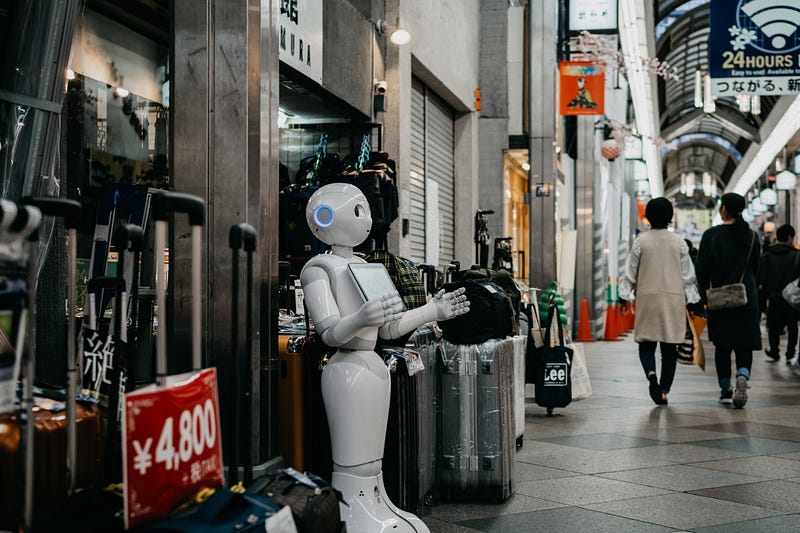
How many of you had a decent conversation with a chatbot?
Hello there! Welcome back! Today we are going to look at the paper “Why AI is harder than you think” published by Melanie Mitchell of Santa Fe Institute.
Let’s define two words used in the paper:
AI Spring— Time periods of optimistic predictions and massive investment
AI Winter — Time periods of disappointment, loss of confidence, and reduced funding
This paper argues that the cycles of AI spring and AI winter come about by people making too overconfident predictions and then everything breaks down. Mitchell has provided examples of times where people make overconfident predictions and outlined four fallacies that researchers make.
I found this paper interesting and sharing it here with you.
Springs and Winters
Since its beginning in the 1950s, AI has faced many cycles of AI spring and AI winter. Even with the fast-paced technology today, some capabilities like self-driving cars, housing robots, and conversational companions are far from reality. In the paper, Mitchell has shared many instances where researchers have become overconfident about AI's future and made predictions that haven’t come true yet. I am sharing a few of those key statements researchers and entrepreneurs have made over the future of AI. These statements are made after some breakthroughs in the field.
When perceptron was invented back in 1958, the New York Times reported that “The Navy revealed the embryo of an electronic computer today that it expects will be able to walk, talk, see, write, reproduce itself, and be conscious of its existence”[1].
In 1960 Herbert Simon declared that “Machines will be capable, within twenty years, of doing any work that a man can do”[2].
Claude Shannon echoed this prediction: “I confidently expect that within a matter of 10 or 15 years, something will emerge from the laboratory which is not too far from the robot of science fiction fame”[3].
Marvin Minsky forecast that “Within a generation…the problems of creating ‘artificial intelligence’ will be substantially solved”[4].
In surveys of AI researchers carried out in 2016 and 2018, the median prediction of those surveyed gave a 50 percent chance that human-level AI would be created by 2040–2060 [5].
Stuart Russell, co-author of a widely used textbook on AI, predicts that “superintelligent AI” will “probably happen in the lifetime of my children” [6].
Sam Altman, CEO of the AI company OpenAI, predicts that within decades, computer programs “will do almost everything, including making new scientific discoveries that will expand our concept of ‘everything.’ ” [7].
Shane Legg, the co-founder of Google DeepMind, predicted in 2008 that, “Human-level AI will be passed in the mid-2020s” [8].
Facebook’s CEO, Mark Zuckerberg, declared in 2015 that “One of [Facebook’s] goals for the next 5 to 10 years is to basically get better than human level at all of the primary human senses: vision, hearing, language, general cognition” [9].
These are a few of the statements made by researchers and entrepreneurs. and These statements or opinions are the ones that drive the fundings. I have only mentioned AI Springs here as everyone knows whether these things have become reality as of today or not. More Springs and Winters can be found in the paper.
The author states that predictions about the likely timeline of human-level AI reflect our own biases and lack of understanding of the nature of intelligence. And here are the four fallacies in our thinking about AI that lead to these overconfident predictions.
Fallacy 1: Narrow intelligence is on a continuum with general intelligence
Advances on a specific AI task are often described as the first step towards more general AI. Any improvements in our programs, no matter how trivial they are, considered as progress towards general AI. Whatever progress we made, we considered it as a step towards general AI.
Ex: Deep Blue was hailed as the first step of an AI revolution. We can implement it by using a min-max search tree and a few hand-crafter rules. It might not be actual intelligence. But we can’t surely say that it is not a step towards general intelligence, because we are not very clear about general AI principles. It might use some trivial algorithms to make decisions as well.
Fallacy 2: Easy things are easy and hard things are hard
We assume that the hard problems for humans are hard for computers and the same goes for easy problems. Whenever we solve hard problems we think, “Wow! the computer must be super smart because only a super smart person can do those things”. Are those problems actually hard for computers? Tasks that seem very easy for us might be very difficult for computers. How many of you had a decent conversation with a chatbot?
Ex: researchers at Google DeepMind, in talking about AlphaGo’s triumph, described the game of Go as one of “the most challenging of domains” [10]. Challenging for whom? For humans perhaps. Psychologist Gary Marcus pointed out, there are domains, including games, that, while easy for humans, are much more challenging than Go for AI systems. One example is charades, which “requires acting skills, linguistic skills, and theory of mind”, abilities that are far beyond anything AI can accomplish today [11].
Fallacy 3: The lure of wishful mnemonics
This is about how we call things or talk about AI systems. Here is the argument — A major source of simple-mindedness in AI programs is the use of mnemonics like “UNDERSTAND” or “GOAL” to refer to programs and data structures [12]. We use the words like goal, thinks, understand, win and we ascribe human tendencies or human wants/needs to those systems.
Ex: DeepMind co-founder Demis Hassabis tells us that “AlphaGo’s goal is to beat the best human players not just mimic them”. And AlphaGo’s lead research David Silver described one of the program’s matches thus: “We can always ask AlphaGo how well it thinks it’s doing during the game. …It was only towards the end of the game that AlphaGo thought it would win” [13].
Fallacy 4: Intelligence is all in the brain
This is about embodied cognition. The assumption that intelligence is all in the brain has led to speculation that to achieve human-level AI, we simply need to scale up machines to match the brain’s “computing capacity” and then develop the appropriate “software” for this brain-matching “hardware”. But cognitive scientists claim that the representation of conceptual knowledge is dependent on the body: it is multimodal…, not amodal, symbolic, or abstract.
Ex: Deep-learning pioneer Geoffrey Hinton predicted, “To understand [documents] at a human level, we’re probably going to need human-level resources and we have trillions of connections [in our brains]. …But the biggest networks we have built so far only have billions of connections. So we’re a few orders of magnitude off, but I’m sure the hardware people will fix that” [14]. Others have predicted that the “hardware fix” — the speed and memory capacity to finally enable human-level AI — will come in the form of quantum computers [15].
Conclusion
The 4 fallacies given by the author can raise several questions for AI researchers. These fallacies seem reasonable to me, although I disagree to some extent being an AI engineer ;) There are cases where I think optimism is required for making progress. If we think this is overconfidence and we can’t do much, we can’t give our best efforts. The main important thing for any research is funding. We might be far from general AI, but we have made remarkable progress so far. And this wouldn’t be possible if we hadn’t been optimistic.
The author has also given some thoughts on how to reach general AI, you can go through the paper for those details in the conclusion section.
References
- New Navy Device Learns by Doing. New York Times, 1958. URL https://tinyurl.com/yjh3eae8
- H. A. Simon. The Ford Distinguished Lectures, Volume 3: The New Science of Management Decision. Harper and Brothers, p. 38, 1960.
- The Shannon Centennial: 1100100 years of bits. https://www.youtube.com/watch?v=pHSRHi17RKM, 1961.
- M. L. Minsky. Computation: Finite and Infinite Machines. Prentice-Hall, p. 2, 1967.
- K. Grace, J. Salvatier, A. Dafoe, B. Zhang, and O. Evans. When will AI exceed human performance? Evidence from AI experts. Journal of Artificial Intelligence Research, 62:729–754, 2018.
- S. Russell. Human Compatible: Artificial Intelligence and the Problem of Control. Penguin, p. 77, 2019.
- https://moores.samaltman.com, 2021.
- J. Despres. Scenario: Shane Legg. Future, 2008. URL https://tinyurl.com/hwzna364
- H. McCracken. Inside Mark Zuckerberg’s bold plan for the future of Facebook. Fast Company, 2015. URL www.fastcompany.com/3052885/mark-zuckerberg-facebook.
- D. Silver et al. Mastering the game of Go without human knowledge. Nature, 550(7676):354–359, 2017.
- G. Marcus. Innateness, Alphazero, and artificial intelligence. arXiv:1801.05667, 2018.
- D. McDermott. Artificial intelligence meets natural stupidity. ACM SIGART Bulletin, (57):4–9, 1976.
- Mixed outlook for human-versus-AI match. Korea Herald, 2016. URL https://tinyurl.com/zb3ywabe.
- J. Patterson and A. Gibson. Deep Learning: A Practitioner’s Approach. O’Reilly Media, p. 231, 2017
- G. Musser. Job one for quantum computers: Boost artificial intelligence. Quanta Magazine, 2018. URL https://tinyurl.com/2k8fw628.
Hope you enjoyed this discussion as much as I do. Let me know whether you agree with the author or not in the comments. Thank you!