Why AI Can’t Replace You
Humans can draw on a range of experiences and knowledge to come up with new and innovative ideas.
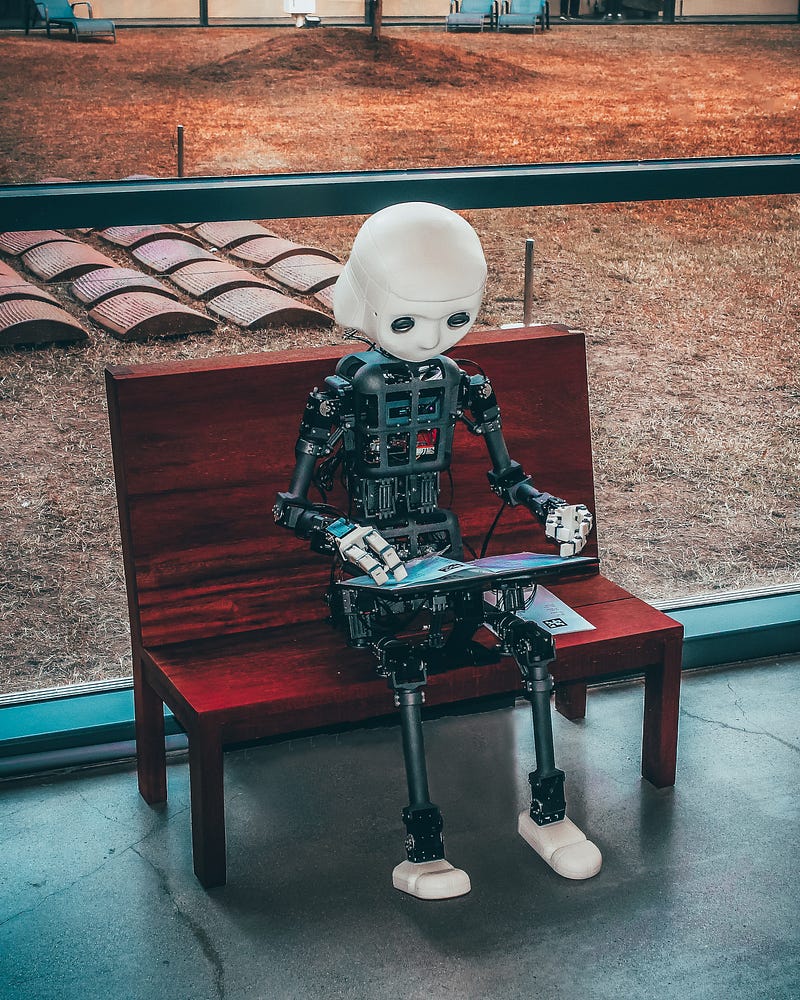
Introduction
I don't know what your industry is but Robotics and artificial intelligence are rapidly changing the landscape of many industries, from manufacturing and healthcare to finance and logistics.
AI is being used to automate tasks and improve efficiency. But does this mean that robots will eventually replace humans in all walks of life?
The short answer is no. In many cases, AI can do the job faster, better, and cheaper than humans. But there are some things that AI can’t do — at least not yet. Creativity and innovation are two of these things.
So, if you’re creative and competent, you don’t need to worry about being replaced by a robot anytime soon. Here’s a closer look at five reasons why AI can’t replace you if you’re creative and competent.
“Artificial intelligence is one of the most profound things we’re working on as humanity. It is more profound than fire or electricity.”
— Sundar Pichai
You’re not a robot
First and foremost, there is one major factor that puts you ahead of AI when it comes to creative and competent jobs: you’re not a robot — at least not yet. No matter how sophisticated AI may become, it will never be able to replicate the complexity of the human mind.
There is simply too much that we don’t yet know about the way our minds work and how we process information to be able to recreate it with any degree of accuracy. At the same time, the human brain is capable of so much more than AI ever could be, especially when it comes to creative endeavors. Humans can draw on a range of experiences and knowledge to come up with new and innovative ideas. This is something that AI simply can’t do.
You’re creative
Second, if you’re qualified for the job, you have a major advantage over AI: you’re creative. From inventing new products to creating marketing campaigns and artwork, the creative process is one of the most important aspects of many jobs.
We, Humans, are creative by nature. We can draw on a range of experiences and knowledge to come up with new and innovative ideas. AI, on the other hand, simply follows an algorithm. It can’t think for itself or come up with original ideas. Furthermore, creativity is rarely an all-or-nothing endeavor.
Even the most basic jobs involve a degree of creativity. Writing reports and emails, designing presentations, problem-solving, and more are all tasks that require creativity. And AI simply isn’t equipped to handle these tasks.
You’re competent
Third, if you’re competent at your job, AI can’t replace you. Competence involves not only understanding the task at hand, but also the wider context of the industry in which you work.
For example, if you’re a skilled medical professional, you’ll understand the complexities and nuances of the medical field that AI simply can’t replicate. That same holds true for any job. The most capable professionals understand the context of their industry — the laws, trends, regulations, etc. — and that context is one thing that AI programs simply can’t replicate.
AI can’t do everything
Fourth, while AI is becoming increasingly powerful, there are still many things that it can’t do. AI is becoming more efficient and capable of completing tasks such as data analysis, pattern recognition, and more. But no matter how advanced it gets, it simply can’t replace the human mind.
When it comes to creative and innovative endeavors. For example, no matter how powerful AI gets, it won’t be able to replace the human ability to make decisions and think strategically. It won’t be able to replicate the human ability to understand the nuances of the industry and utilize that knowledge to make informed decisions.
Conclusion
AI will always have its place. It can automate tasks quickly and efficiently, and that is something that will always be beneficial. However, when it comes to creative and competent tasks, AI can’t replace the work that humans can do.
For now, humans are needed to perform creative and competent tasks. AI may one day be able to come close to replicating the human mind, but that day is far off in the future. For now, if you’re creative and competent, robots can’t replace you. Thanks for reading.


