
Why Africa’s Largest Slum is the Best Place in Nairobi
And how to avoid ‘poverty porn’ in your photography
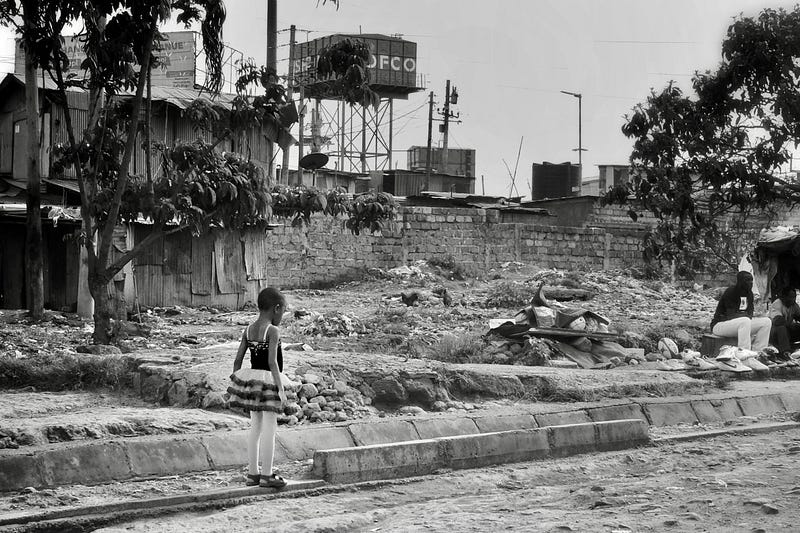
Ok, I wouldn’t go quite that far but I needed a good title hook.
I’ll get to Kibera in a moment, bear with me please.
Nairobi in general is an up-and-coming city with a lot to offer. Great restaurants, lush greenery (at least in wealthy areas, like most cities), modern shopping malls, a vibrant arts scene, decent health care, access to wildlife. The weather is about as good as you can get, with warm but not hot days, cool but not cold nights, and it rains. You can buy pretty much anything you need.
It also has all kinds of problems: lack of urban walkability; corruption at many levels of society, including police who use intimidation to extract bribes from motorists for the slightest infraction (I’ve been stopped three times); high levels of poverty and increasing wealth inequality; and white-knuckle traffic that is not for the queasy. Anyone with money lives in a gated compound with security guards. The guards themselves, those who work for the most professional companies, make about 100 dollars a month.
As Nairobi continues to grow and evolve, what is still missing in the public realm is continuity and coherence, a sense of a city made for comfortable and safe enjoyment.
Even in wealthier areas, Kenyans and visitors alike don’t have places to just be. Sidewalks are often minimal, forcing people to walk along — or in — busy lanes of traffic. People dash across expressways to get where they need to go. Many of the good things are only accessible by car, behind walls, and separated from other good things behind walls.
If you have foreign guests coming to town and want to take them to some cozy, must-see part of town, I’m not sure where that would be. There’s a nice forest for day hikes. The nearby National Park is a great safari drive. The malls?
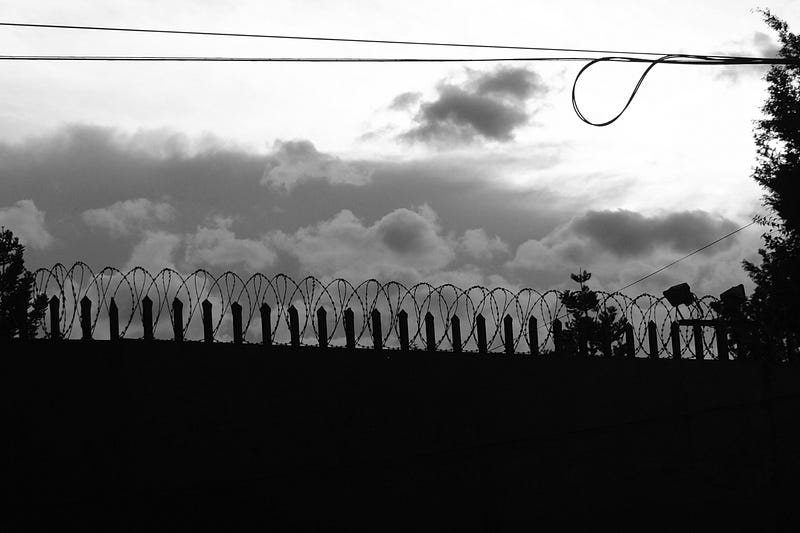
Again, there are lovely places to eat, though they are mostly behind those ubiquitous walls and even barbed wire.
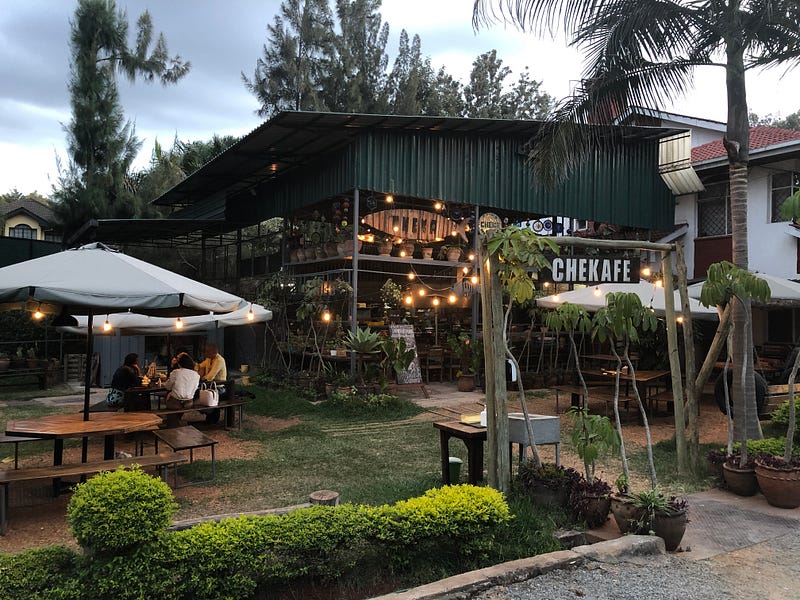
The security guys, some more professional than others, typically let your car in through a huge metal gate. At mall entrances, there’s a quick security check of your entire car, including those mirrors that check underneath.
Why? You may remember the 2013 terrorist siege of the Westgate Mall, which I pass almost everyday but can’t quite bring myself to visit.
For a photographer like myself (and for Kenyans as well), it’s a challenging environment. I’ve been told that walking around with a camera is not a great idea. But the rough edges of the city actually make everyday life very visual. Not in a lovely Prague way, more like a gritty, early-1900s New York City way, with inequality and barely-controlled chaos as infrastructure struggles to keep up with the growth.
That brings us to Kibera, the largest slum in not just Nairobi but all of Africa. Depending on who you believe, anywhere from 250,000 to up to a million people are said to be packed into the ‘informal settlement’ in the heart of the city. A friend told me that, at least in the past, US Embassy employees were forbidden to go there.
I just gave a photo workshop in Kibera, called Finding Your Stories, to a group of young photographers mostly from the slum.
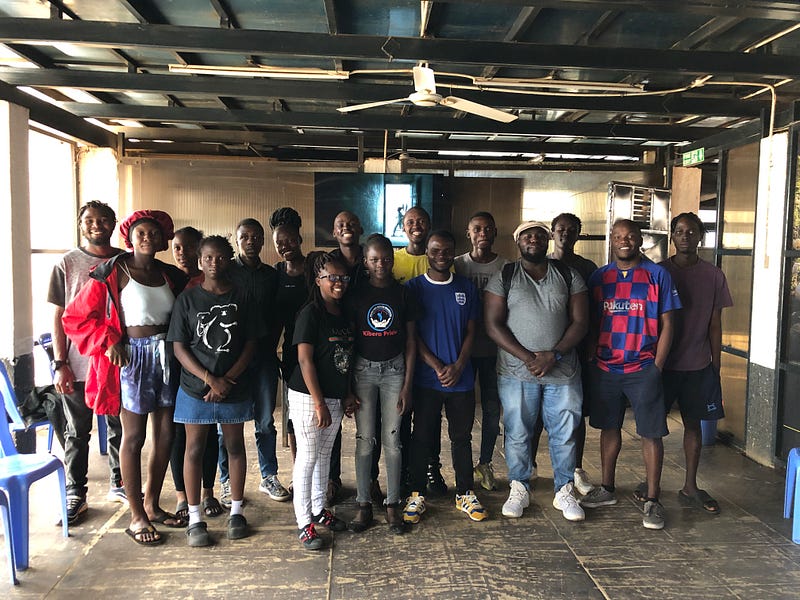
I was excited - I’m hopeful that workshops, mentoring, and online teaching will be part of my next chapter following a 15-year photo teaching career (which ended when we moved to Nairobi in August from Washington DC).
More on the workshop itself in a separate story.
I was just as excited to finally see Kibera itself. I was confident we would get the chance for a photo walkabout after the workshop.
Which we did. And let me tell you, it is a sight to behold.
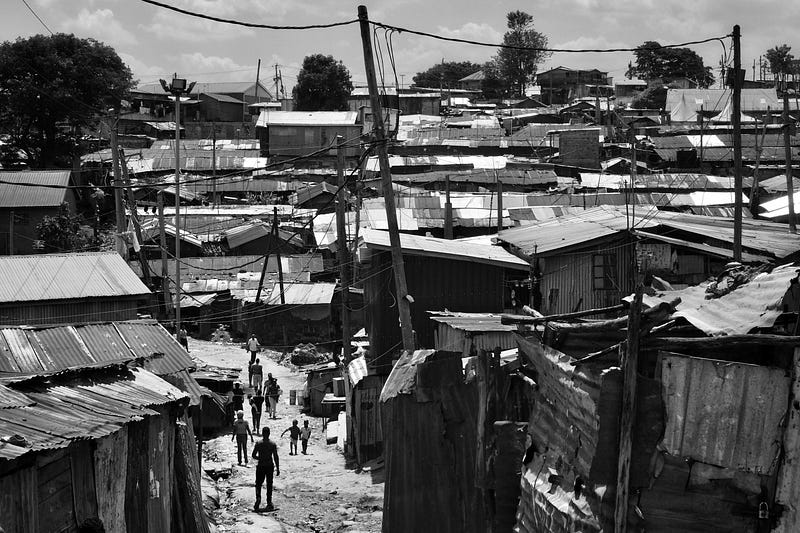
A hive of humanity living in dense layers of utterly irregular, unregulated, improvised dwellings, connected by a maze of tight, muddy alleyways. The main roads are thronged with people and hand-pulled carts and lined with shops and services of all kinds, most in closet-sized corrugated kiosks.
I loved it.
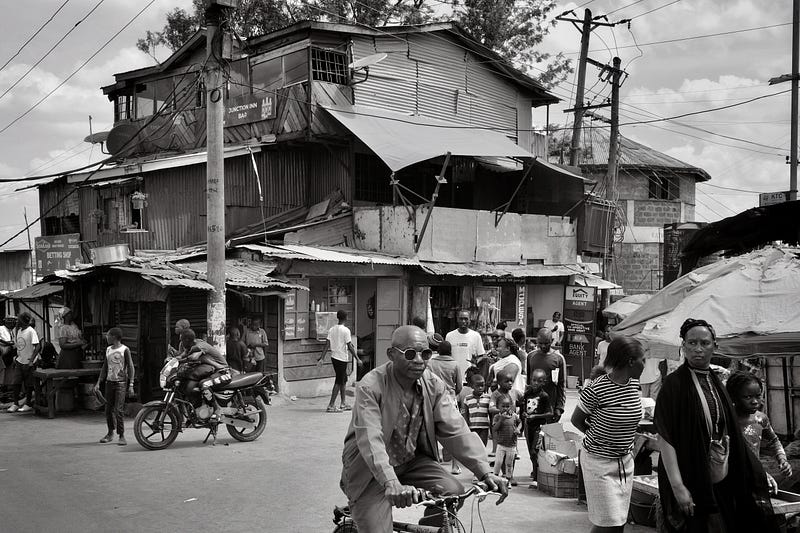
I can’t exactly explain why. I’m not callous or naive, I understand Kibera has tremendous problems that I don’t need to list here. Sure, I had the benefit of walking with a small group of young locals who knew — and were known in — the area. I also think we were in one of the ‘better’ areas that has clearly seen some improvements like paved roads, somewhat better buildings, and proper drainage. Still, even as we descended deeper and deeper (literally, there is an almost 200-foot difference in elevation) into Kibera’s maw, not only was it fascinating but I felt oddly safe in a way that I don’t always in some other parts of the city.
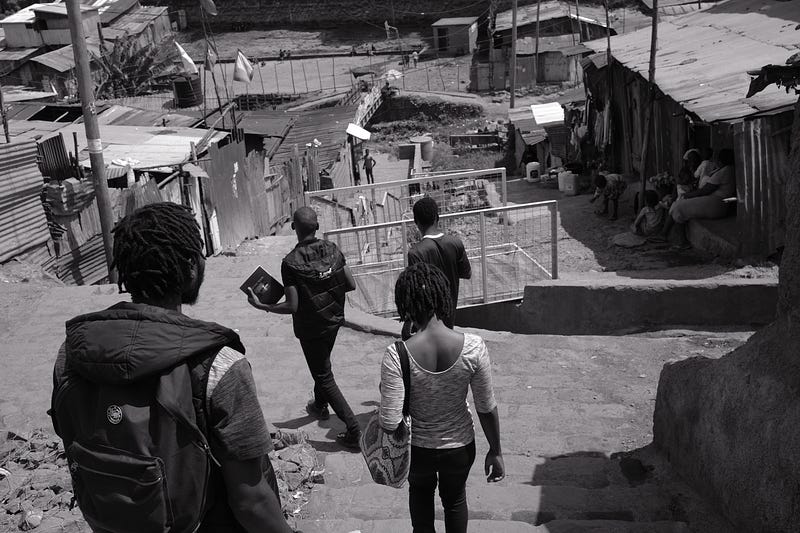
My local photographer friends agreed. In downtown Nairobi, and even in some of the more outer neighborhoods considered ‘good’, they talked of a somewhat hostile environment when photographing, even worrying about having their cameras stolen.
In the sprawling jumble of Kibera, they were relaxed, fist-bumping friends along the way, as the Saturday crowds did their errands and generally lived life on the street. If Nairobi is often a life behind walls, this was the opposite: everything human scale, pedestrian-based, happening where you could see it.
A young guy hanging outside with his family, overlooking a sewage-clogged stretch of the Nairobi River next to a new footbridge, called me over to have some fresh-cooked potatoes. So I went over to their little makeshift patio and it was tasty. Turns out it was a friend of someone in my group.
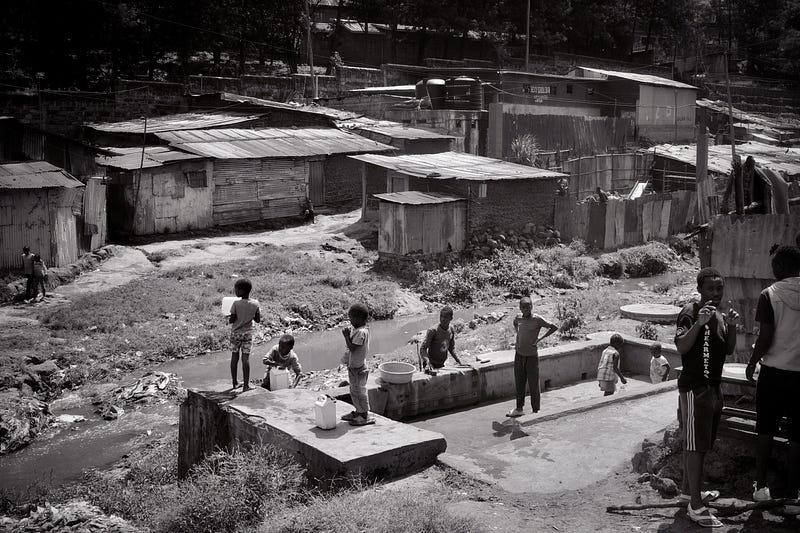
Nobody gave me a hard time. Everywhere I looked there was a photo, like Nairobi itself but ten times more so. Just processing it all was dizzying. Photo-wise you basically had two choices: run around frantically spraying everything and everyone, or pick and choose and accept you will miss out on a lot. Every step of the way there seemed to be photos to be had — too many.
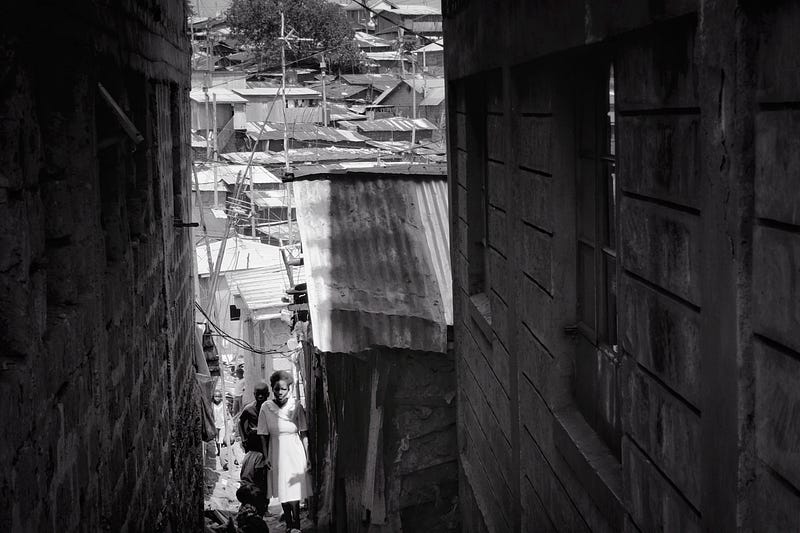
Though not everyone is necessarily poor, as a young Kenyan once told me. One thing you notice is many people are dressed pretty well, going about their business in a dignified fashion.
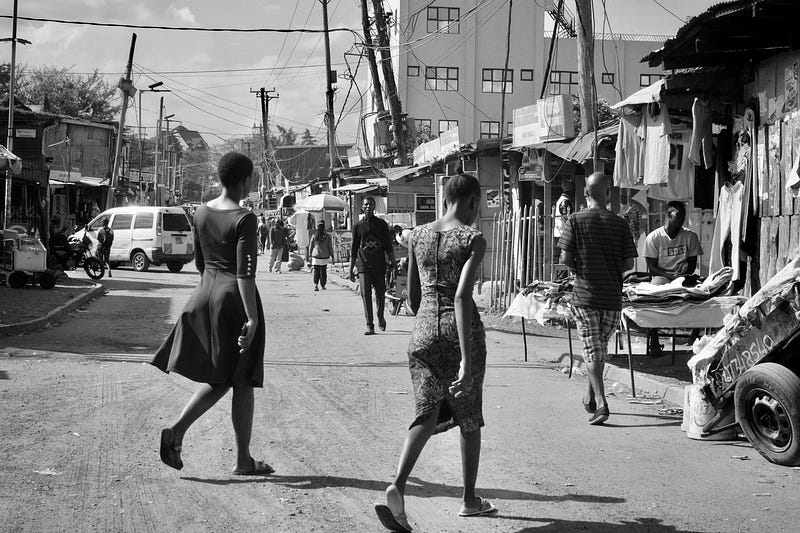
Those who clearly did have little didn’t seem angry, menacing, on drugs, or looking to rob someone. I actually never felt uncomfortable, in ways I have felt uncomfortable in parts of central Nairobi. The people I interacted with were super friendly.
This huge alt-city within the Nairobi metropolis almost had something like small-town vibes. Maybe that’s a stretch, but with a population possibly larger than Washington DC, and most of them seemingly out and about, to this newcomer Kibera felt ‘out of time’, the rhythms more like a town in the 1800s. With the makeshift buildings, maybe akin to a Wild West town. There was even a little shack marked ‘saloon’.
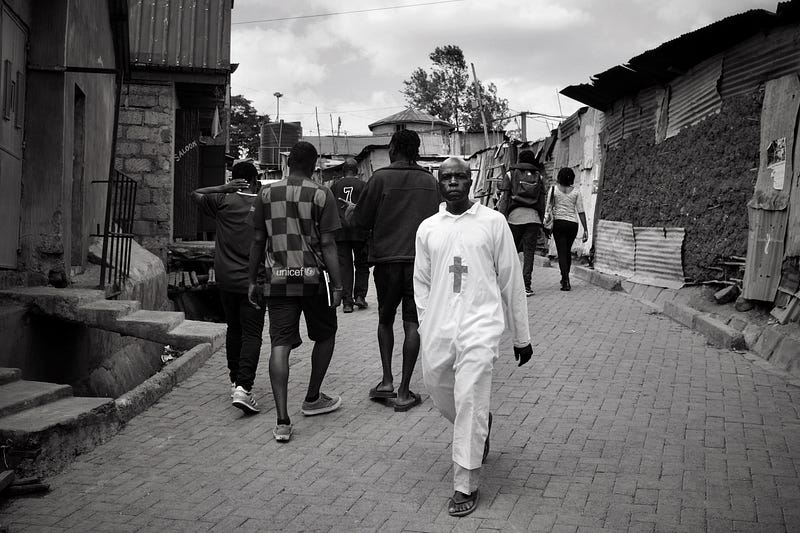
I’m not saying I could live there, but I found myself thinking it. Despite all the obvious problems, maybe I was simply relieved to see a surprisingly normal flow of life after the often crimped, disjointed experience of urban Nairobi.
Our walk was only for about an hour. At first I was disappointed in the quality and quantity of the photos I managed to take (driving out later I made a few more from the car). Everything had been too fleeting, too overwhelming. But as I edited the best ones that night, I felt somewhat better.
I try, especially in places like Africa, not to use people as stereotypes of picturesque poverty. I don’t go looking to make a place look bad — or good. I try to be honest. This poverty was incredibly picturesque. Even Kenyan photographers say they are sometimes accused of ‘poverty porn’ when shooting in Kibera.
In retrospect I noticed I instinctively tried to avoid that. There are clearly countless stories there, many of which are well-documented. When I return I’d like to find my stories, my approach. For starters, what I really wanted to show was the unique landscape and the relationship of people to it. This is what the place looks and feels like. Simply put, you really have to see it to understand. So that was job one.
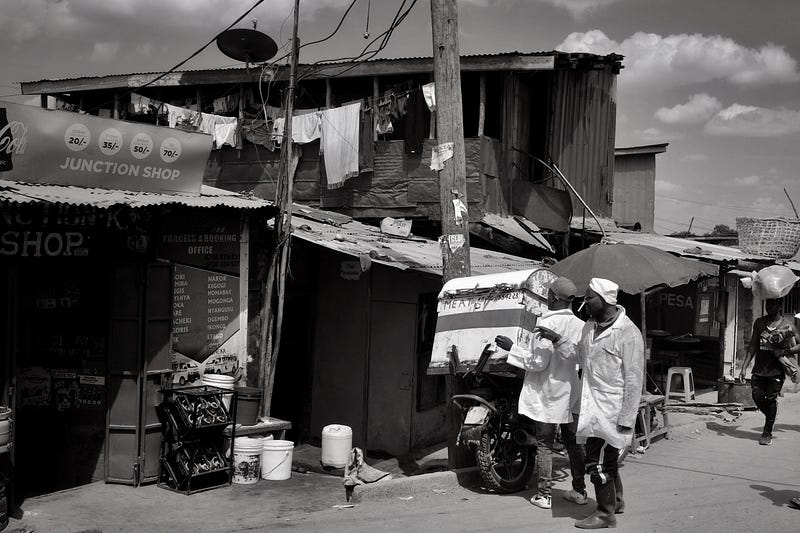
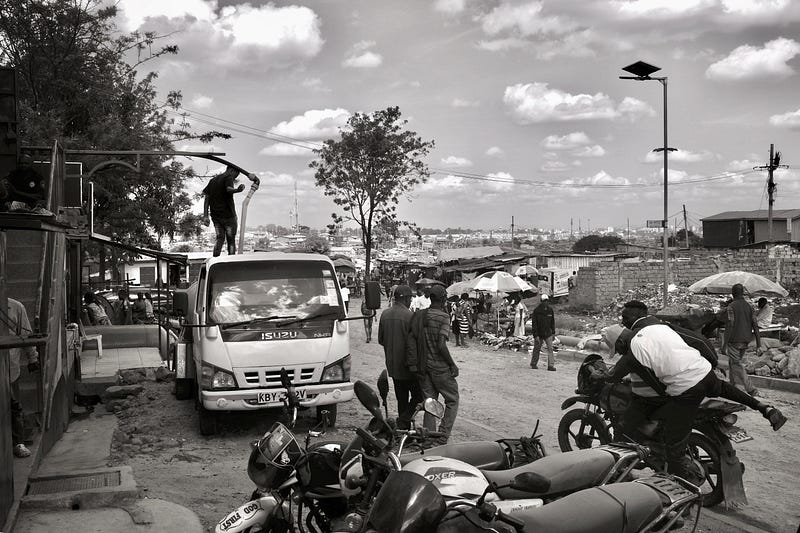
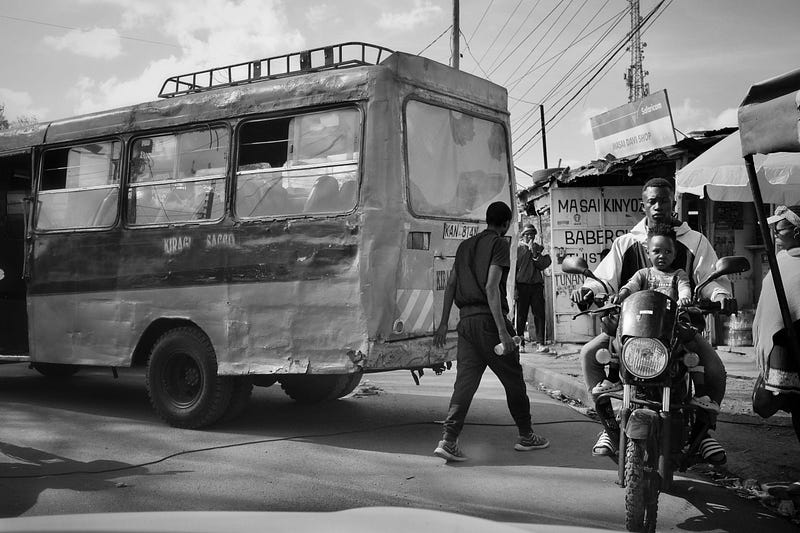
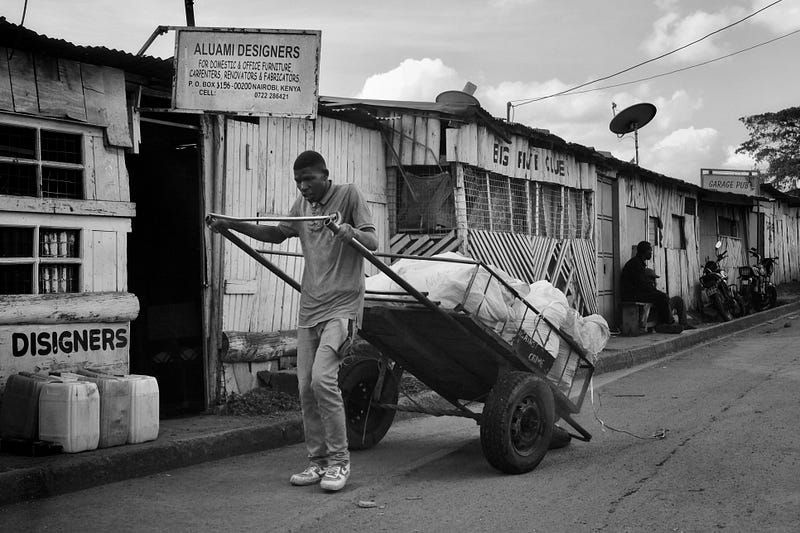
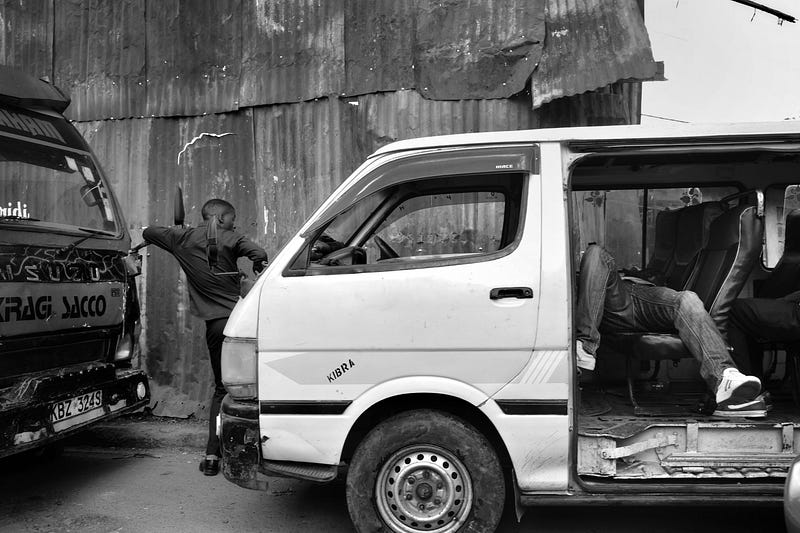
I am always most interested in place, and Kibera was maybe the most interesting place I have ever been. Maybe not good by standard objective measures, but in a paradoxical way the most coherent place I have found yet in Nairobi.
I noticed other non-Kenyans who were clearly getting guided tours. On TripAdvisor you’ll see positive reviews of the experience, which runs about 40 bucks per person. People seem to agree it’s both eye-opening and rewarding if you have the right mindset.
Yes, people living in Kibera suffer from a lack of services, poor sanitation, and a litany of dysfunction, so I don’t want to be glib or romantic.
But for Kenyans I can also see there’s community there — life there — that is often denied them in Nairobi’s splintered urban ecosystem. Despite the dereliction, the areas I saw actually function better as a public realm than many other parts of Nairobi or, say, Baltimore for that matter. There is good energy at the grass-roots level to continually improve living conditions. I’ve heard some people choose to stay in Kibera even when they could afford an apartment somewhere else.
The year-round mild weather means the main natural enemy is flooding, which is a real problem and getting worse with climate change.
Just because it’s poor doesn’t mean it‘s bad. I have walked around new high-end developments in the suburbs of Washington DC that are perfect by comparison — yet make my skin crawl and have none of the spirit of Kibera.
I think if the apocalypse comes, places with grit, stoicism, solidarity, and ingenuity will fare better. By that measure, Kibera looks set to survive whatever happens. I can imagine Kibera barely noticing the apocalypse.

I can’t wait to go back, which I’m doing soon. We’ll see if I feel differently after learning more.


