Why Advanced AI Robots would be Awesome!
A brief introduction to get started with robots and robotics with AI.
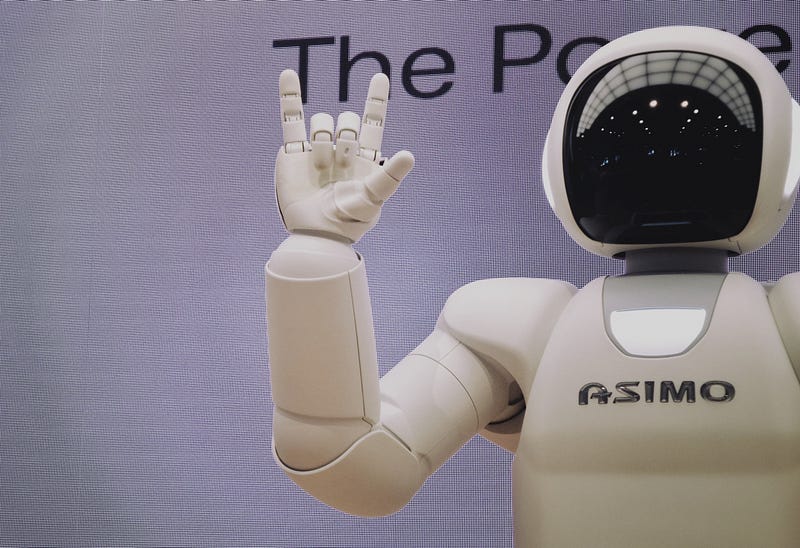
I have always been fascinated with robots since my childhood. I used to watch robots on television and they never failed to interest me. I always dreamed of building one by myself and thought to myself that it would be super cool to have a robot friend for me to play, a robot friend to help my mom do daily chores, and another robot that would guard the house. The 5-year-old me had many dumb, funny, and unique ideas about what to expect from the world especially robots.
As I grew older, my curiosity grew each second too and I wanted to explore the field of robotics and learn more. A sudden realization hit me, what I expected robots to be was an unrealistic expectation. My idea of robots was based on science fiction humanoid robots which could act similarly to human beings. However, the complexity behind this was unfortunately too much for that time. Not to be too disheartened though as with advancements in technology especially in the fields of artificial intelligence and deep learning due to better equipment as well as an abundance of data, the AI-based robot dream could indeed be a reality!
In this article, I will be firstly looking at the more boring formal definitions of robots and then proceed to list the various hardware and software resources to get started with building robots. We will then understand why this is the best time to indulge in robotics and how improvements in artificial intelligence amplify my interest.
Definition:
According to the International Standards Organisation (ISO), an industrial robot is defined to be
an automatically controlled, re-programmable, multipurpose manipulator, programmable in three or more axes, which can be either fixed in place or mobile for use in industrial automation applications.
Essential Components of Robots:
Before we dive into the hardware and software tools to start building robots, let us look at some of the essential components of every robot:
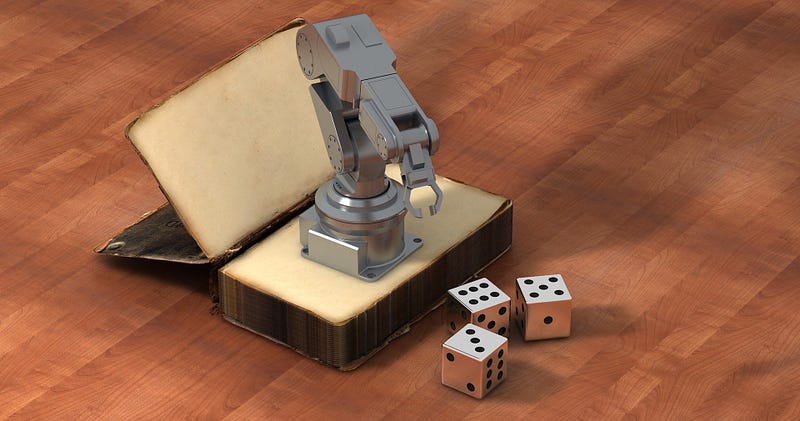
- Manipulators: — The manipulators are used to manipulate and operate on the workpiece. The manipulator consists of mainly three parts which are the arm, wrist, and end effector. The arm ensures mobility and reach-ability while the wrist takes care of the orientation. The end effector performs actions and tasks.
- End effectors:— They increase the multi-tasking by using specialized equipment. The main parts of end effectors are the grippers and tools. The grippers are used for grasping objects and tools are used performing specific tasks on a workpiece.
- Drive systems: — These are also called actuators and they control the action of individual joints in manipulators to perform the desired movement in the arm or wrist. There are 3 main methods of supplying energy/power to drive systems. They are electric, hydraulic, or pneumatic.
- Controller:— A controller is a device that takes one or more inputs and adjusts its outputs so connected device functions in a controlled manner. The controller works in 3 main steps. The controller has a perception i.e. an input from sensors, then it does the processing which is basically cognition activities which include pattern recognition, computer vision, mapping techniques, motion planning, and artificial intelligence. The final step is performing actions that are done by the actuators.
- Sensors:— These are the peripheral devices from which the robot can receive an input. We will go into further detail on sensors in another article as it is a vast topic. For now, we can understand that sensors act as inputs to the robot and they help in perception. Some of the examples of sensors are ultrasonic sensors, infrared sensors, proximity sensors, temperature sensors, and a ton more.
With the essential parts of every robot analyzed, we can finally look at the hardware and software components to get started with building amazing robotic projects. Let us look at the hardware stuff first to build our models, then we will look at the essential software to make our robots much better in visual perception and performance.
Hardware Components —
- ARDUINO:
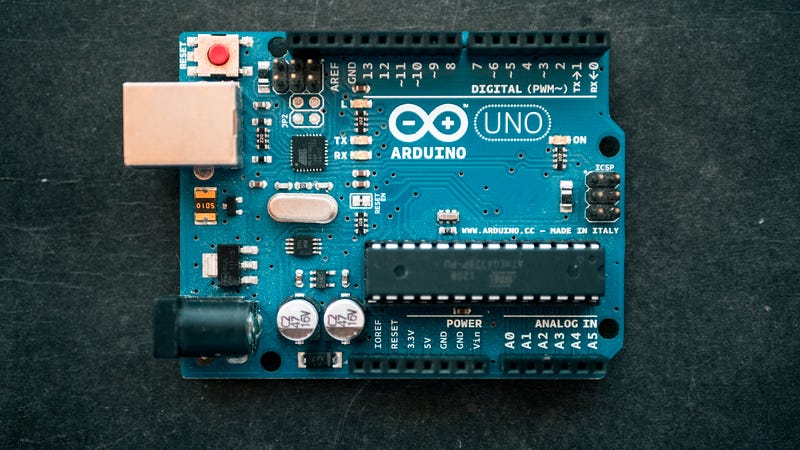
The Arduino is a development board that consists of an ATmega Micro-controller. It is one of the best ways to get started with robotics and IoT (Internet of Things) projects. Arduino is an open-source hardware and software company that can be used by hobbyists, tinkerers, and professionals to build amazing innovative projects. From my experience, Arduino is definitely one of the best ways to get started with your robotics dream as it is comparatively easier to use than other micro-controllers. The Arduino comes in many forms and sizes namely Arduino nano, Arduino uno, and Arduino mega. The nano is a smaller sized board which can be used for more simple and unique projects. The uno is a medium-sized board perfect to start experimenting and trying out hobbyist level projects. The mega is a bigger development board which can be used for slightly more complex projects and scenarios.
2. RASPBERRY PI:
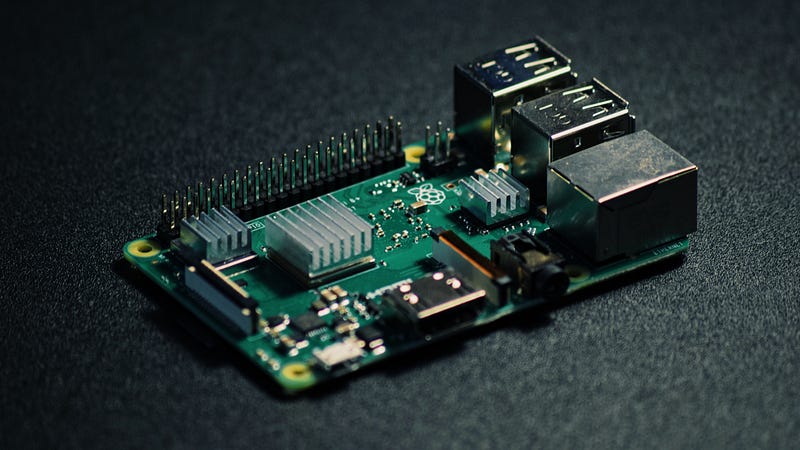
The Raspberry Pi is a single-board computer which is a fantastic way to get started with computing and programming. The Raspberry Pi offers lots of opportunities to create extremely cool projects in branches like computer vision, gaming, IoT projects, and so much more. With a camera attachment, the raspberry pi can even be used for tasks like object detection, face recognition, and surveillance operations. If you are a beginner who wants to get started with programming and coding, then the Raspberry Pi is the cheapest and best approach. It can also be used by intermediate-level hobbyists or experts for more advanced projects.
3. NVIDIA JETSON NANO:
The NVIDIA Jetson Nano is one of the best tools for artificial intelligence related operations in robotics. It is slightly more expensive than the Raspberry Pi but the Jetson Nano also has higher computation power. According to NVIDIA:
NVIDIA Jetson Nano enables the development of millions of new small, low-power AI systems. It opens new worlds of embedded IoT applications, including entry-level Network Video Recorders (NVRs), home robots, and intelligent gateways with full analytics capabilities.
The NVIDIA developer kit allows users to run many neural network operations including image classification, segmentation, object detection, and speech processing among many more.
4. ACRYLIC/ METALLIC SHEET:
These are the physical structural requirements for building the robot. Acrylic or metallic sheets can be used by beginners to build the robotic design after some altering. These are cheap options to start your first ever robot. The acrylic or metallic sheets can be molded into a desirable shape for the framing either the body, base or any other design. Other alternatives can be aluminium-based material or stronger metallic substances like steel or similar alloys.
5. 3-D Printing:
3-D printing is slightly more advanced but it is extremely useful for creating precise and perfect-sized shapes and designs for the robotic model. 3-D printing is the procedure of creating a 3-Dimensional design from a CAD model or a digital 3-D model. I would highly recommend 3-D printing for more advanced projects to get the exact 3-dimensional design you envisioned for your project.
Software Requirements —
- ARDUINO: The Arduino integrated development environment (IDE) is the best way to code all our Arduino projects. The Arduino IDE supports languages like C and C++. This is a completely free open-source platform and you can get started here.
- PYTHON: Learning programming languages is extremely important to get started with coding your micro-controllers or embedded devices. While languages like Java can be extremely useful for app development, python is amazing for any artificial intelligence application. You can get started with python here.
- V-REP: The Virtual Robot Experimentation Platform is a 3D robot simulation software, with an integrated development environment, that allows you to model, edit, program, and simulate any robot or robotic system (Source). In my opinion, this tool is absolutely fantastic in understanding how robots exactly work and simulate your models to see how it performs. It also comes with many free examples.
- AUTODESK: Autodesk, Inc. is an American multinational software corporation that makes software services for the architecture, engineering, construction, manufacturing, media, education, and entertainment industries (Source). Autodesk can help you in designing high-quality models which can also be 3-D printed or can be laser cut according to the users requirement.
- TINKERCAD: Tinkercad is one of the coolest free online websites to design not only 3-D models but also design your Arduino connections as well. This is the best place for beginners to get started with robotics and Arduino designing. You can check out tinkercad here.
Artificial Intelligence in Robots:
Now that we have a brief understanding of robots and robotics as well as the tools required to get started with them, we can understand why advancements in AI can be so crucial to designing and building better robots. We can now have robots that visually perceive and understand human emotions and actions as well as interact with us. For some, this might be slightly concerning and I will make sure to discuss this in a future article but for now, let us take our time to appreciate how far we have come that we can comfortably have discussions that the AI-based robot dream can actually be a reality soon.
Final Thoughts:
I am super hyped for the future of artificial intelligence based robots. There will be a wide range of opportunities in the future for both AI and robotics. I find it extremely fascinating how my childhood dream of humanoid science fiction like robots can actually be a reality in the near future. My excitement levels for this are very high and I am curious to know what the viewers feel. I hope all of you enjoyed this article and if you stuck on till the end, let me know your views on this topic. Thank you all and have a wonderful day!