avatarSingh Bhai

Free AI web copilot to create summaries, insights and extended knowledge, download it at here

4869

Abstract

ve all made the leap, too. At Kickstarter, the policy boosted their <b><a href="https://insideinvestor.com.au/what-does-high-conviction-mean/">company conviction score</a></b> (a measure of employee confidence and buy-in) by a whopping <b>24%</b>.</li></ul><p id="19d2">Clearly, a better work-life harmony is possible. But how exactly does shaving off that extra day create such profound shifts?</p><h1 id="93d5">The Psychological Drivers Behind the Impact</h1><p id="7e68">As full-time humans, we all share <b>three core psychological needs</b> that deeply influence our motivation and well-being:</p><ol><li><b>Mastery</b> — Making progress on tasks that challenge our skills.</li><li><b>Autonomy</b> — Having freedom and control over how we work.</li><li><b>Connection</b> — Feeling part of a supportive community.</li></ol><p id="1c3a">The traditional work setup starves us of opportunities to fulfill these innate drivers. But the 4-day model provides fertile ground for them to flourish:</p><p id="ab32"><b>Mastery:</b> With one less obligatory workday, employees can go deeper into their most meaningful work. This ignites their <a href="https://www.frontiersin.org/articles/10.3389/neuro.12.006.2007#:~:text=Intrinsic%20motivation%20is%20defined%20as,products%2C%20pressures%2C%20or%20rewards."><b>intrinsic motivation</b></a> to grow and develop skills over busy work.</p><p id="9f04"><b>Autonomy:</b> Rather than punching a clock, successful 4-day policies accept trust and flexibility. People can craft their ideal schedule and environment for peak productivity.</p><p id="3446"><b>Connection:</b> More personal time frees up breathing room for genuine bonding with loved ones, hobbies, and passions outside work. Employees arrive refreshed and able to forge stronger workplace bonds.</p><h1 id="70a4">Overcoming Skepticism: The Data Weighs In</h1><p id="9486">I know what you may be thinking: “Fewer work hours? How does THAT increase output?”</p><p id="186c">But study after study affirms that strategically <i>reducing</i> hours can create <i>exponential</i> productivity gains:</p><figure id="d18a"><img src="https://cdn-images-1.readmedium.com/v2/resize:fit:800/1*VjE9NGMYdRVfLr8-hb1ifw.jpeg"><figcaption>Source: <a href="https://www.aabri.com/VC2020Manuscripts/VC20032.pdf"><b>Microsoft Work Life Choice Challenge Results</b></a></figcaption></figure><ul><li><b>Microsoft Japan saw a 40% boost</b> in employee productivity after adopting 4-day weeks. (<a href="https://www.npr.org/2019/11/04/776163853/microsoft-japan-says-4-day-workweek-boosted-workers-productivity-by-40#:~:text=store%20in%20Tokyo.-,Microsoft's%20division%20in%20Japan%20says%20it%20saw%20productivity%20grow%20by,a%20week%20rather%20than%20five.&amp;text=Workers%20at%20Microsoft%20Japan%20enjoyed,normal%2C%20five%2Dday%20paycheck."><b>Source</b></a><b>)</b></li><li><b>A UK facility moving to 32-hour weeks experienced an astounding 51% jump</b> in team output. (<a href="https://www.theguardian.com/money/2024/feb/21/four-day-week-made-permanent-for-most-uk-firms-in-worlds-biggest-trial"><b>Source</b></a>)</li><li><b>Employees at 4 Day Week Global</b> report up to <b>40% gains in output</b> for 32 hours of work compared to 40 hours. (<a href="https://gitnux.org/4-day-work-week-statistics/#:~:text=The%20results%20showed%20increased%20productivity,engaged%20with%20the%20wider%20society."><b>Source</b></a>)</li></ul><p id="6189">The reason is simple: when we’re unmotivated, unfocused or just plain fatigued, <b>we become productivity sinkholes</b>. Those extra hours don’t foster output — they drain it.</p><p id="df94">By <b>optimizing for human factors like energy levels and work-life balance</b>, companies can squeeze more productive juice out of fewer workday hours.</p><p id="e92c">It’s time to retire the antiquated notion that <b>more time = more results</b>. The 4-day week model quantifies a new way of defining productivity.</p><h1 id="341e">Leading With Trust and Empowerment</h1><p id="6e3d">If you want to make the 4-day model work, there’s no skirting around it: <b>you MUST trust your employees to get the job done</b>.</p><p id="c47f">Maybe that sounds scary if you’re used to micro-managing presenteeism with clock punch-ins or tracking idle mouse movements. But leading teams at Shopify, Shake Shack, and 4 Day Week Global have learned a crucial lesson:</p><p id="3ac6"><b>Define clear goals — not time constraints — and let your team run with it.</b></p><p id="f23e">At Shopify, leadership sets bi-weekly sprints that teams tackle asynchronously. As long as those targets get hit, the flexibility reigns supreme.</p><p id="2cd9">Similarly, at 4 Day Week Global, it doesn’t matter whether my colleague starts at 5 AM or I crank away at 1 AM. All that matters is that we deliver quality results.</p><p id="f368">The 4-day model rewards trust with <b>ma

Options

ssive boosts to the discretionary effort</b> — that elusive well of drive and commitment every company dreams of taking into.</p><p id="74b0">With that psychological buy-in, employees will take that extra ownership to blow past expectations on their terms.</p><h1 id="2778">It’s Not About Working Less, It’s About Working Smarter</h1><p id="b38d">Despite what naysayers claim, the 4-day week isn’t about working less. It’s about <b>working smarter and aligning our vision of productivity with human realities</b>.</p><p id="d837">Let’s face it: <b>working 24/7 is an inevitably self-destructive path</b>. We mentally log off long before those final hours of overtime. They become nothing more than “<b>presenteeism</b>” without substance.</p><p id="db6b">Prolonged cognitive fatigue eventually leads to burnout — a very real phenomenon costing the global economy over <b>$300 billion</b> annually in expenses. (<a href="https://www.stress.org/workplace-stress"><b>Source</b></a>)</p><figure id="9537"><img src="https://cdn-images-1.readmedium.com/v2/resize:fit:800/1*OWjT3ygyhQY1M4n9rA2-IA.png"><figcaption><a href="https://delphis.org.uk/peak-performance/stress-and-the-pressure-performance-curve/">Source</a></figcaption></figure><p id="5064">Making the 4-day pivot means <b>restructuring work with output in mind, rather than chasing flawed “hours spent” metrics</b>. By freeing up more personal time:</p><ul><li>Employees can recharge their physical and mental batteries</li><li>Teams can encourage psychological safety for open collaboration</li><li>Companies can optimize productive workflow rather than Facetime</li></ul><p id="52ce">If anything, the 4-day movement marks <b>a much-needed return to common sense</b> in the face of toxic hustle culture.</p><h1 id="4466">Accepting the Next Evolution of Work</h1><p id="a4ad">Of course, implementing a 4-day schedule can feel daunting. Some challenges may include:</p><ul><li>Overcoming legacy attitudes that more hours = better work</li><li>Restructuring meetings and project timelines for async flexibility</li><li>Ensuring engagement across virtual/remote teams</li></ul><p id="4a41">But as the Success stories from Kickstarter, Microsoft, and others illustrate, <b>the benefits far outweigh any growing pains</b> — for both retention and the bottom line.</p><p id="10d4">The world of work is evolving, whether we’re ready or not, And on the other side there’s AI on the rise which can boost our productivity.</p><p id="abaa">We can either cling to archaic industrial models — or accept the inevitable disruption of the 21st century workforce.</p><p id="255a">Giving employees true autonomy, mastery, and connection may be the best productivity investment companies can make.</p><p id="f213" type="7">When we tame our unhealthy obsession with time, we can finally live — and thrive — in it.</p><p id="ebf9">Thanks for reading, have a great day :)</p><p id="33d5"><b>Scrolled this far?</b></p><p id="afed">Hit that <b>follow button</b> for juicy content like this delivered straight to your feed.</p><p id="24c1">Plus, Grab my free <a href="https://theopenbook.substack.com/?r=2scb01&amp;utm_campaign=pub-share-checklist"><b>Newsletter</b></a> for bonus goodies. You won’t regret it! ✨</p><figure id="1ae7"><img src="https://cdn-images-1.readmedium.com/v2/resize:fit:800/0*MHc4ScU58bzXzd3F.png"><figcaption></figcaption></figure><p id="7d73"><b><i>If you think this was helpful then be sure to <a href="https://www.buymeacoffee.com/singhbhai">buy me a coffee</a></i></b></p><p id="c84f"><b>You deserve more!</b></p><div id="7cb4" class="link-block"> <a href="https://readmedium.com/how-toxic-productivity-turns-you-into-a-slave-3c77bf3cfc98"> <div> <div> <h2>How Toxic Productivity Turns You Into A Slave</h2> <div><h3>Life is meant to be savored, not mindlessly ground down into oblivion on the altar of productivity.</h3></div> <div><p>medium.com</p></div> </div> <div> <div style="background-image: url(https://miro.readmedium.com/v2/resize:fit:320/1*5lb30lWI6BKeH1JpPdvKqw.jpeg)"></div> </div> </div> </a> </div><div id="f517" class="link-block"> <a href="https://readmedium.com/6-ways-to-avoid-being-the-21st-centurys-illiterate-0c5bf8de96c0"> <div> <div> <h2>6 Ways To Avoid Being the 21st Century’s ILLITERATE!</h2> <div><h3>The Art Of Unlearning</h3></div> <div><p>medium.com</p></div> </div> <div> <div style="background-image: url(https://miro.readmedium.com/v2/resize:fit:320/1*YxRpwol6INDiI0pdGao8bg.jpeg)"></div> </div> </div> </a> </div></article></body>

Why 4-DAY WORK WEEK is the Future of Work

Image by freepik

No matter how many productivity hacks we try, there just never seem to be enough hours in the day to get it all done.

This isn’t just a personal struggle — it’s a full-blown cultural phenomenon economists refer to as “time famine.” Across professions and generations, we’re starving for one of life’s most precious resources: time.

But what if I told you there was a solution that could simultaneously boost employees’ well-being and company productivity? A bold approach that leading companies like Kickstarter and Microsoft have recently embraced?

I’m talking about the 4-day work week. And chances are, it may just be the future of how we work.

Key Highlights

  • We face a cultural “time famine” where people never feel they have enough time
  • The traditional 5-day, 40-hour work week is an outdated industrial-age model
  • Studies show the 4-day work week boosts productivity, work-life balance, and health
  • Companies like Perpetual Guardian, Shake Shack, and Kickstarter have seen success with it
  • The 4-day model fulfills 3 key psychological needs: Mastery, Autonomy, Connection
  • Reducing hours optimizes energy/focus, leading to productivity gains of up to 51%
  • It requires leading with trust over micromanagement
  • The aim is “working smarter,” aligning productivity with human factors
  • Prevents burnout and prioritizes quality output over busywork
  • Overcoming the mindset of “more hours = more work” is key

Chaining Ourselves to the 9–5 Grind

Let’s rewind a few centuries to the 1600s. Even back then, the brilliant philosopher René Descartes recognized our tendency to chain ourselves to societal conventions without questioning why:

“We must conquer ourselves rather than the world.”

Fast forward to today, and we’re still shackled to an antiquated industrial-age concept: the 5-day, 40-hour workweek established by those illustrious time monopolists, the Fords and Toyotas of the world.

But does working more hours actually translate to more output? The data suggests otherwise:

  • A study by the Workforce Institute found that 66% of employees admit to struggling with work-life balance, leading to poor mental and physical health.
  • Meanwhile, a recent Harvard Business Review analysis determined that employees are productive for just 3 hours per day on average.

It’s clear the 9–5 grind is fundamentally broken. But the 4-day week could fix it by aligning our output hours with crucial human factors like:

  • Better focus and cognitive function
  • Reduced burnout risk
  • More time for self-care and relationships

Sounds enticing, right? Let’s see some pioneering companies are already reaping these rewards.

The Companies Leading the Charge

From sleepy rural towns to innovation hubs like Silicon Valley, the 4-day workweek revolution has been quietly brewing:

  • At Perpetual Guardian, a firm in New Zealand, employees maintained the same productivity levels while reporting 24% better work-life balance and 7% less burnout after switching to 32-hour weeks.
  • Shake Shack implemented 4-day weeks for many teams during the pandemic — and reported higher productivity and employee engagement levels as a result.
  • Tech titans like Bolt, Kickstarter and Buffer have all made the leap, too. At Kickstarter, the policy boosted their company conviction score (a measure of employee confidence and buy-in) by a whopping 24%.

Clearly, a better work-life harmony is possible. But how exactly does shaving off that extra day create such profound shifts?

The Psychological Drivers Behind the Impact

As full-time humans, we all share three core psychological needs that deeply influence our motivation and well-being:

  1. Mastery — Making progress on tasks that challenge our skills.
  2. Autonomy — Having freedom and control over how we work.
  3. Connection — Feeling part of a supportive community.

The traditional work setup starves us of opportunities to fulfill these innate drivers. But the 4-day model provides fertile ground for them to flourish:

Mastery: With one less obligatory workday, employees can go deeper into their most meaningful work. This ignites their intrinsic motivation to grow and develop skills over busy work.

Autonomy: Rather than punching a clock, successful 4-day policies accept trust and flexibility. People can craft their ideal schedule and environment for peak productivity.

Connection: More personal time frees up breathing room for genuine bonding with loved ones, hobbies, and passions outside work. Employees arrive refreshed and able to forge stronger workplace bonds.

Overcoming Skepticism: The Data Weighs In

I know what you may be thinking: “Fewer work hours? How does THAT increase output?”

But study after study affirms that strategically reducing hours can create exponential productivity gains:
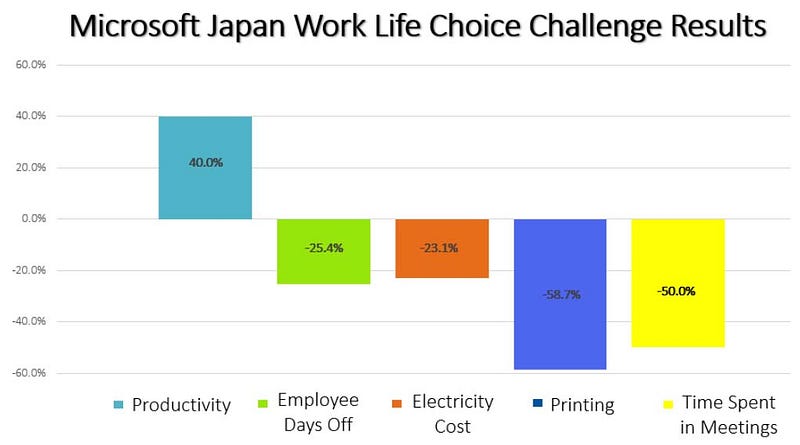
Source: Microsoft Work Life Choice Challenge Results
  • Microsoft Japan saw a 40% boost in employee productivity after adopting 4-day weeks. (Source)
  • A UK facility moving to 32-hour weeks experienced an astounding 51% jump in team output. (Source)
  • Employees at 4 Day Week Global report up to 40% gains in output for 32 hours of work compared to 40 hours. (Source)

The reason is simple: when we’re unmotivated, unfocused or just plain fatigued, we become productivity sinkholes. Those extra hours don’t foster output — they drain it.

By optimizing for human factors like energy levels and work-life balance, companies can squeeze more productive juice out of fewer workday hours.

It’s time to retire the antiquated notion that more time = more results. The 4-day week model quantifies a new way of defining productivity.

Leading With Trust and Empowerment

If you want to make the 4-day model work, there’s no skirting around it: you MUST trust your employees to get the job done.

Maybe that sounds scary if you’re used to micro-managing presenteeism with clock punch-ins or tracking idle mouse movements. But leading teams at Shopify, Shake Shack, and 4 Day Week Global have learned a crucial lesson:

Define clear goals — not time constraints — and let your team run with it.

At Shopify, leadership sets bi-weekly sprints that teams tackle asynchronously. As long as those targets get hit, the flexibility reigns supreme.

Similarly, at 4 Day Week Global, it doesn’t matter whether my colleague starts at 5 AM or I crank away at 1 AM. All that matters is that we deliver quality results.

The 4-day model rewards trust with massive boosts to the discretionary effort — that elusive well of drive and commitment every company dreams of taking into.

With that psychological buy-in, employees will take that extra ownership to blow past expectations on their terms.

It’s Not About Working Less, It’s About Working Smarter

Despite what naysayers claim, the 4-day week isn’t about working less. It’s about working smarter and aligning our vision of productivity with human realities.

Let’s face it: working 24/7 is an inevitably self-destructive path. We mentally log off long before those final hours of overtime. They become nothing more than “presenteeism” without substance.

Prolonged cognitive fatigue eventually leads to burnout — a very real phenomenon costing the global economy over $300 billion annually in expenses. (Source)
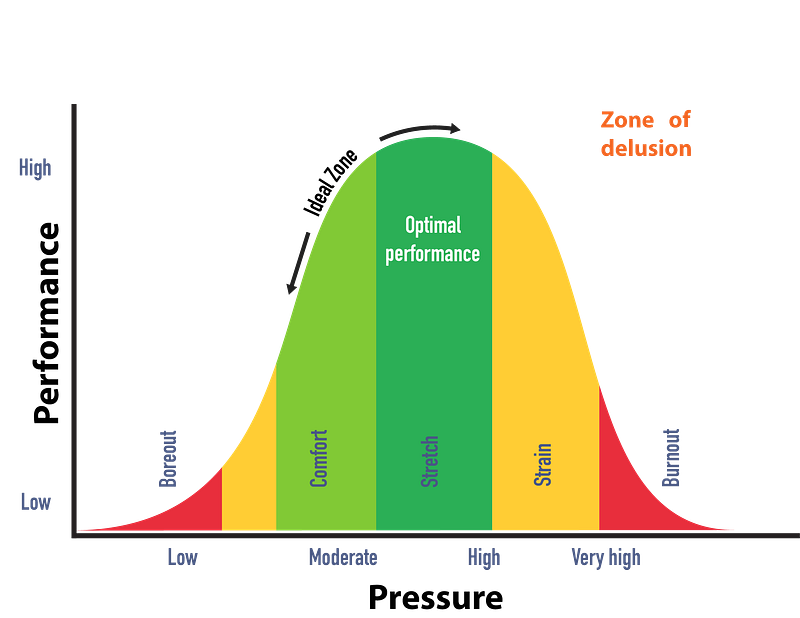
Source

Making the 4-day pivot means restructuring work with output in mind, rather than chasing flawed “hours spent” metrics. By freeing up more personal time:

  • Employees can recharge their physical and mental batteries
  • Teams can encourage psychological safety for open collaboration
  • Companies can optimize productive workflow rather than Facetime

If anything, the 4-day movement marks a much-needed return to common sense in the face of toxic hustle culture.

Accepting the Next Evolution of Work

Of course, implementing a 4-day schedule can feel daunting. Some challenges may include:

  • Overcoming legacy attitudes that more hours = better work
  • Restructuring meetings and project timelines for async flexibility
  • Ensuring engagement across virtual/remote teams

But as the Success stories from Kickstarter, Microsoft, and others illustrate, the benefits far outweigh any growing pains — for both retention and the bottom line.

The world of work is evolving, whether we’re ready or not, And on the other side there’s AI on the rise which can boost our productivity.

We can either cling to archaic industrial models — or accept the inevitable disruption of the 21st century workforce.

Giving employees true autonomy, mastery, and connection may be the best productivity investment companies can make.

When we tame our unhealthy obsession with time, we can finally live — and thrive — in it.

Thanks for reading, have a great day :)

Scrolled this far?

Hit that follow button for juicy content like this delivered straight to your feed.

Plus, Grab my free Newsletter for bonus goodies. You won’t regret it! ✨

If you think this was helpful then be sure to buy me a coffee

You deserve more!

Productivity
Work Life Balance
Work
Money
Business
Recommended from ReadMedium