
Why Is 3 More Effective Than 2 In Your Decision-Making?
Welcome To Your Quantum Word.

If you want to make better decisions, continue reading. In addition, you will learn more about quantum computing.
What’s the link?
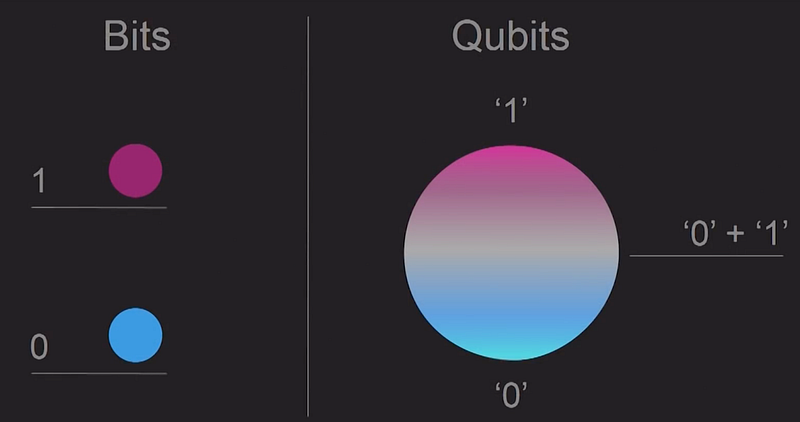
In classical computers, all the information is stored in a series of “0” and “1”. It’s a binary world. A bit is a result of such a state.
A bit can only have two values: either 0 or 1.
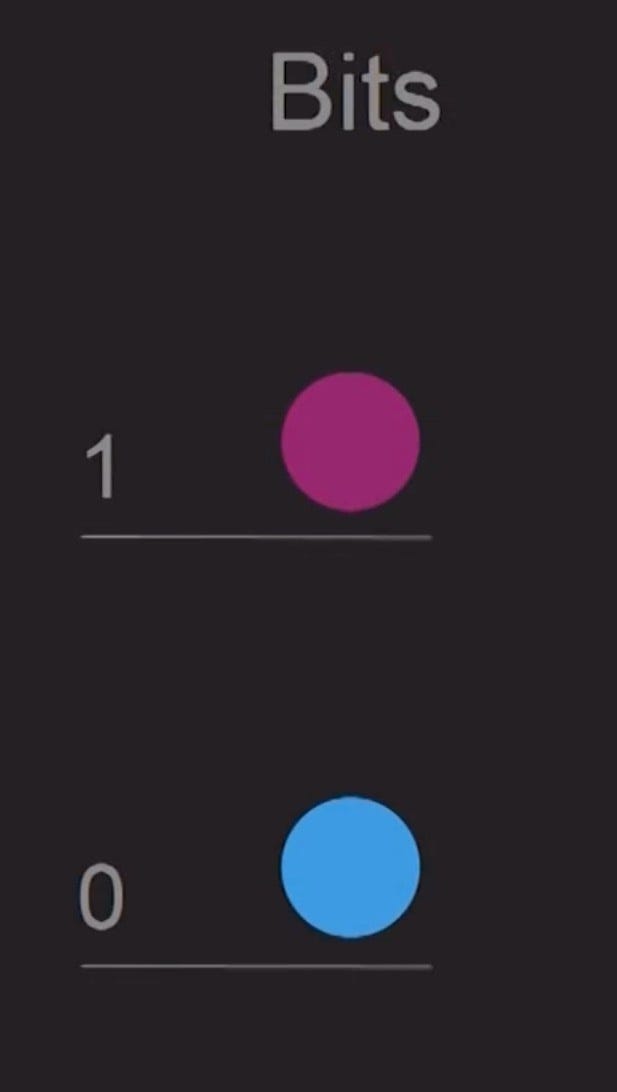
Generally, information is stored in a series of 8 bits, called a byte.
A classical computer solves many problems by adding and multiplying bits of information.
To solve more complex problems, a classical computer will do iterations.
An iteration is done in a series of two steps:
- Making an assumption
- Verify your assumption
- If the assumption is valid, you stop the iteration.
- If the assumption is false, you make a new assumption and start over.
To solve complex physical problems, a classical computer would need a massive amount of time to iterate through many hypotheses and eventually find the correct answer.
This is where quantum computers are interesting because they use a new type of bits called Qubits.
A Qubit is a quantum bit.
A Qubit does not have two states like bits: 0 or 1
A Qubit does have three states: 0 or 1 or a mix between 0 or 1.
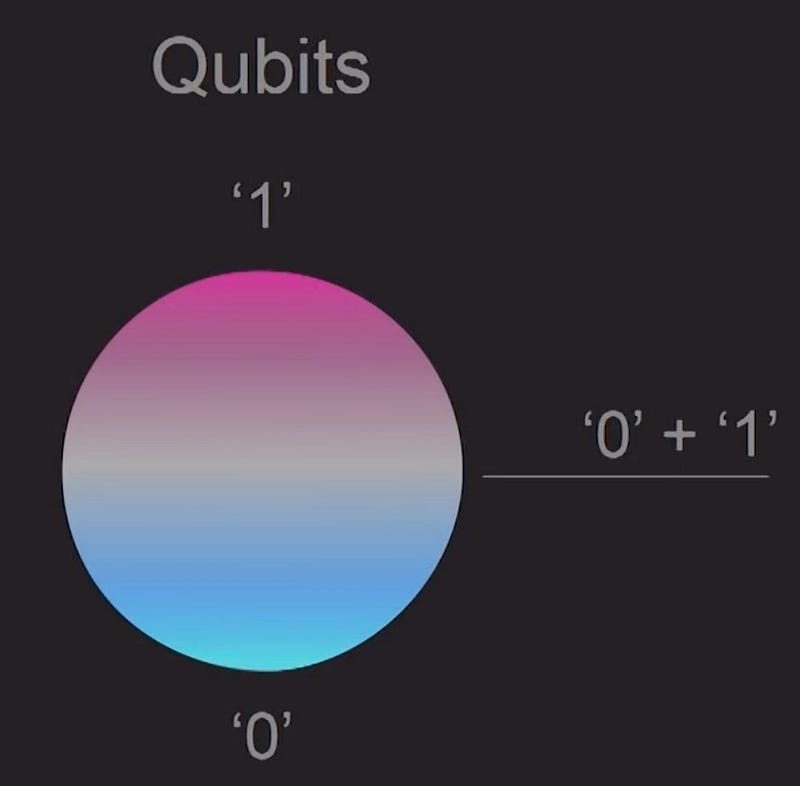
And this is why Qubits and quantum computing are huge!
If you find this confusing, I invite you to watch the TED talk below A beginner’s guide to quantum computing | Shohini Ghose:
Did you watch the video? Sure?
Let’s link with decision-making.
At a young age, I was raised in a country, namely Senegal, an African country where most people are black, and the majority of them are Muslims, even if we are a secular country.
I was always offered two options to view my world for everything.
There are Muslims and others.
There are black people and others.
There are the rich and others.
And the list goes on.
I was raised with dichotomy goggles.
I had to see everything only in two colors: Black or White.
I can understand the advantage of this approach for the survival of my ancestors in the caves. They had to assess every event quickly with either fight or flight actions. This was a very efficient way to view the threats around them and was critical to our survival as a species.
We have come so far since then and still use our primal brain today in our decision-making.
We process each decision as a classical computer processes bits: 0 or 1, “bad” or “good.”
This approach can be efficient and saves us a lot of brain power to do other activities.
However, there are some situations where this approach is not always the most efficient one.
One situation that exemplifies it is the negotiation area.
As explained by Chris Voss, the author of:
In our lives, we are constantly in negotiation situations, be it with our loved ones, our bosses, our kids, or even the strangers we meet out there.
In negotiations, you are often presented with two choices by the other party. And more than that, those two options are tailored so that no matter which one you choose, the other party will win somehow.
I am not saying this deal is “good” or “bad.”
I suggest that you always approach negotiations and life in general with a quantum-computing mindset.
What do I mean by that?
I mean that you should not always accept the two options that are “offered” to you by your boss, your partner, or your employer as the only options available out there.
Use your Qubit mind to always derive a 3rd option by combining the two initial ones at some point.
Final Thoughts
In approaching your decision-making process like that, you will constantly develop novel solutions that benefit both parties. In the long run, you will develop a Qubit mindset and multiply your possibilities as an infinite machine instead of a finite binary machine.
That is the approach that I am applying now in my decision-making. When somebody offers me two options, my Qubit processor quicks in and always comes up with a 3rd option.
I moved from a black-and-white palette of colors to a complete infinite rainbow painting of my world.
And I feel more in charge of my life and my destiny.
What is your decision-making process?
What are the most efficient ways to decide from your perspectives?
What kind of palette do you use and why?
Leave a comment below.
If you find this article of value to you, please like it and share it within your sphere of influence.
#Dare2Care #Dare2Share
#BIOS #BringInyourOwnSoul #LeadHeartship #Leadership
You can read my previous article (Friendly Link):
Photo by Mike Benna on Unsplash


