
Who’s to help the Roma people?
Intercultural barriers: empathy, poverty and Roma people
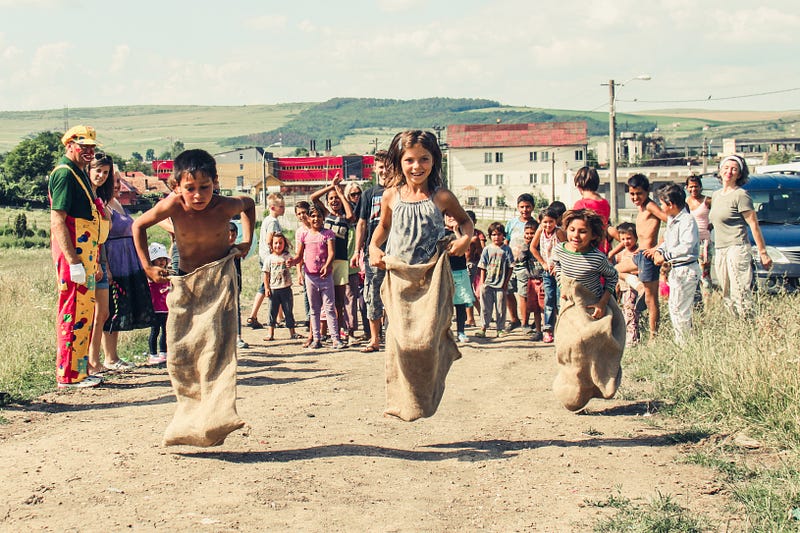
Romani people (Roma, native meaning: man, human) are nomadic people originally from the northern regions of India. They have been commonly known as Gypsy but this term is often considered offensive and better not to use.
To be honest, living in a society with not many Roma people, even I had no idea of this and that a term Roma even exists before encountering their colorful culture in Serbia).
Their history goes far beyond what’s shown in The Hunchback of Notre-Dame
Romani belong to a large Roma-speaking population and their original home was in central India (modern day Rajasthan province) from where they emigrated northwest in the 11th century.
World War II turned to be a major change for the lives of the Roma. During the German National Socialist regime, the Roma were exterminated on the same ground as the Jews.
Between 150,000 and 500,000 Roma were killed or shot in concentration camps.
Only those who managed to hide or escape survived.
Today, there are more than a million Roma worldwide, mainly in the Balkans and the newer member states of the European Union, particularly in Romania, Bulgaria, Slovakia and Hungary.
A look into the life of a modern day family
Having briefly summarized the background of the Roma, let’s move on to modern day Serbia where an ordinary family of seven (five children) lives in a 15 square metre shack in the middle of a small town named Kruševac.
They lack basic washing facilities, proper clothes as well as garbage collecting service.
This is the sad reality for many Roma in the middle of the Balkans whose cities are littered with rubbish, which is also one of the Roma’s main source of income.
There they go through the trash in order to collect paper, plastic, glass and scrap metal and sell it to the local waste management companies for 6–15 euro cents for kilogram, depending on the material.
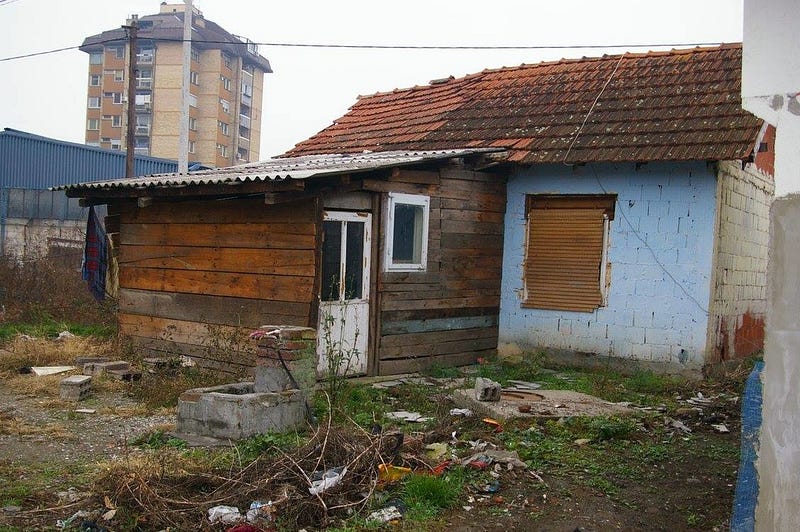
In their gardens one can usually find a herd of animals such as hens, roosters, pigs as well as cat and dog colonies. These animals are often hungry and sick.
The households generally also have many children who the state supports with 100 euros per child every three months.
No other ethnic group has suffered as much as the Roma
In English-speaking countries the Roma are better known by their second name Gypsies which is now considered politically incorrect.
According to many Romani as well as scholars who have studied them, the word has been corrupted due to its racist tone and a meaning that emphasizes being an illegal citizen.
Philanthropist George Soros has acknowledged that no other ethnic group has suffered more than the Roma.
World War II was a time of great suffering to the Roma people but after becoming citizens of the European Union, their livelihoods have actually deteriorated further, mostly due to the demeaning attitude towards them.
On the positive side, the ethnic group has not been completely ignored by the international society as there exist organizations that are committed to improving the living conditions of the Roma and creating equal opportunities for them. These equal opportunities are often offered in the form of better education and living conditions. However, this same helpful attitude could lead to an intercultural conflict and a clash of values.
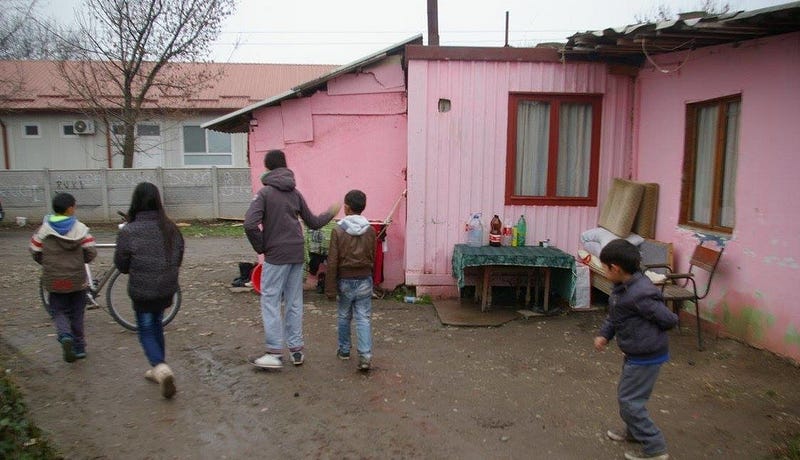
Who’s to decide what’s best for the ethnic group?
The traditional lifestyle and cultural specificities of the Roma are a major stumbling block for them achieving these goals.
In most cases, the educational path of the ethnic group has remained short and this same attitude towards education gets thus transferred to the next generations.
According to the Romani beliefs, education is not a priority.
It’s often preferred for the children to work on the streets from an early age in order to be earning livelihoods for their families, for example, by begging.
There is a fine line between the benevolent desire to help the Roma and naivety.
The history of these people goes back a long way and it’s not possible for someone belonging to the Western culture to suddenly change their customs, beliefs and value system.
People being born into the Western cultural sphere often find this very difficult to understand. We are stuck in a mindset where only our values are worth living by and anything incomprehensible seems automatically wrong and should be changed. This is the reason why we tend to evaluate someone else’s culture by our own standards.
Extremely great efforts are needed if we are to help the Roma and begin to comprehend their values in order to develop new approaches by which to help them integrate into our society.
However, the question remains: how much of our help is really needed? Could it be that we only imagine our help is that crucial? Some food for thought.
I would love to hear your opinions.