
Who’s That Masked Man?
Emotional Cues We Lose Sight of, When Others Wear Masks
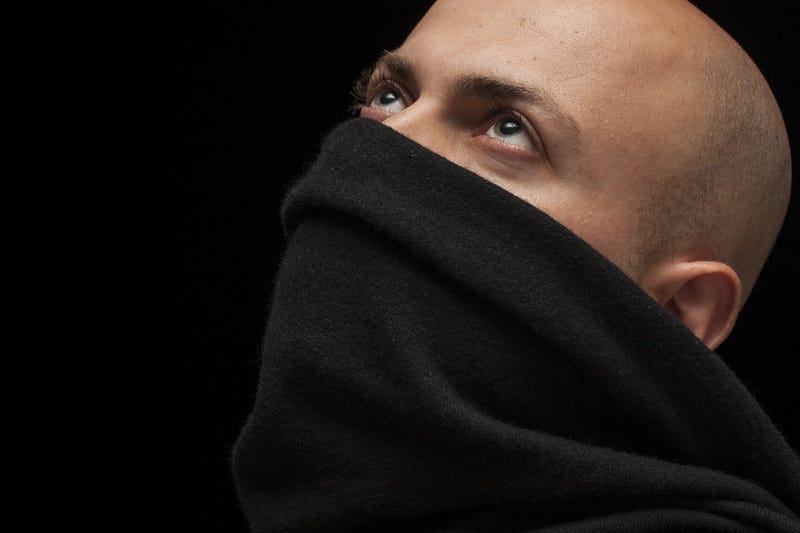
If we are not able to smile, then the world will not have peace. Thich Nhat Hanh
Have you ever tried to smile without moving your lips? Doing it on the inside, doesn’t count.
We are visual creatures, most of us. What we see, we remember. We use these memories and the information that comes with them, as a lens through which we view the world.
We see a smile as a sign of approval, affection or at least, an interest in what we are saying. We see it, as agreement, that we’re on the right path, thinking the right thoughts or moving in a direction that will likely garner some support.
The lips, along with the eyes that reside just above them, speak volumes about what a person is thinking, how they feel, what their day is like. If they’re ready to talk, interested in meeting you or likely to keep on walking.
There are endless emotional cues that humans take from others by watching the lips and the eyes and when we are wearing masks, when half of our emotive organs are under cover, we are losing a good portion of what makes it easier for us to interact.
Smile at strangers and you just might change a life. Steve Maraboli
Over the last 8 weeks I have found myself feeling more isolated when in the company of others than when I am at home alone.
I feel less inclined to smile, just as a greeting, because it is hidden behind paper or a piece of cloth with the image of a rabbit on it. I see others struggling to express themselves visually, because the instrument of this expression is neatly tucked away and out of sight. So, they tend to simply walk on by. Eyes meeting mine briefly, maybe a nod, maybe a furtive glance, maybe nothing at all.
As humans we are already dealing with the “known unknowns” of a virus. Where is it? What’s it doing? Did I get any on me, and how times do I have to wash my hands before I gain a sense of protection?

This uncertainty manifests in many ways. The Blues. Somber thoughts, that aren’t as easily pushed away as they normally are. Fear, that things may have just surreptitiously slid into permanent residence while we weren’t ‘t looking.
So, what should we do?
Life has no remote. Get up and change it yourself.
Mark A. Cooper
Nothing is not an option.
Here are some of the steps I’ve been taking. Maybe they will work for you.
Assume they are smiling.
Why not. Say hi. Start talking as if they are still the same person you would have met 3 months ago. Assume they’ll laugh at your joke or appreciate your humor or at least not chase you away. Don’t change in reverse. Keep doing what worked before.
Pay more attention to the eyes.
Unless they’re wearing sunglasses and a mask — in which case — just wave, pay more attention to what the eyes are doing.
When Irish eyes are smiling Sure, ’tis like the morn in Spring In the lilt of Irish laughter You can hear the angels sing — Copyright: 1912 by M. Witmark & Sons, N.Y
They’re just as important, and if this is all we have for the next few months, make the most of them.
Don’t change who you are, because you can’t see who they are.
Humans are designed to adapt to changing environments. But sometimes, we need to go against that design and not change everything. Sure, adapt to not seeing the lips, the smiles and the full expression of those eyes, but don’t let that change your outlook on life.
When the next disaster rolls around, and it will, we don’t have to run into the same wall again, like we did this time. We can learn and respond differently in the future. If we change too much. If we see the lack of emotional cues as a sign of permanent change in the way we interact with one another — then we are giving up before the outcome is known.
The Masked Man is you.
What you’re seeing and feeling is being seen and felt by the one looking at you. They’re no doubt going through the same thoughts, feeling the same signs of uncertainty, wondering in the same wistful way, what’s it going to be like when the dust settles? And that’s okay. Feeling what we feel is perfectly alright. They’re our emotions, anyway. Let them happen. Then take a step back, accept what can’t be changed, change what’s in our power to do so, and focus on the future.
“I always just thought if you see somebody without a smile, give’em yours!” Dolly Parton
Joe Luca is writer and editor for ILLUMINATION and a published author and writer of children’s stories, short fiction, non-fiction articles, screenplays and poetry. Publications include Child’s Life, Children’s Playmate and others. There are some other articles below — have a read. And thank you for stopping by.


