
Who’s More “Golden” — The Golden Girls or Carrie Bradshaw and Friends?
And what does being 55 really look like?
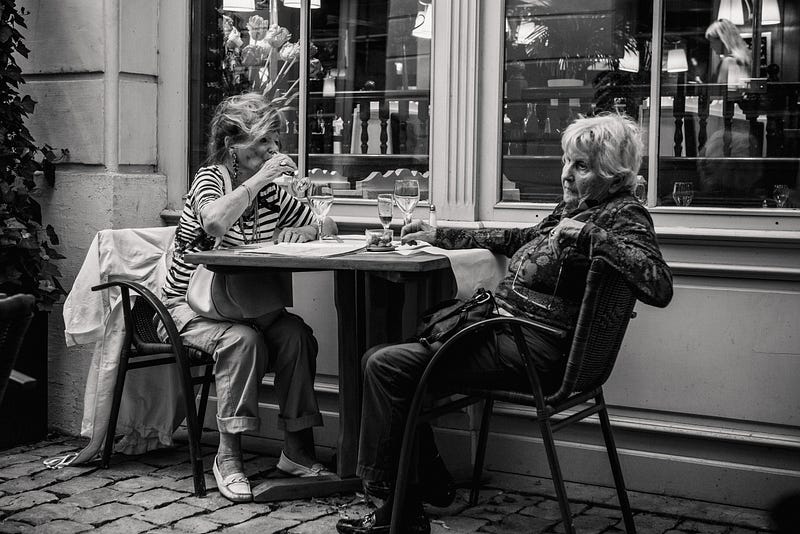
At what age is a woman considered old? 40? 50? 80?
And what is a “golden girl” anyway?
Our idea of what makes a woman old is constantly changing. When I was a young child I considered over 40 old. Now that I’m over 40, I feel far from a senior citizen.
It’s not just that my age is changing. It’s society’s perception of old that is changing.
And what better reflection of society is there than television? The portrayal of women on TV in their 50s in the 1980s is much different than how they are portrayed today.
But should TV shows determine what women should look and act like in their 50s?
And more importantly, why is there even a way women should look and act in their 50s?
“Thank you for being a friend…”
The theme song of The Golden Girls was the soundtrack of my Saturday nights as a child. I was eight years old when it premiered and I would tune in to watch these “golden” girls, aka senior citizens.
I fantasized about living my later years with my best friends, hanging out on the lanai with my roomies.
The golden girls weren’t really that “golden”
Turns out my “later” years won’t be like the golden girls. Because they were in their fifties, just a decade older than I am now. Hardly even senior citizens.
That’s right. In the first season, Blanche was 53, Rose and Dorothy were 55, and Sophia, the only real golden girl, was 79.
Interestingly, there was no reference to the “golden boys.” Men weren’t considered spinsters if they were single in their fifties. They were bachelors.
They had careers and freedom and sleek sports cars. So why did we decide that over 50, women were supposed to wear mumus and live with their besties because god forbid they live alone and independently?
Another side of 50
Fast forward to 2021. And Just Like That premiered, featuring three women in their fifties. Yes, women roughly the same age as Dorothy, Blanche, and Rose were living their lives in New York City. Not in Florida.
Not forced to live together despite being widowed or divorced. Not all wearing the same old lady hairdo.
How did these New York ladies still manage to have a life well into their fifties? What was their secret?
There is no secret. Because fifty isn’t old for a woman.
Why is there such a contrast between two groups of women in the same decade? Why are the golden girls even referred to as “golden girls” when the ladies in In Just Like That are living it up as career women in New York City?
Perhaps it’s the way our view of aging women has changed. Gone are the days when women are considered old maids when they hit 50.
In the pilot episode of The Golden Girls, Rose laments being widowed and alone. She says:
It’s not fair. We get married, we have kids, the kids leave, and our husbands die…we are alone.
While this statement could be made by any woman with children and a husband, it feels as if she’s well into her senior years, resigning to living the last years of her life alone.
The kids are grown up with lives of their own and they’re widowed. This doesn’t sound like the statement of a 55-year-old woman.
Now let’s look at the And Just Like That pilot episode. Carrie is on a podcast, Miranda is going back to law school so she can make the career transition from corporate to human rights law, and Charlotte is prancing around Manhattan while micromanaging her two teenage children.
These women aren’t alone or abandoned. They have each other, but more importantly, they have lives independent of one another.
And Just Like That concludes its pilot with (SPOILER ALERT), the death of Mr. Big, Carrie’s husband. So the series is kicked off with Carrie becoming a widow.
But Carrie’s widowhood looks much different from the golden girls. She doesn’t move in with her friends in Florida and spends the day sipping iced tea on the lanai. On the contrary, Carrie embraces her life. She continues with her podcast and writes a book.
What is beneath the surface?
On the surface, these two groups of 50-something women look very different. One is a representation of “older” single women in the 1980s. The other is a current view of women in that same decade of their lives.
The characters even address this facade they’re putting on in And Just Like That. In the pilot episode, Charlotte confronts Miranda about her gray hair, telling her, “I think the gray ages you.”
To which Miranda responds:
No, you think the gray ages you. Because if we’re friends and I’m this age, you can’t be whatever age you’re pretending to be…there are more important issues than trying to look young.
The women openly address the age issue and admit that they’re trying to look younger. They’re holding up this facade of being younger than they actually are (a topic I explore in my essay “Middle Age is Not a Dirty Word.”)
Meanwhile, the golden girls just allow themselves to look older. Is this effort that the Manhattanites put forth to look younger really what separates them from the golden girls?
And which group of women really is more progressive?
And Just Like That is no more progressive for women. Sure, they live more modern lives, but that’s simply a sign of the times.
If you were to update the golden girls’ hairstyles and wardrobes, give them a little botox, and placed them in a large city, they would not be much different from the ladies on And Just Like That.
The women in And Just Like That are simply women in their 50s with better skincare and a better wardrobe. Underneath it all, they’re still women in their 50s.
Carrie becomes a widow, Miranda is having a midlife crisis, and Charlotte is living in the shadow of her husband and children.
Are they really that different from the golden girls?
The golden girls weren’t old ladies — they were ahead of their time
Let’s not forget that The Golden Girls was, in fact, groundbreaking for its time.
We may look at them as old ladies living in an old lady community in Florida, but they were independent and empowered old ladies.
Dorothy was outspoken, Rose was stepping outside of small town Minnesota to live a life as a single, widowed woman, Blanche was unapologetically sexually open, and Sophia was the toughest of them all.
These women were leaning on their sisterhood to get through their single years. And living together? Unheard of for women in their 50s.
Maybe the women of And Just Like That are simply updated versions of the same characters. I won’t go into the similarities of the characters because there are countless articles about this, but it’s worth looking deeper into the characters to see that their ages are almost irrelevant.
Fifty isn’t the end of the road for a woman
The fact that we’re so fixated on what it looks like to be in your 50s further proves my point: being in your 50s isn’t the end of the road for a woman.
Maybe this whole idea that the golden girls are presented as too old is our own projection of what being older means.
Not to mention the fact that I was eight years old when it premiered. To me, 55 was old.
It’s an old cliche: Age is just a number. Whether we’re wearing polyester pastel dresses or the latest designer couture outfit, kicking back in Florida or hitting the streets of Manhattan, it’s all a mindset. And the mindset of these characters is strong, independent, and witty.
Maybe 55 is where life begins.


