
Who Would Animals Vote For?
A look at the 2020 election from the perspective of other species.
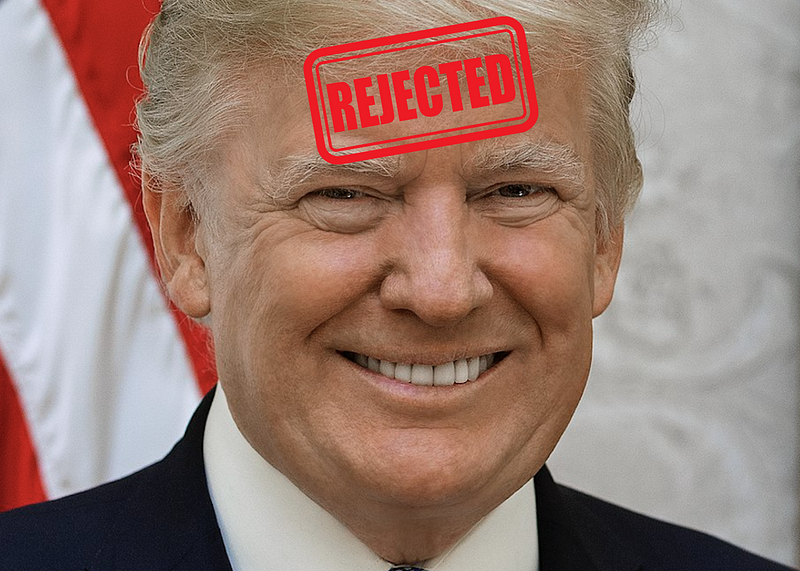

It’s normal for us vegans to walk into a restaurant, look at the menu, and realize the options are both limited and unappetizing. This will be good practice for looking at our ballots in 2020.
To describe either of our options as honest would be to identify yourself as otherwise. Biden’s plagiarism and tall tales could draw vicarious embarrassment from a sociopath, and Trump lives in a state of open conflict with the truth. And while age alone shouldn’t be grounds for disqualification, being able to stay alive for 4 years is a rather important part of the job. Trump and Biden are both older than the average age people die. Frankly, Biden appears to be in a state of cognitive decline, and Trump has always been on the ground floor. Worst of all, both candidates are trailing credible accusations of sexual assault. The center of our presidential Venn diagram is a list of fatal flaws.
Animals are too often ignored in our politics. We should make a habit of considering our effect on them with every election.
Despite their unfortunate similarities, there are differences. Differences that matter not just for the next four years, but for the future of this country and the world. I know it’s tempting to skip this meal, or order an item that isn’t on the menu. Unfortunately, this is where the analogy breaks down: If you attempt that at this particular restaurant, your fellow diners will happily order for you, and then the waiters will force-feed you. For this reason, I strongly recommend asking for whichever meal is easier for you to stomach.
In this article, I will take a closer look at the ingredients in our two recipes for disaster, and try to determine which one is the most vegan-friendly. (Or, perhaps, the least vegan-unfriendly.) While there are more important criteria to consider when choosing the next president, animals are too often ignored in our politics. We should make a habit of considering our effect on them with every election. We should, at the very least, ask the question: Who would animals vote for?
There hasn’t been a vegan option on this menu since Cory Booker left the race. Trump’s diet consists almost entirely of fast food, and Joe Biden has turned his love of ice cream into a personality trait. Needless to say, neither of these candidates is vegan, and both of them live lifestyles that contribute to animal cruelty.
However, their policies have different effects on nonhuman beings. We can divide these policies into two broad categories: Regulations on animal cruelty and environmental legislation.
When Trump came into office, American slaughterhouses were already moral wastelands. During his tenure, he worked diligently to make them worse.
When it comes to animal cruelty and exploitation, Joe Biden has a stellar record in Congress. He has voted to stop taxpayer funding for steel-jaw leg-hold traps and neck snares, limit US funding of international tuna fishing, eliminate a $2 million annual subsidy to the mink industry, and prevent factory farms from receiving taxpayer subsidies. Biden co-sponsored myriad bills and resolutions that sought to permanently shut down multiple cruel industries, including commercial whaling, horse slaughter, commercial seal hunting, and animal fighting. He was even the lead author of the Captive Exotic Animal Protection Act, which prohibited trophy hunting of caged exotic mammals. Should he become president, we can be fairly sure that Joe will sign any pro-animal legislation that reaches his desk.
Trump, meanwhile, is a man who once boycotted the circus because they got rid of the performing elephants. His attitude towards other creatures is cartoonishly evil. When Trump came into office, American slaughterhouses were already moral wastelands. During his tenure, he worked diligently to make them worse. He approved faster slaughter speeds for poultry, which now allow each line to slice open the necks of 175 birds per minute. While “humane slaughter” has always been an oxymoron, attempting to kill three birds per second guarantees chaotic and miserable deaths. Trump has done the same for the pork industry, removing maximum limits on how fast workers can slaughter pigs. At high speeds, stunning is often ineffective, leaving animals to die slowly, conscious, writhing in agony, and screaming through their own slit throats. (The administration hopes to do the same for the beef industry.) The President has even allowed slaughterhouses to perform their own inspections — this is like allowing an accused criminal to act as their own judge. Given how bad these institutions were before this president arrived, his negative impact is almost impressive.
Trump’s only positive action on behalf of animals is the Preventing Animal Cruelty and Torture Act. This bill made torturing animals illegal at the federal level, so long as the torture was not performed in the procurement of food. (Ironically, in this way, the wording of the law acknowledges that animal agriculture is cruel.) However, this bill was mostly redundant — every single state in the union had similar laws already.
For bills regulating animal exploitation, Biden is the better candidate. On the environment, Biden’s superiority is even more evident. Donald Trump does not even try to compete with Biden on this terrain.
Trump is openly hostile to the idea of environmentalism, and he has dedicated his tenure as president to rolling back all the environmental protections he can. Trump started his presidency by leaving the Paris Agreement, and has spent the past 4 years dismantling US environmental law. He has stripped away protections on endangered species, attempted to resurrect coal from the dustbin of atrocious industries, and removed countless regulations on pollution and emissions. Trump’s actions not only threaten wildlife today, but the wildlife of future generations which will have to deal with the consequences of his climate non-policy. It is true to say that if his goal as president was purely to damage the natural world, we would not expect him to behave differently.
Though Joe Biden has a reputation as a moderate, his environmental policies are quite progressive. His website endorses the Green New Deal as “a crucial framework for meeting the climate challenges we face,” and his plan is to achieve net-zero emissions and a 100% clean energy economy by 2050. He intends to rejoin the Paris Agreement, punish polluters, and work with other leaders to cooperate in the fight against climate change. In Congress, his voting record has repeatedly proven that the environment matters to him, earning him a 95% positive score from the League of Conservation Voters. If you are a wild animal, your future looks a whole lot brighter under a Biden presidency.
There are many areas where Joe Biden and Donald Trump lack significant difference — this is not one of them.
While humans might struggle to decide between these candidates, other animals would not. One of these candidates believes in climate change, the other thinks it’s a conspiracy theory. One of these candidates has fought against factory farms, the other has made them worse than ever. One of these candidates has tried to protect endangered species, the other has deliberately dismantled their protections. One of these candidates has a long history of pro-animal policies; the other has only one, and it’s rather timid. There are many areas where Joe Biden and Donald Trump lack significant difference — this is not one of them.
As our moral circle expands, we must reflect on how our democracy impacts the rest of the animal kingdom. While I don’t advise anyone to become a single-issue voter on behalf of animals, I hope that everyone will at least consider their needs. Not everyone who is affected by the results of an election has a say in its outcome, and so it is up to us to act as their representatives.