
Who won this year’s Nobel Prize?
Announcement of the Nobel Prize in Physiology or Medicine
Introduction
In 2023, the world once again held its breath for the announcement of the Nobel Prize.
Particularly, the award in Physiology or Medicine deeply touched and inspired many, shining a spotlight on the two researchers who greatly contributed to the development of the 「mRNA vaccine」 that saved countless lives amidst the unprecedented threat of the novel coronavirus:
Katalin Karikó and Drew Weissman.
This award is not just a recognition of academic achievement.
It is also a testament to how scientists and researchers confronted the enormous challenge of a global pandemic.
Karikó and Weissman, along with numerous other scientists, paved a new way to combat the threat of the novel coronavirus.
Their research introduced the world to the groundbreaking technology of mRNA vaccines, saving countless lives as a result.
In this article, we will delve into the achievements of the mRNA vaccine and its developers, Katalin Karikó and Drew Weissman.
Difference between traditional vaccines and mRNA vaccines
Imagine a day when an unknown virus suddenly strikes the world, altering our daily lives.
There’s no weapon against this virus yet, and scientists are racing against time to develop a new vaccine.
The development of traditional vaccines was a time-consuming process.
It involved culturing viruses or bacteria, then weakening or killing them, or extracting a part of the virus for use, among many other steps.
These steps were vital to ensuring the safety and efficacy of the vaccine, which often meant that it took years or even decades to develop a new vaccine.
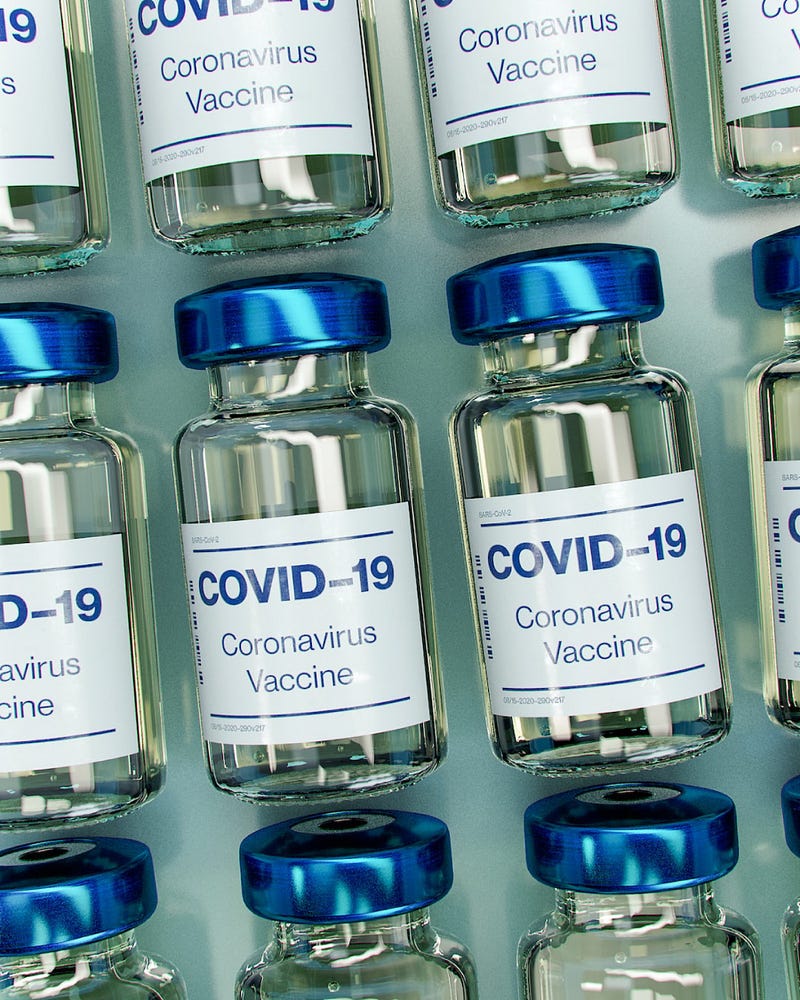
However, the emergence of a new technology called mRNA vaccines began to draw attention.
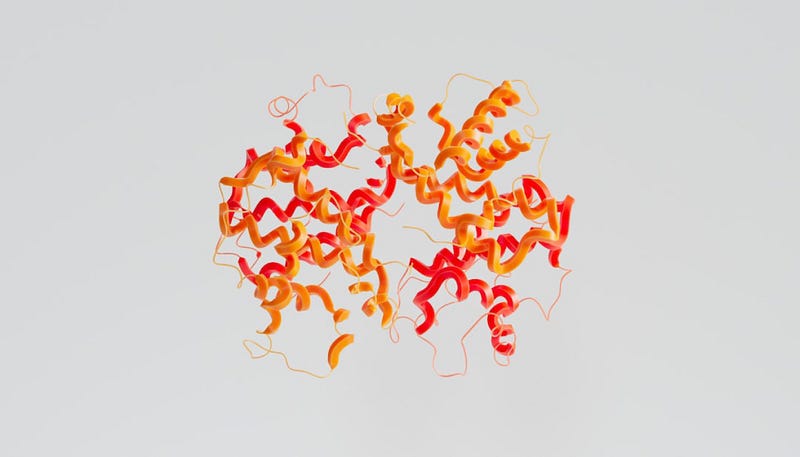
mRNA vaccines use mRNA that carries the 「recipe」 of a part of the virus.
When introduced into our body, the body takes this as a directive and produces proteins similar to a part of the virus.
The immune system, recognizing these proteins as foes, is then primed to quickly respond to the actual virus upon future encounters.
The main advantage of this technology is that once the genetic information of the virus is known, a vaccine can be designed and produced very quickly.
Time is of the essence, and being able to provide a vaccine swiftly not only has the potential to save countless lives but is also key to resuming social and economic activities more quickly.
With the advent of this revolutionary technology, a new beacon of hope emerged to confront the formidable adversary that is the novel coronavirus.
This hope stands as a powerful shield protecting each of our lives.
The Contribution of Ms. Kariko and Dr. Weissman

Starting from a small town in Hungary, Katalin Karikó probably never dreamed that she would be in the global spotlight.
As a biochemist, she was captivated by the intricate mechanisms of RNA and dedicated her life to its research.
However, the world of science isn’t always smooth sailing. Her research faced many obstacles and skepticism.
There were significant challenges in the development of mRNA vaccines. Firstly, mRNA was inherently unstable and would quickly degrade inside the body.
To address this issue, Ms. Karikó and Dr. Weissman fine-tuned the structure of mRNA to enhance its stability.
Specifically, they explored techniques to delay its degradation in the body by adding chemical modifications to certain parts of the mRNA.
Additionally, a method was required to effectively introduce mRNA into cells. They researched the use of nanoparticles called liposomes.
Liposomes are small bubble-like structures formed by lipid bilayers, capable of encapsulating mRNA. As these liposomes are composed of lipids similar to cell membranes, they easily fuse with cells, efficiently delivering the mRNA inside.
Another challenge was the inflammatory reaction caused by mRNA inside the body.
The duo tackled this issue, discovering a way to significantly reduce this inflammation.
Specifically, by replacing a portion of the bases in the mRNA with modified bases not naturally present, they could evade immune detection and suppress the inflammatory response.
When the novel coronavirus struck the world, the value of their research was suddenly proven.
Based on their techniques, mRNA vaccines were rapidly developed, saving countless lives.
Why Were They Chosen for the Nobel Prize? And the Future Uses of mRNA?
In 2023, the world faced an unprecedented crisis with the pandemic of the novel coronavirus. Amidst this crisis, the research of Katalin Karikó and Drew Weissman emerged as a savior.
Their years of research achievements enabled the rapid development of vaccines, saving numerous lives.
The Nobel Prize committee highly recognized the two researchers for providing an effective weapon against a formidable enemy like the novel coronavirus in a short time.
Furthermore, the technology behind mRNA vaccines holds immense potential, not just against the novel coronavirus but also for various future infectious diseases.
Potential applications range from developing new vaccines for other viruses like influenza or RSV, to personalized treatments for cancer.
The range of mRNA technology applications is vast, and it is hoped that due to its advancements, disease treatment and prevention will be more swift and effective.
Conclusion
The evolution of mRNA vaccine technology we’re witnessing is not just a temporary breakthrough.
It hints at a revolutionary shift in future medical and vaccine development approaches. The prevention and treatment of diseases are expected to dramatically change, thanks to this technology.
The Nobel Prize awarded to Katalin Karikó and Drew Weissman showcased to the world the immense value of their dedicated research and its results.
Amidst the unprecedented crisis of the novel coronavirus, their research saved countless lives and gave us hope.
This award strongly signifies the true value of scientific research and its profound impact on the well-being of all humanity.
Lastly, I am aiming for 10,000 followers, so if you liked the article, please follow, comment, and give claps.
Your support is greatly appreciated.
