
Who Was Nina Seawell Hannold
And why is she buried in Big Bend National Park?
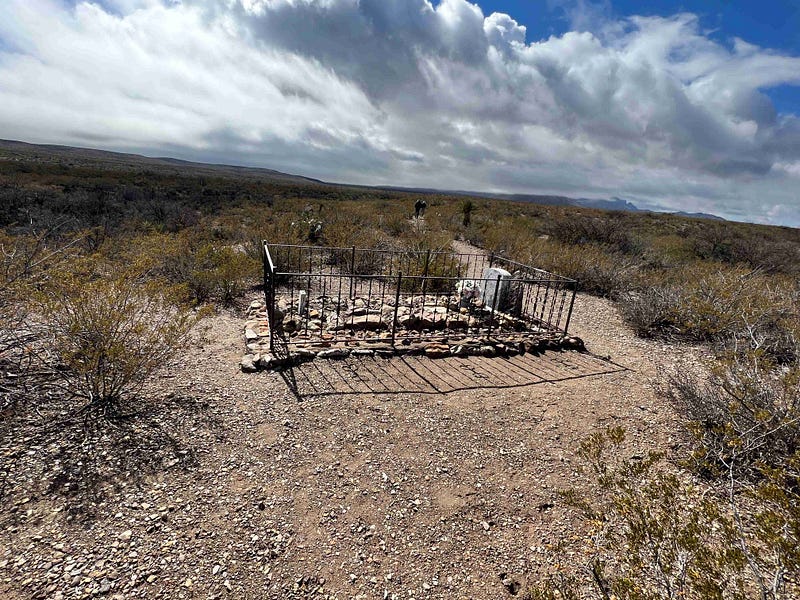
Driving into Big Bend National Park from the north entrance on 385 past the Persimmon Gap Visitor Center, there are places marked as having an exhibit ahead and then a pull-off on the side of the road.
We have plenty of time to explore every part of this huge park, and I want to stop at all the places and see everything I can. After all, each one is a writing opportunity for me.
At this particular exhibit site we did not know what lay ahead. The exhibit signs do not say. There is a cement walkway into the desert, and soon a marker sign appears up ahead on a small hill.
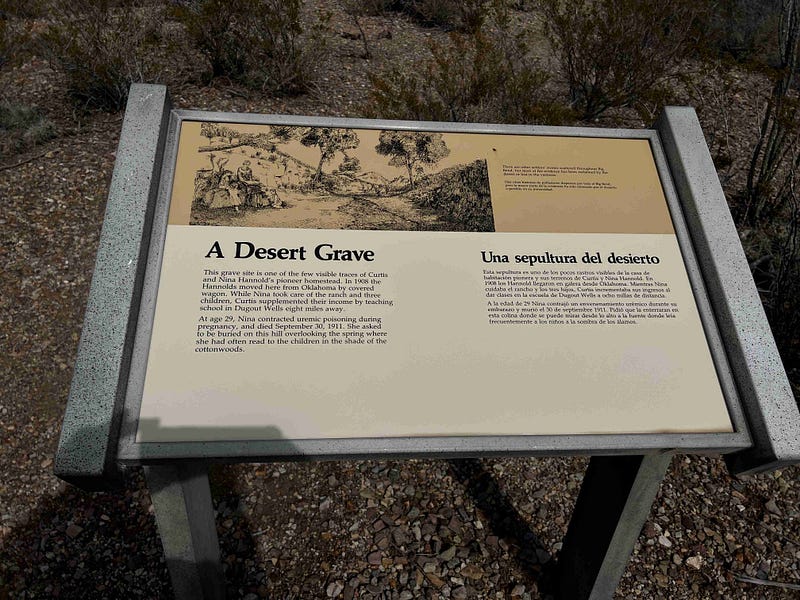
The rest of the trail is desert sand surrounded by various cacti to the end of the hill overlooking what used to be a small creek.
The sign says that Nina Seawell Hannold became sick after childbirth at the age of 29 and died at the age of 31 from uremic poisoning, which is kidney failure. Her last dying request was to be buried on the little hill overlooking the spring where she loved reading to her children.
This family of homesteaders lived in the area before it was designated as protected land and made into a National Park. The grave was already there, and I am glad they left it alone.
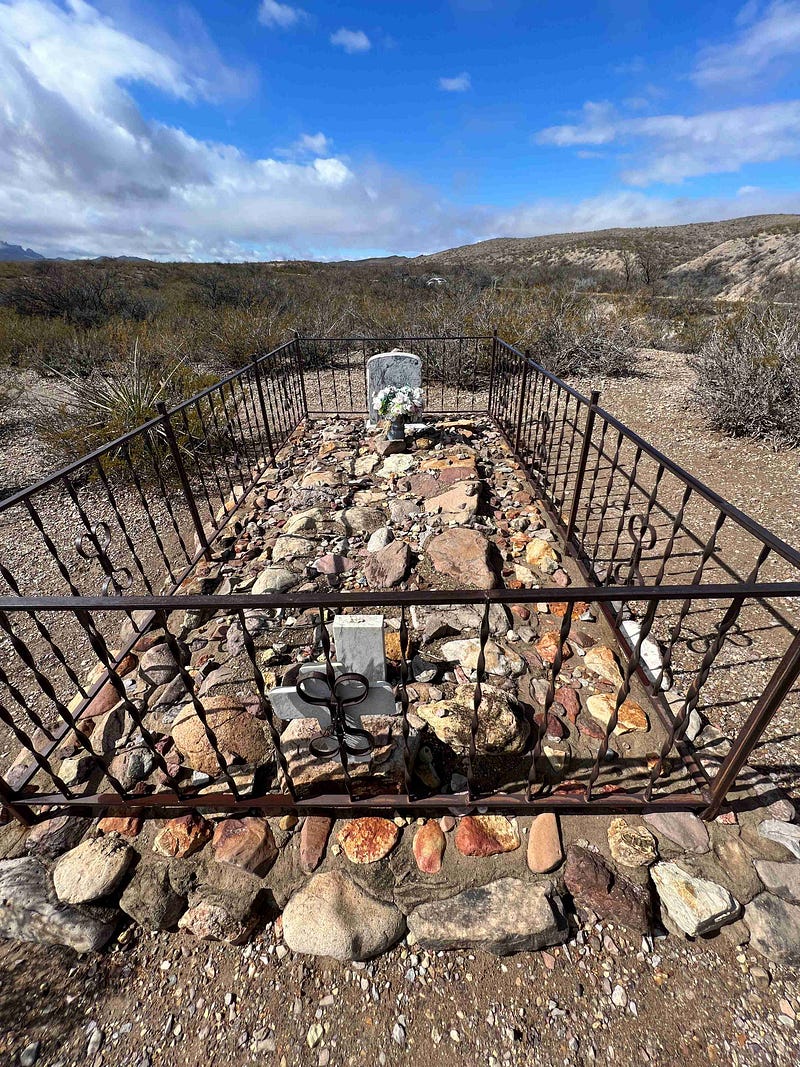
She was born in 1880, Nina Seawell. In 1901 she married Curtis Hannold, who was originally from Ohio. They were lured to the Texas frontier with stories of exciting homestead life. She died in 1911. Her grave is a beautiful sight worth stopping to see.
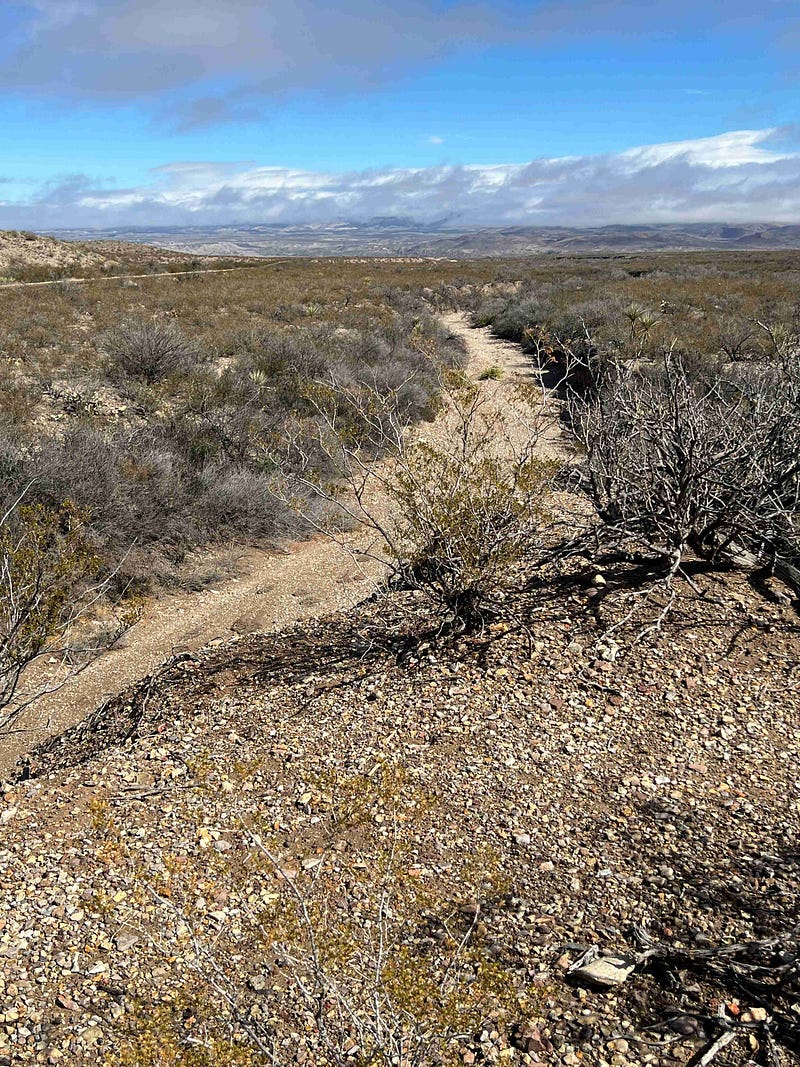
Today the creek is dried up, but I can understand why she loved reading to her children outside under a tree by a freshwater creek. I can’t help but feel she would be sad to see the dried creek bed. Life was hard back then but filled with many simple pleasures.
Thanks for reading. Stay tuned for the next adventure.