
Who Upholds Beauty Standards: The Media, or Its Audience?
Examining what drives Western ideals of attractiveness.
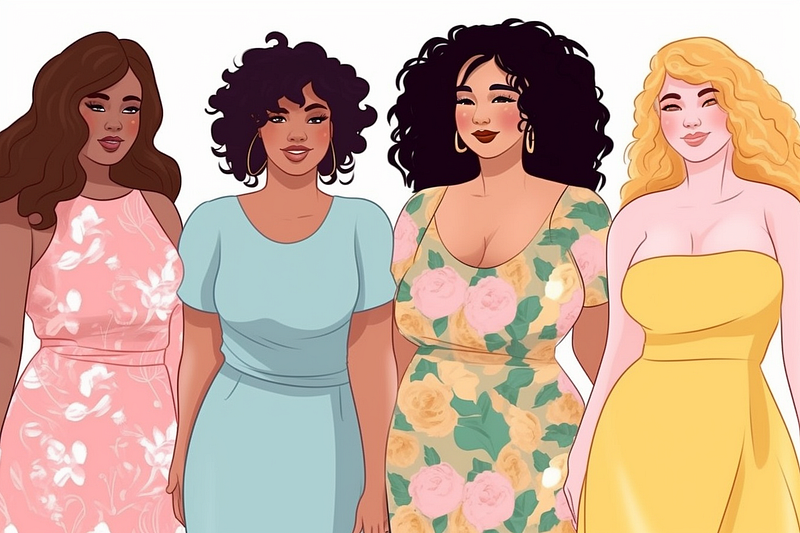
Ever since I was a teenager, there have been images of a certain type of female thrust in my face. Whether it was on television, in magazines (okay, I may have peeked at a few), and eventually online, it has been relentless. But now that I’m older and marginally wiser, I’ve been thinking about our current beauty standards, especially for women: is the media simply catering to what society wants to see, or is it actually shaping what we should consider attractive?
Either way, there’s definitely an ideal woman in our society, at least from a physical point of view. If you google “most beautiful women in the world”, you’ll see some recurring similarities between the top picks. The women on the list range in age, which is encouraging — but they have achieved… a certain look.
This is not to shame any women who happen to match current beauty ideals without trying. Some people were born “lucky” enough to fit society’s image of attractive. In fact, some of them even get shamed for this (being too tall or skinny), which is also wrong, as it’s in itself body shaming.
An example of this is model Renee Somerfield taking flack for appearing in a contentious “beach body ready” ad, when in fact she’s just naturally thin.
“I couldn’t work every day as a full time model by starving myself, dieting or not looking after my body. Nourish your body, be kind to it and it will love you right back, no matter your size,” she’s quoted as saying in a Daily Mail article.
As a male-identifying person who has often been body shamed for being “skinny”, I’d also say this is also discriminatory. Models are real people, who are not necessarily starving themselves. In fact, some eat like horses but have a fast metabolism or exercise often. They are simply filling a need in the industry, namely to sell clothing and other products.
Why are people buying them if they’re so angry? The standards must be working, despite the backlash. (In the case of the controversial beach body ad, the company successfully defended its campaign, and so did the UK’s advertising watchdog.)
Which came first, the market or the consumer?
When it comes to selling to the masses, buyers drive the demand based on their tastes and expectations (among other key factors.) This is why companies strive to learn about their target audience. The company is simply figuring out how to give them what they’re interested in the most.
Is this same concept true for beauty standards? We often complain about how Big Media only shows us a certain type of person — usually tall, thin, or pretty (or all three.) However, despite increasing calls to re-examine what it means to be beautiful, we collectively keep buying their products.
From a capitalist marketing perspective, why would a company change its stance on beauty if sales are strong?
But on the other hand, we do see some big companies using the war on traditional beauty ideals to their advantage. Dove (owned by Unilever), for example, has gained a reputation for featuring “normal” everyday women in its campaigns. Sure, they are beautiful, but not in a Playboy centerfold kind of way. (I’m not saying Dove women couldn’t easily be featured in a gentleman’s magazine, I’m saying it’s not as likely they’d be invited to pose in the first place.)
The company launched a “Dove Real Beauty Challenge”, with the goal not to exclude any women of any race, shape or size. “Models reflect a narrow view of beauty. Dove believes that beauty is for everyone and therefore features real women of different ages, sizes, ethnicities, hair color, type or style,” says the company on their campaign page.
Instead of hiring professional fashion models, or using digital editing to smooth out any “imperfections”, Dove says it uses “real women introduced by their names.” Bravo to them, but they’re also unfortunately among the few big influencers that are championing the average woman.
I do also see individual women online pushing back against beauty ideals. But in their very next social media post, they are demonstrating some new kind of beauty product or a weight loss solution. It’s almost as if women are trying to break free from the cycle of expectations, but can’t, as they fear they’d be dismissed by their peers.
In short, most media and marketers are sticking with the traditional pretty person, because it’s still working. Why else are modern companies/media that push strict beauty ideals still succeeding? Surely, if women were collectively angry, they would face lower revenue from boycotts. But the beauty industry, which pushes skin creams, makeup, thinness, and high-end fashions (that are out of reach financially for most people) is worth more than $571 billion in 2023, and is only set to grow in the coming years. I doubt beauty brands and fashion magazines will drive disruption of beauty ideals if they’re still raking in cash.
Women are trapped in a cycle of conformity
Obviously, beauty standards affect mostly women, who are under constant pressure to conform. We do see some more acceptances of curvier bodies in recent years — but society calls these women “thicc”, which usually equates to bigger butts and meatier thighs. As Urban Dictionary puts it, thicc refers to the “appearance of a very seductive female with a large ass.” In other words, even when the woman is larger than the media prefers, they’re still being sexualized. The woman is fat in all the right places, so to speak. They are asking to be noticed.
Curvy bodies were also popular thousands of years ago, as evidenced by ancient sculptures of women. Slender female bodies only began to invade mainstream media in the 1920’s, when the post-war Flappers came into popularity. It’s difficult to say exactly what caused this shift towards a more waif-like appearance for women during that time, but there are some insights.
CNN Health notes, “the bust-to-waist ratios among women featured in the magazines Vogue and Ladies Home Journal dwindled by about 60% between 1901 and 1925”. The source says this caused widespread eating disorders, and argues that this changing portrayal of females in magazines could “constitute empirical support for the hypothesis that the mass media play a role in promoting the slim standard of bodily attractiveness fashionable among women.”
So if you only looked at this one aspect, you could blame magazines solely for the shift in women’s beauty ideals. The women didn’t actually want to get thinner, they were just trying to keep up with this new trend.
But it also falls largely to the patriarchy. Women say they strive to look good for themselves or their female peers, which is fine and great. But internalized misogyny could be driving them to fit the mold of what’s considered beautiful, both by men and women. Meanwhile, men insult women who are overweight, at least by their own perception. (Unless the women are “thicc,” in which case men give them another kind of unwanted attention.)
Nature or nurture — which influences beauty standards the most?
Science backs up the notion that we don’t control what we like physically. This article argues that our primitive limbic system overrides our prefrontal cortex, the latter that makes more rational decisions. The same article makes a case that what we find attractive is a blend of internal and external forces.
It notes that what many people find beautiful is connected to fertility — and that a certain hip-to-waist ratio is perceived as healthier. But is it really about fertility, as we often claim? Sure, beautiful women find ideal mates and have children, but so do women who are considered less physically attractive by current standards.
In fact, some women who probably would be shooed off the fashion runway have more kids than “attractive” women — and as far as I know, they didn’t have an undue amount of trouble having them. This kind of throws the whole fertility argument out the window. If our primitive brains somehow think thinner means healthier, then our modern experiences should cancel this out.
I conclude that most of our beauty bias comes not from within, but from outside influences. If I had never been presented with the “ideal female model” from a young age, and heard men comment on their beauty, I may not be programmed a certain way. I’ve been guilty of glancing at traditionally attractive women, probably because their look is so imprinted in my brain. I’ve been told that’s what I’m supposed to like, and choosing otherwise makes me weird. (I am.)
If we remove the influence of media, we see the beauty ideals opening up. Before we had regular newspapers and magazines, painters depicted women as mostly voluptuous. This is because many people during the Renaissance in particular were going hungry, and chubbiness was seen as a status symbol of wealth. It had nothing to do with our basic instincts of fertility.
In other words, while we mainly idolize younger, skinnier women, they would have been rejected during other time periods. This suggests that the ideal woman is not actually hard-wired into our brains — but rather influenced by a number of factors outside of their looks.
Let’s also consider other cultures, some without televisions or social media. Their beauty ideals vary greatly from the Western World, suggesting they have created their own vision of attractive. It’s not just about big butts and boobs like in America. In this way, the society creates the standards, not an outside force.
While attractiveness is important up front, like a bird showing off its feathers during a mating ritual, it becomes less important afterwards. We crave beauty, but we also know deep down it’s somewhat of an illusion — a shiny thing to make us spend money and gain attention. It’s frankly a cheap and boring way for media to portray people, but like I said, it’s still working.
In my years as a heterosexual, cis male adult, I have been attracted to many female body types. They sometimes are within the eye-rolling of course you think she’s pretty types, but other times, my male friends have teased me for noticing a very curvy or otherwise voluptuous female.
All people are beautiful in various ways
To me, female beauty cannot be contained in a checklist. I actually think most women are beautiful from a purely aesthetic point of view. I think most people would agree that God did a fine job designing them.
Men are still demanding women to look a certain way (women do the same to men by demanding they be tall.) However, in order for beauty ideals to change among females, we need more women to step up and challenge them. Women are primarily the target audience of beauty products and solutions, so real change will come from that audience.
On that same note, I also see women complaining about being idealized in a certain way (mostly by men), and then commenting on other women’s posts about how hot they are. Of course they’re free to do that, but they’re also putting a person’s appearance at the forefront of their value. The women complimenting each other online also often fall within today’s ideal body types — so doesn’t that perpetuate them?
Fixing this issue doesn’t mean slamming anyone who fits an ideal beauty standard — they may naturally fit that mold, or even strive to. Improvement means including all women including the naturally attractive (at least by modern definitions), and also not excluding any women who don’t fit inside the beauty box.
The most important critic of your own beauty is you. If you’re not happy with your appearance, you have to ask yourself why. If it makes you happy to change up your look, go for it — but don’t let outside profiteers steer your sense of self-value. Trust me, someone out there thinks you’re beautiful, and you should too.
What are your thoughts on current beauty ideals, especially for women? Who is driving them? Can they be changed during our lifetimes?


