
Who Should I Thank at the Thanksgiving Feast?
Haiku considering Native Americans on Thanksgiving
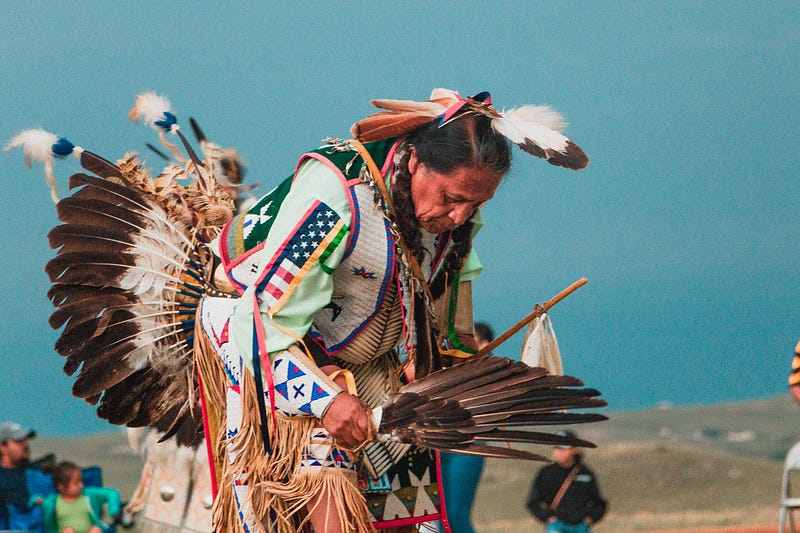
Thanksgiving Feast
My name has been called
I look around the table
My turn to give thanks
Do I give thanks to
Greedy invading rapists
Thieves grifting nations?
Do I thank all who
Followed their tears to mountains?
Breadcrumbs are lost, souls
Dare I walk a trail
Sullying ancient sorrow?
I must kneel head bowed
Supine to those my
Ancestors tore asunder
Debts that will not die
Be Mindful this Thanksgiving
In kindergarten, I celebrated Thanksgiving with construction paper feathers on my head. Finger paint turned war paint with deft strokes of my teacher’s thumb.
I was an Indian! I made noises with a cupped hand on my mouth, “Wah, wah, wah, wah, wah!”
I didn’t know that my feathers, paint, and noises were stereotypes used to keep Natives “othered” in their land. Many years passed before I recognized my fallacy.
At nonprofitaf.com, Native Americans shared a list of 22 ways you can be more mindful and respectful of Native cultures this Thanksgiving;
- Understand that being Native means different things to every person. “To some people, it means being Indian. To some, it means being Native. To some, it means being American Indian. Native American. Indigenous. Alaskan Native. First Nations. Some folks exclusively use their tribe’s name.”
- Find out whose land you are on, and honor it. “Remember that every inch of the US land was acquired illegally, so that’s the deficit that organizations need to understand as they begin working with tribal people and entities.” If you don’t know whose land you are occupying, here’s an excellent map where you can enter your city in the US or Canada, and it’ll tell you, along with links so you can learn more about the Nations or tribes whose land you are on.
- Never ask anyone if they’re an “enrolled member.” There is so much complexity to this question. “You may be 100% eligible and not enrolled.” Many people are from multiple tribes. Some people may not have their paperwork for a variety of reasons.
- Do not lightly claim that you have Native American heritage. Don’t lightly say things like you have an uncle who was a shaman or your grandmother was a Cherokee princess. “No one is a Cherokee princess. No tribes had that term in the history of Indigenous people, so stop with that nonsense. Along with this, you don’t become Native just because your DNA test says you are. Like just DON’T.” Here’s a thought-provoking article on why so many people claim to be Cherokee.
- Avoid sayings that diminish or disparage Native culture. As mentioned above, don’t say things like “let’s have a pow-wow,” “lowest person on the totem pole,” “too many chiefs, not enough Indians,” “Indian giver,” “circle the wagons,” etc. These phrases are disrespectful, and we still use them every day. “Spirit animal” is another one; some colleagues suggest using “Patronus” instead (that’s a reference from Harry Potter.)
- Don’t “play Indian.” As this article states, “While minstrel shows have long been criticized as racist, American children are still socialized into playing Columbus Day celebrations, Halloween costumes, and Thanksgiving reenactments stereotype Indigenous Peoples as one big distorted culture. We are relegated to racist stereotypes and cultural caricatures.” Avoid treating Native communities and members as logos, mascots, costumes, caricatures, etc.
- Be where people are. Go to the reservation and Native community organizations. Visit your local Native cultural center. Learn about the culture and history.
- Support Native artists and businesses by buying Native. Buy art, jewelry, clothing, and other items made by Native people and communities. Do not buy “Native” items that are not made by Native Americans and that are just taking advantage of Native culture to make money; be aware of scams by non-Natives who claim that proceeds from sales are benefiting Natives. These scams are illegal according to the Indian Arts and Crafts Act of 1990 and should be reported.
- Invite an elder or tribal leader to do an opening prayer or invocations at significant events. This is a way to honor and to bring attention to the tribes whose land the event is taking place on. But do your research first, so you do it right. And make sure you honor people’s time, culture, and expertise by providing an honorarium to the leader or organization.
- Understand that there are over 550 tribal affiliations in the US. They are incredibly diverse and have different languages and cultural customs. This is why it is essential to do your research. Do not lump everyone together. A colleague mentioned, for example, being asked to represent the tribe whose land the organization was trying to honor, even though she is not a member of that tribe.
- Don’t assume that tribal people get money from casinos. As mentioned in this handy, simple guide, “Out of more than 560 Federally recognized tribes, only 224 operate gaming facilities. About three-fourths of those tribes reinvest revenue in the community. In 2006, only 73 tribes distributed direct payments to individual Tribal members.”
- When disaggregating data, make sure to include Natives. Even if they are a small percentage. “I mean, think about it,” says a colleague, “They are such a small percentage of the overall population BECAUSE of the injustice done by colonization and ethnic cleansing.” It does not help to further minimize people’s existence by excluding them.
- Don’t expect every cultural custom will be explained to you. For example, when you are at a cultural event. As a colleague mentioned, “We don’t want to feel like an exhibit and have to explain everything going on.” Also, there might be times when people are required not to talk about something. If you work with kids, for instance, be sensitive about forcing them to share their culture. “Some things are not meant to be shared.”
- If you’re at an event, be thoughtful and patient around time. Events may not start or end on time. This does not necessarily mean that people can’t be punctual. They may just value other things more highly, such as creating space to build relationships, or to be inclusive of everyone’s stories.
- Be sensitive during meal times. Food is a significant part of many communities and cultures. A colleague mentioned that in her tribe, elders eat first, and those who are able-bodied are expected to get plates for the elders or mothers with small children. Be aware when you are at an event and not just jump directly into the food line.
- Don’t say costume when referring to native dance outfits and traditional wear. A dancer’s outfit is called regalia. As mentioned in this article on pow wow etiquette: “Often pieces of the regalia are family heirlooms. Regalia is created by the dancer or by a respected family member or friend. The feathers, in particular, are sacred and highly valued and cared for. The beadwork may take a very long time to complete. Sometimes years have gone into the completion of a dancer’s regalia.”
- Do not assume Native Americans have high rates of alcoholism. As mentioned here, Native Americans have “the highest rate of complete abstinence. When the socioeconomic level is accounted for in a comparison group, alcoholism rates are no different for AI/ANs than for other ethnic or racial groups.” Adds a colleague, “But alcohol WAS used to obtain illegal signatures for treaties and access to lands and resources that belonged to tribal people. So maybe don’t invite Natives to do ‘business’ in a bar without checking in first.”
- Do not tokenize people. As with other marginalized communities, they’ll know if you are only trying to look diverse or to look good for a grant application or something. Spend time building actual relationships, and ensure people and organizations are equitably compensated.
- Ensure the voices of Natives are amplified. We’ve seen when non-Native journalists are paid to tell stories about Native communities and their struggles. Let’s ensure the people whose stories are being told are the ones telling them. However, we all need to do our research and reflections so our Native colleagues are not always having to educate us. [Update: This is my blog, so my research and writing on this topic is part of my learning and reflection. I would never, for example, allow myself to be quoted in another publication or get paid to speak on behalf of Native/Indigenous communities]
- Don’t bring up the land bridge theory. Many communities are very sensitive to the theory that Native Americans came over from Asia through the Bering Strait. You can read a couple of articles from Native perspectives here and here, but it may be best not to bring it up.
- Check your white privilege. “Native people don’t have time or the emotional energy to labor through your hang-ups around race issues or your identity crisis.” Do you work to understand your heritage and the privileges that come with it, and understand your family’s history, including the parts that may be challenging, that may have involved displacing Natives from their land, for example.
- Use the present tense. Many of us make the mistake of using the past tense when talking about Native communities, and according to this article, “A staggering 87 percent of references to American Indians in all 50 states’ academic standards portray them in a pre-1900 context.” Many kids believe that Native Americans only exist in the past; they have no understanding of current Native cultures and challenges, and we adults often inadvertently contribute to this. As a colleague states, “the use of only the past tense contributes to the genocidal narrative that we’re anything but still here.”


