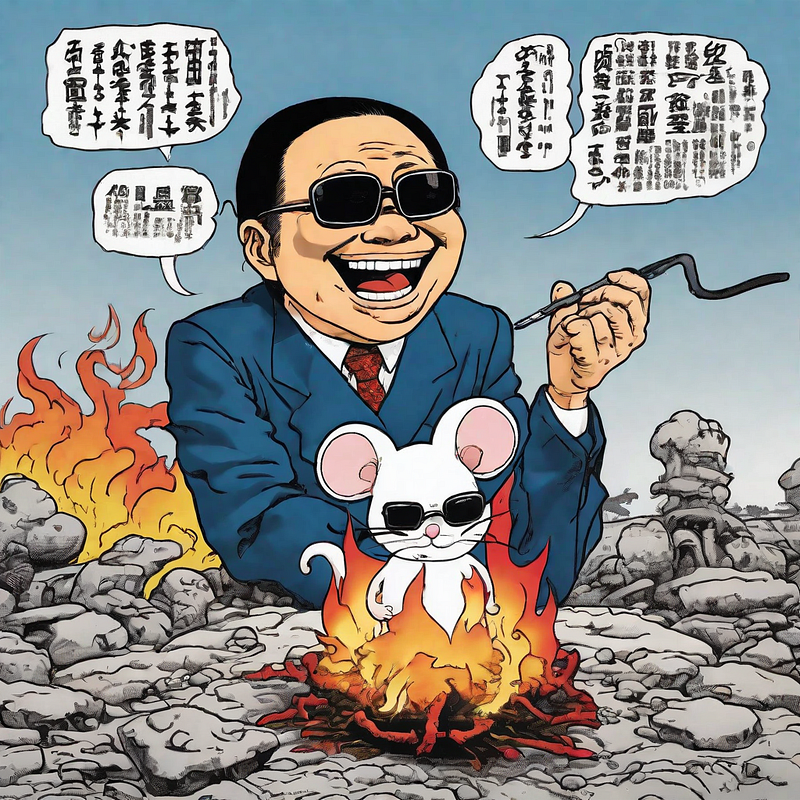
Who Said Mice Can’t Burn Charcoal?老鼠也燒炭
The "Hope Experiment" with Mice and Its Relationship with Economic Downturn
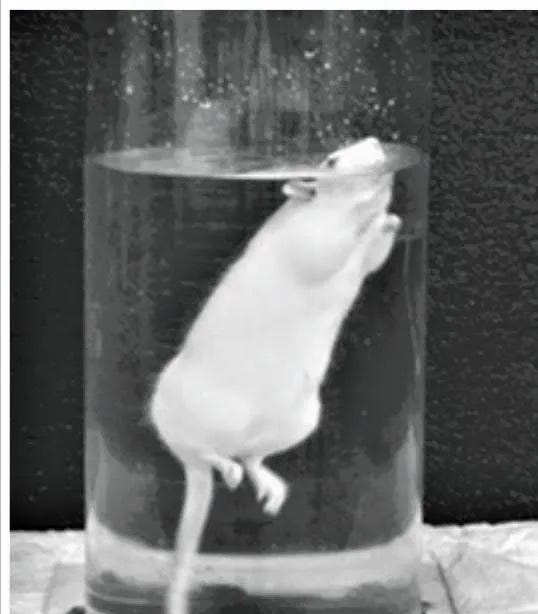
Recently, a fascinating experiment involving mice has caused a global sensation. Dr. Cote conducted a humorous "Hope Experiment" in his biology lab at Harvard University. He placed mice in a bucket of water, allowing them to nearly drown before rescuing and returning them. The results astonished Dr. Cote, as these mice became remarkably resilient. One of them even survived underwater for a staggering 60 hours! This far exceeded Dr. Cote's expectations, highlighting the power of psychological effects.
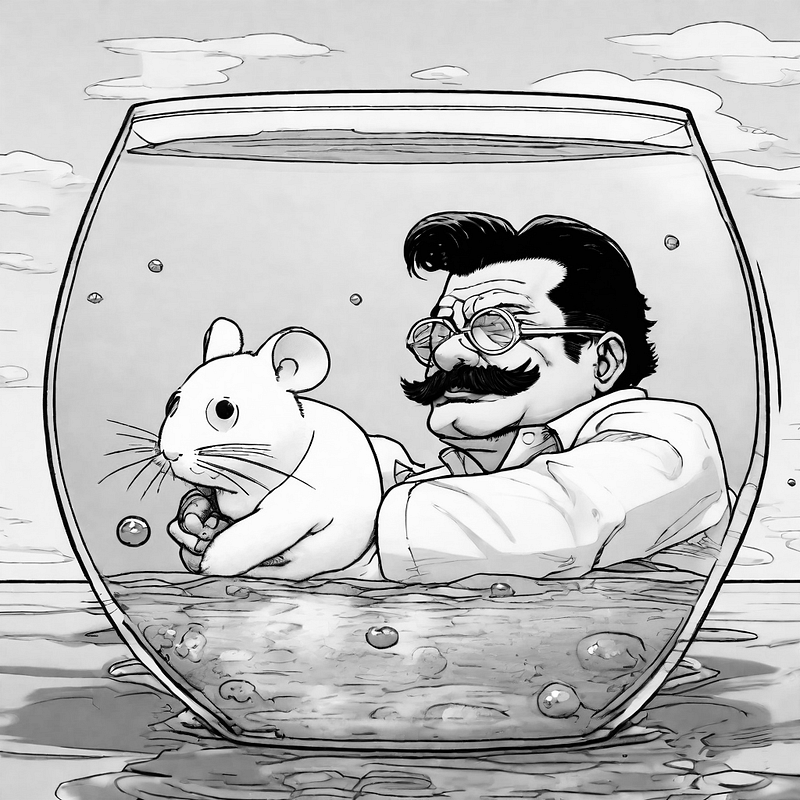
Dr. Cote named this experiment the "Hope Experiment" because the rescued experience instilled a sense of hope in the mice for their future lives, thus igniting tremendous motivation. This reminds us of similar cases in human society, such as certain primitive tribes believing in the life-or-death prophecies of shamans, which resulted in some individuals miraculously recovering after being predicted to die. It seems that the influence of hope on the will to survive should not be underestimated.
In the workplace, promises of future rewards from superiors can also stimulate employees' motivation. Once these promises are fulfilled, employees' drive increases significantly. However, if these promises turn out to be empty, employees' confidence and enthusiasm may plummet, much like the continuous plunge of the A-share market.
Not long ago, the A-share market witnessed a mix of joy and sorrow. The three major indexes fluctuated at the opening, and after a brief surge, the market started to decline. The ChiNext Index even fell by nearly 2%, reminiscent of the mice saved by Dr. Cote. In the afternoon, the A-share market accelerated its decline, with the Shanghai Composite Index falling by over 3%, breaching the 2700-point mark and hitting a new low since April 2020. The Shenzhen Component Index even fell by nearly 5%, with over a thousand stocks experiencing a decline of more than 9%. This leads us to wonder, who gave hope to the A-share market only to let it fall into the abyss?
Former CEO of JD.com, Xu Lei, recently made some bold statements, suggesting that we are not in an economic downturn but witnessing the end of an era. Xu Lei is an interesting person; he compares economic cycles with the changing of eras, conjuring up images of him burning charcoal with mice in the laboratory. Perhaps this is his unique way of understanding the economy.
Both the "Hope Experiment" with mice and the A-share market's downturn provide us with some insights. The power of hope is incredibly potent, but the key lies in how we grasp and utilize it correctly. When we give others hope, we must ensure that our actions align with our promises; otherwise, it may have the opposite effect, making people question whether we are burning charcoal for them.

Therefore, let us cherish hope and use its power in the right way, as it has a significant impact not only on an individual level but also on the economy and society. In the economic realm, people's confidence and expectations play a vital role in the stability and development of the economy.
The fluctuations of economic cycles are often related to people's expectations and confidence in the future economic conditions. When people are optimistic about the economic prospects, they are more willing to invest and consume, which contributes to economic growth. Conversely, when people feel pessimistic about the economic prospects, they tend to reduce investment and consumption, potentially leading to an economic recession.

Governments and economic policymakers also consider people's expectations and confidence in the formulation of economic policies. They take measures to enhance people's confidence in the future economy, such as providing a stable policy environment, improving employment opportunities, and offering social security. These initiatives help stabilize the economy, stimulate investment and consumption, and promote economic growth.
However, hope and expectations also need to be grounded in reality. Excessive optimism and unrealistic expectations can lead to economic bubbles and the accumulation of risks. In economic decision-making, it is necessary to balance hope and the actual situation, formulating sustainable and robust policies.
In conclusion, the power of hope is crucial for economic and social development. People's expectations and confidence can influence the stability and growth of the economy. Therefore, at both the individual and collective levels, we should grasp and utilize the power of hope correctly to achieve sustainable and healthy development.